














Standardizing Information to Enhance Real Estate Management Efficiency
The Vietnamese government has issued Decree 357 on the construction and management of the information system and database for housing and the real estate market, effective from March 1, 2026.
Accordingly, the information system and database for housing and the real estate market will be centrally and uniformly built and managed from the central to local levels to ensure transparency, synchronization, and efficiency in state management.
Each house, apartment, and real estate product will be assigned a unique electronic identification code. This code is a string of numbers and letters, with a maximum of 40 characters. The structure of the electronic identification code for real estate products includes the following information fields: project or construction information code, location identification code (if any), and a natural character sequence.
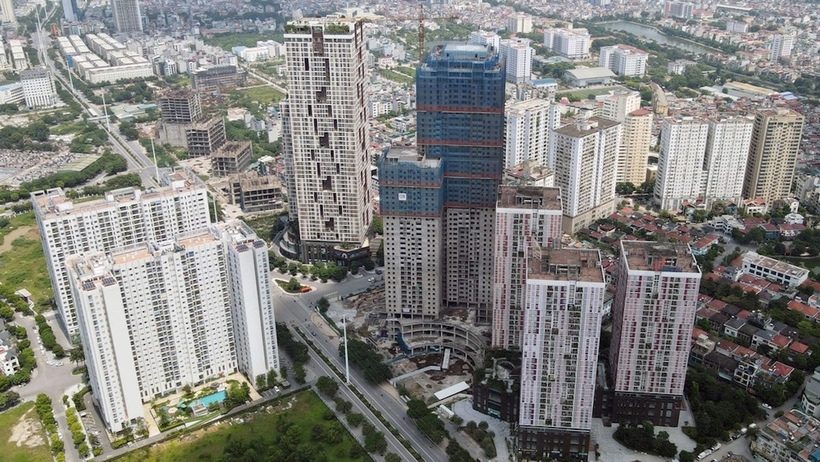
Each real estate property will have a unique electronic identification code starting March 1, 2026
This identification code is automatically generated within the information system and database for housing and the real estate market. Local Departments of Construction will assign electronic identification codes to houses in housing development projects within their jurisdiction, coinciding with the issuance of the document notifying that the housing is eligible for sale, for future housing.
For the floor area within a construction project, the electronic identification code is also composed of similar information groups, including land plot identification code, project or construction information code…
This identification code is automatically generated within the system and is assigned by the Department of Construction to the floor area within the construction project at the time of issuing the feasibility study report appraisal results for investment construction.
Additionally, condominium management units, real estate brokerage practice certificates, and individuals benefiting from housing support policies will also have electronic identification codes.
The Decree also stipulates that the Ministry of Construction is the agency responsible for building, managing, and using the information system and database for housing and the real estate market nationwide.
The housing and real estate market database must contain complete project information, including total investment, land use scale, progress, and relevant legal documents.
Simultaneously, the real estate database will include statistics on buying and selling prices (in million VND/m²), total transaction value, or unsold real estate inventory… Furthermore, this system will also contain data on notarized transactions and information about real estate purchase and sale contracts. These contracts include the identification code of the real estate and the transacting individual/organization, signing date, and transaction type (buying, selling, leasing, transfer acceptance…).
The system managed by the Ministry of Construction also includes information about housing ownership by organizations and individuals, such as housing type, address, area, quantity; ownership term and form; legal status…
Other ministries and sectors are required to share, connect, and provide information on the system and database for housing and the real estate market. Specifically, the Ministry of Agriculture and Environment is responsible for sharing data on land use right certificates and land plot identification codes.
The Ministry of Finance needs to provide information on taxes related to real estate transfer activities. The State Bank shares credit results in this field, such as outstanding debt for investment and real estate business, and the balance of guarantees for future housing.
End of “Opaque” Real Estate Transactions
Speaking with Life & Law, Dr. Nguyen Van Dinh, Vice Chairman of the Vietnam Real Estate Association, stated that over many years, the Vietnamese real estate market has had legal “loopholes” that have allowed some individuals and organizations to exploit and engage in wrongful profiteering activities.
Moreover, data on planning, project legality, supply and demand, transaction prices, inventory, social housing, commercial housing… remains scattered, fragmented, and dispersed across various ministries, sectors, and localities, even lacking consistency and updates.

Dr. Nguyen Van Dinh, Vice Chairman of the Vietnam Real Estate Association
The lack of information transparency has led to consequences such as widespread “virtual land fever,” real estate prices being driven far from their actual value; capital misallocation, increasing risks for the financial system; citizens and businesses facing legal risks, with the biggest losers often being home buyers and small investors…
Therefore, the electronic identification code for real estate is considered a crucial step in the digitalization process of the housing and real estate market, aligning with new management requirements.
According to Dr. Dinh, the electronic identification code for real estate can be understood similarly to a citizen’s ID card. Each house, land plot, and product is a high-value commodity with a significant impact on the economy, so consumers need to grasp information about these commodities to protect their legitimate rights.
Identification does not stop at the product level but is part of a comprehensive real estate market database. This transparency makes speculative activities much more difficult by exposing “hoarding” behaviors and creating artificial scarcity to drive up prices.
This policy also reduces “virtual selling and creating fake supply and demand” situations where developers or secondary investors hold properties without completing procedures, making the market appear scarce.
Additionally, transparent data helps management agencies promptly detect unusual market signs and take early regulatory measures. For businesses, comprehensive data reduces information search costs, enhances forecasting capabilities, and helps formulate investment strategies aligned with actual market needs.
Furthermore, data transparency is a prerequisite for developing healthy real estate financial products.
Recognizing the challenges in building and making real estate market information transparent, according to Dr. Nguyen Van Dinh, constructing and operating a unified information system still faces many obstacles, both institutionally, technically, and in implementation.
Therefore, building and making real estate market data transparent must be linked with the national digital transformation process, where real estate data is connected and shared with other national databases such as land, population, business registration, taxes, and credit. Combining digital technology, artificial intelligence, and big data creates a foundation for providing online public services and simplifying administrative procedures.
Unlock New Opportunities: Prime Land Plots in Dong Nai’s Booming Infrastructure Hub

In a market where land plots are increasingly scarce due to new government regulations, The Link City has emerged as the focal point of Dong Nai’s real estate scene. Beyond being one of the few remaining projects offering land plots, The Link City captivates with its meticulously planned infrastructure and 50 integrated amenities designed to meet daily needs seamlessly.
Unveiling the Pioneering Projects of 2026: A New Year’s Debut

The simultaneous launch of real estate projects by Van Phuc Group, Nam Long, Phat Dat, TBS, Phu Dong Group, Khai Hoan Land, and others at the beginning of 2026 signals a year brimming with confidence from developers.
Market Pulse 09/01: Clear Divergence as VN-Index Returns to Starting Line
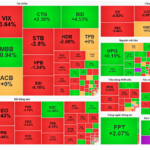
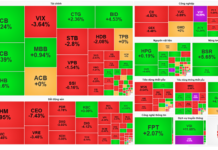
Profit-taking pressure continued to mount, pushing the VN-Index back to its starting point by the end of the morning session. The index hovered just above the reference mark, closing the mid-session at 1,856.23 points. Meanwhile, the HNX-Index dipped slightly by 0.24%, settling at 248.5 points. Market breadth increasingly favored sellers, with 390 decliners outpacing 311 gainers.
Prime Minister: Vietnam’s GDP Growth to Lead Globally in 2025, Officially Ranking as the World’s 32nd Largest Economy

This morning, the Government convened a nationwide online conference with local authorities to evaluate the outcomes of 2025 and outline tasks for 2026. The conference was live-streamed from the Government headquarters to 34 provinces and centrally-governed cities.
Latest Developments in the 2026 Tet Mai Flower Market

Mrs. Bay Viet, a plum blossom grower in Cho Lach (Vinh Long), reveals her focus this Tet season is solely on affordable plum blossoms, ensuring easy sales during the holiday.