







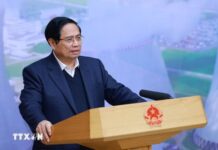







State-owned economy is a critically important component of the socialist-oriented market economy – Photo: TTXVN
Following is the full text of Resolution No. 79-NQ/TW:
The state-owned economy is a critically important component of the socialist-oriented market economy. The foundation of the state-owned economy includes resources held, managed, and controlled by the State to fulfill socio-economic development goals, macroeconomic stability, and national defense and security, such as: land, mineral resources, water resources, sea areas, airspace, underground space, state-invested infrastructure projects, the state budget, national reserves, state financial funds outside the budget, state-owned enterprises, state credit institutions, state capital in enterprises where the State holds from 50% of the charter capital downwards, and public service units…
After 80 years of construction and development, especially nearly 40 years of implementing the country’s renewal, the state-owned economy has always played a leading role, effectively performing the function of orienting, leading, and regulating economic activities. It has contributed to promoting growth, stabilizing the macro-economy, maintaining major economic balances, ensuring national defense and security, fostering social progress and equality, improving people’s livelihoods, and enhancing Vietnam’s international standing.
However, there are still many limitations and shortcomings. Policies and laws on the state-owned economy are slow to renew and have not kept pace with the practical development of the economy. The management, exploitation, and use of many state resources and assets are not truly efficient, lacking full economic accounting requirements, leading to waste and loss, and failing to clearly demonstrate the leading and controlling role in the national economy. State-owned enterprises, the core of the state-owned economy, operate ineffectively and do not match their positions and resources; their international competitiveness is limited; and they have not played a pioneering role in innovation or led key and essential sectors.
There are many causes for this situation, primarily due to limitations in understanding the position, role, and scope of the state-owned economy in the socialist-oriented market economy with state management under the Party’s leadership. The relationship between the State, market, and society has not been reasonably resolved; legal institutions are not synchronized and have obstacles and shortcomings; implementation in some places and times has been inadequate; coordination in management, use, and action among agencies has not been effective; the capacity of the management team does not meet development requirements; the sense of responsibility, especially among leaders, in managing and using state assets is not high, and some even intentionally violate regulations for corruption; and inspection, examination, auditing, and supervision work still has limitations, not meeting management requirements.
To further enhance the role of the state-owned economy, contributing to realizing the goal of making our country a developing nation with modern industry and high middle income by 2030, and a developed, high-income nation by 2045, the Politburo requires a focus on thoroughly grasping and effectively implementing a number of guidelines and policies on developing the state-owned economy.
I. GUIDING PRINCIPLES
1. The state-owned economy plays a leading role in the socialist-oriented market economy, ensuring macroeconomic stability, major economic balances, strategic development orientation, and national defense and security. It contributes to promoting cultural values, social progress, equality, and social welfare, serving as an important resource for the State to intervene promptly in response to urgent and emerging needs.
2. The state-owned economy is equal before the law with other economic sectors, developing long-term, cooperating, and competing fairly. It accesses resources, markets, and development opportunities equally, openly, and transparently, working with other economic sectors to build an independent, self-reliant, and resilient economy. This ensures economic security and promotes extensive, substantive, and effective international integration.
3. State-owned economic resources must be reviewed, statistically evaluated, and fully accounted for according to market principles, aligned with socio-economic development goals and national defense and security. Barriers must be removed, and resources must be liberated, managed, exploited, and used efficiently to prevent loss and waste. The impact and socio-economic cost-benefit analysis of state material resource investment must be assessed according to international practices. The relationship between the State, market, and society must be effectively managed. The use of state resources for providing public goods and services and fulfilling political tasks must be separated from business activities.
4. The state-owned economy must pioneer development, lead, and promote industrialization, modernization, and economic restructuring. It must establish a new growth model driven by science, technology, innovation, and digital transformation, enhancing national competitiveness. State-owned enterprises must be restructured, focusing on improving operational efficiency, adopting advanced technology, and modern management models according to international standards. Emphasis should be placed on building and developing large state-owned economic groups, corporations, enterprises, and commercial banks that play a leading role in key and strategic sectors, with regional and global competitiveness. The role of state-owned enterprises and public service units in research, development, and technological cooperation must be enhanced.
5. The Party’s leadership must be strengthened, and the capacity and effectiveness of state management over the state-owned economy must be improved, especially in resource allocation and implementation. Administrative procedure reform, decentralization, and empowerment must be promoted alongside inspection and supervision. Transparency, autonomy, and accountability must be enhanced, with a focus on preventing corruption, waste, and negativity in the management and operation of the state-owned economy.
II. OBJECTIVES
1. General Objective
Enhance the efficiency and leading role of the state-owned economy in key, essential, and strategic sectors, guiding and supporting other economic sectors to develop together. This contributes to rapid and sustainable development, ensuring national defense and security, social progress, equality, and improved livelihoods. The goal is to become a developing country with modern industry and high middle income by 2030 and a developed, high-income country by 2045.
2. Specific Objectives by 2030
– Land and Resources: Manage, exploit, mobilize, and use land and resources efficiently, transparently, and sustainably to support rapid and sustainable economic growth, ensuring national defense, security, economic security, environmental protection, and climate change adaptation.
– Infrastructure Assets: Develop a modern, synchronized, and strategic infrastructure system to meet the country’s development needs in the new era. Focus on completing key national infrastructure projects, large-scale, inter-regional, and international connectivity projects.
– State Budget, National Reserves, and Non-Budget State Financial Funds: Achieve a budget mobilization rate of around 18% of GDP by 2026-2030, with a budget deficit of around 5% of GDP and public debt not exceeding 60% of GDP. Allocate 35-40% of the budget to development investment and 50-55% to regular expenditures. Aim for national reserves to reach at least 1% of GDP by 2030. Review, reorganize, and improve the management and use of non-budget state financial funds.
– State-Owned Enterprises: Aim for 50 state-owned enterprises to be among the top 500 in Southeast Asia and 1-3 to be among the top 500 globally. Build strong state-owned economic groups and corporations with large-scale, modern technology, and regional and international competitiveness. Ensure 100% of state-owned enterprises adopt modern digital management and 100% of state-owned economic groups and corporations apply OECD governance principles.
– State Credit Institutions: Aim for at least 3 state-owned commercial banks to be among the top 100 in Asia in terms of total assets. Develop 4 leading state-owned commercial banks in technology, management, scale, market share, and market regulation.
– Public Service Units: Continue to socialize public services, streamline units, and focus on essential political and state management tasks. Provide basic and essential public services efficiently.
3. Vision by 2045
The state-owned economy will be a solid foundation for strategic autonomy, resilience, and comprehensive competitiveness, with modern, transparent, and efficient management. It will integrate deeply into the global economy, provide high-quality public services, and affirm the superiority of socialism, contributing to the goal of becoming a developed, high-income country by 2045. By 2045, national reserves are expected to reach 2% of GDP, with 60 state-owned enterprises among the top 500 in Southeast Asia and 5 among the top 500 globally. At least 50% of public service units will be self-sufficient in regular and investment expenditures or operate efficiently under market mechanisms.
III. TASKS AND SOLUTIONS
The Politburo requires the continued vigorous, synchronized, and effective implementation of guidelines, orientations, tasks, and solutions identified in resolutions and conclusions of the Party Central Committee, the Politburo, and the Secretariat. Focus on the following tasks and solutions:
1. General Tasks and Solutions
– Thoroughly disseminate the Party’s guidelines on the state-owned economy throughout the political system and society. Continue to renew leadership and management thinking, shifting from administrative management to development facilitation and modern governance.
– Perfect the legal system, remove institutional barriers, and ensure strict and effective law enforcement. Strengthen discipline and compliance with international commitments. Clearly define the functions, tasks, and responsibilities of agencies in state-owned economic development. Separate ownership functions from economic management, political tasks, and non-profit activities.
– Create a favorable, fair, and transparent environment for all economic sectors to access and use national resources. Encourage public-private partnerships in resource management, infrastructure, and public services. Reform administrative procedures, decentralize, and enhance autonomy and accountability. Reduce direct administrative intervention and compliance costs. Apply risk management and shift from ex-ante to ex-post control.
– Develop high-quality human resources, especially leaders and experts in state-owned economic organizations, ensuring competitive compensation. Implement effective policies to attract and retain talent based on capacity, ethics, and performance.
– Protect officials who take initiative and responsibility for the common good, provided there is no corruption. Establish independent, comprehensive, and transparent evaluation processes to distinguish between honest mistakes and legal violations, ensuring fair treatment.
– Develop a national database with standardized, unified, and regularly updated information on state-owned economic entities and resources. Ensure data integration, security, and sovereignty, using it for monitoring, evaluation, policy-making, and resource allocation.
– Eliminate redundant and prolonged inspections, audits, and oversight. Apply digital technology to streamline these processes, ensuring alignment with digital transformation plans. Strictly handle abuses of inspection powers and cases of loss, waste, and corruption, ensuring maximum recovery of misappropriated assets and funds.
2. Specific Tasks and Solutions
2.1. Land and Resources
– Perfect the legal framework for land and resources, decentralize management, and develop mechanisms to effectively utilize land, sea, biodiversity, and protected areas. Affirm that land is a special production resource owned by the people and managed by the State. Complete land measurement, digitization, and data cleaning by 2026, integrating it with national databases. Review land classifications to adjust planning, ensuring food security, industrial development, and efficient land use. Finalize the revised Land Law and guiding documents by 2026 to remove management barriers. Ensure equal access to land for all economic sectors, prioritize infrastructure and social housing, and strictly recover misused or abandoned land.
– Modernize water resource management to ensure efficient, equitable, and sustainable use across sectors, guaranteeing water and food security. Apply economic tools to promote cost-effective and fair water use. Investigate and manage mineral resources effectively, promoting advanced extraction and processing technologies. Encourage state-owned enterprises to invest abroad in strategic mineral exploration and processing.
– Implement centralized, inter-sectoral management of marine resources to ensure sustainable exploitation, combining economic development with national defense and sovereignty protection. Develop marine resource databases, promote clean energy, and enhance marine environmental monitoring. Support modern fisheries and establish logistics and military-civilian ports in key islands. Prioritize critical marine infrastructure for economic and defense purposes. The marine economy must be a key component of the state-owned economy.
– Modernize airspace and defense zone management, ensuring aviation safety and security. Create legal frameworks to promote space and low-altitude economies, aerospace industries, and controlled testing environments.
– Develop policies for managing and utilizing underground space, integrating it with urban planning. Encourage public-private partnerships in underground infrastructure investment and advanced technology application.
– Perfect the legal framework for digital and telecommunications resources to develop data markets and digital economies. Promote public-private partnerships in artificial intelligence and digital technology. Strengthen state management of digital security, combat cyber threats, and ensure data sovereignty.
2.2. Infrastructure Assets
– Develop long-term, synchronized infrastructure strategies, aligning with global trends and sustainable development. Encourage public-private partnerships in infrastructure investment, management, and operation. Urgently supplement legal frameworks for cultural, sports, tourism, and industrial infrastructure to mobilize non-budget resources, ensuring efficiency and transparency.
2.3. State Budget, National Reserves, and Non-Budget State Financial Funds
a) State Budget
– Reform budget management to meet new development requirements, balancing state, market, and societal roles. Develop new tax sources related to assets and carbon emissions, ensuring sustainability and international alignment. Minimize social policy integration in tax policies, modernize tax administration, and reduce compliance costs. Create revenue sources and promote development.
– Perfect revenue-sharing mechanisms between central and local budgets, ensuring central leadership and local autonomy. Align expenditure tasks with accountability, ensuring efficient and timely implementation.
– Concentrate public investment, avoiding fragmentation. The central budget focuses on strategic infrastructure, while local budgets prioritize local development and defense. Continue to improve public investment laws for effective resource allocation.
– Flexibly allocate budget expenditures, avoiding rigid sectoral allocations. Diversify budget funding sources, ensuring debt sustainability. Develop a connected public debt database, enhance transparency, and manage debt risks effectively.
b) National Reserves
– Perfect reserve management, integrating it with defense, security, and social welfare strategies. Review reserve goods, strengthen storage systems, and modernize processes to ensure strategic readiness. Develop smart reserve systems and encourage public-private partnerships in storage and management.
– Establish special mechanisms for reserve goods procurement, ensuring flexibility and timely response. Encourage enterprises to participate in reserve activities under market principles. Enhance international cooperation in reserve management.
c) Non-Budget State Financial Funds
– Improve fund management, merge or dissolve redundant funds, and enhance transparency and digitalization. Strengthen professional financial management and reduce budget dependence. Avoid creating new funds unless absolutely necessary.
d) State Capital in Enterprises
– Transfer state capital in enterprises where the State holds less than 50% to specialized investment companies or state-owned enterprises for management and development. Ensure efficient use of state capital through restructuring, capital injection, or divestment.
2.4. State-Owned Enterprises
a) Strengthen state-owned enterprises as key drivers of the state-owned economy
– Focus on developing leading state-owned groups and corporations in strategic sectors such as defense, energy, logistics, finance, technology, minerals, construction, and agriculture. Increase capital through privatization proceeds, retained earnings, and asset revaluation. Encourage mergers and acquisitions to enhance industry competitiveness.
– Support state-owned enterprises in national and international projects with adequate capital and credit. Encourage partnerships with other enterprises in value chains and innovation ecosystems.
– Mobilize state-owned enterprises to lead and leverage societal resources for economic development.
b) Promote innovation, digital transformation, and green growth
– Encourage state-owned enterprises to lead in research, innovation, and digital transformation. Establish R&D centers and adopt advanced technologies. Support green investments and circular economy initiatives.
– Ensure R&D results are applied in production and shared across sectors. Implement state procurement policies to support domestic technology products.
– Allow state-owned enterprises to use R&D funds flexibly and participate in venture capital funds. Encourage technology transfers and mergers and acquisitions for competitiveness.
c) Improve corporate governance and efficiency
– Clarify management roles and responsibilities, ensuring accountability. Strengthen internal controls and replace underperforming leaders. Implement competitive compensation and performance-based rewards.
– Evaluate enterprise performance comprehensively, separating commercial and non-commercial tasks. Address underperforming projects and enterprises promptly.
– Reform ownership representative models and board structures for flexibility and efficiency.
d) Restructure state capital and enterprises
– Restructure state-owned enterprises to reduce redundancy and increase scale. Encourage international investment and economic diplomacy. Continue privatization while maintaining state control in strategic sectors.
– Develop mechanisms for enterprises where the State holds a minority stake, focusing on value creation and strategic alignment. Fully restructure SCIC into a national investment fund, focusing on strategic investments and international expansion. Strengthen VAMC and DATC to support financial restructuring and debt resolution.
2.5. State Credit Institutions
– Adopt modern governance and risk management practices. Implement digital transformation and expand digital financial services. Restructure state-owned banks to enhance efficiency and capitalize them adequately.
– Develop the Social Policy Bank and fully restructure the Development Bank to support social welfare and strategic sectors.
2.6. Public Service Units
– Review and streamline public services, ensuring essential services are funded. Socialize non-essential services and encourage private participation. Reform financing mechanisms, linking funding to performance and user fees.
– Allow autonomous public service units to manage operations like state-owned enterprises. Focus on developing key research and strategic technology units.
– Improve governance and transparency, adopting modern management practices. Strengthen quality assessment and public feedback mechanisms.
IV. IMPLEMENTATION
1. The Party Committee of the National Assembly will review and prioritize laws supporting the Resolution’s implementation, enhancing oversight to improve the state-owned economy’s effectiveness.
2. The Party Committee of the Government will establish a National Steering Committee, develop an Action Plan, and ensure resource allocation. It will coordinate with the National Assembly to institutionalize the Resolution’s policies.
Mr. Nguyen Duc Lenh: 2025 Monetary Policy Reflects SBV’s Distinctive Management Approach

Achieving the dual objectives of monetary policy in 2025 marks a significant milestone. This accomplishment underscores the adept stewardship of the State Bank of Vietnam (SBV), showcasing its agility, efficiency, and resilience in navigating the complexities of macroeconomic stabilization while simultaneously fostering economic growth.
State-Owned Stocks PV GAS, BSR, Petrolimex, Becamex… Plunge: What’s Driving the Sudden Market Shift?

According to MB Securities (MBS), state-owned listed enterprises are poised to become the new focal point of the stock market in 2026.
Unveiling the Top 5 Fastest-Growing Localities in Vietnam for 2025
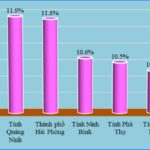
In 2025, local GRDP growth continued its robust recovery, with most regions surpassing a 7% increase. Quang Ninh and Hai Phong led the charge with remarkable growth exceeding 11%, while Hanoi and Ho Chi Minh City remained the backbone of the national economy.
From 8.02% Growth to Double-Digit Ambitions: What Does the Ministry of Finance Say About Vietnam’s Economic Resilience?
Following an 8.02% growth rate in 2025, the Ministry of Finance asserts that Vietnam’s economy has established a robust macroeconomic foundation, paving the way for a targeted double-digit growth trajectory beginning in 2026.
Market Pulse 08/01: VN-Index Closes in the Red Amid Unexpected Correction
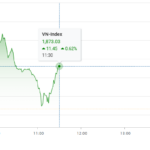
The VN-Index seemed poised for another bullish session as it kicked off the afternoon with promising momentum. However, a sudden downturn erased all gains, pushing the index back below the reference point.