










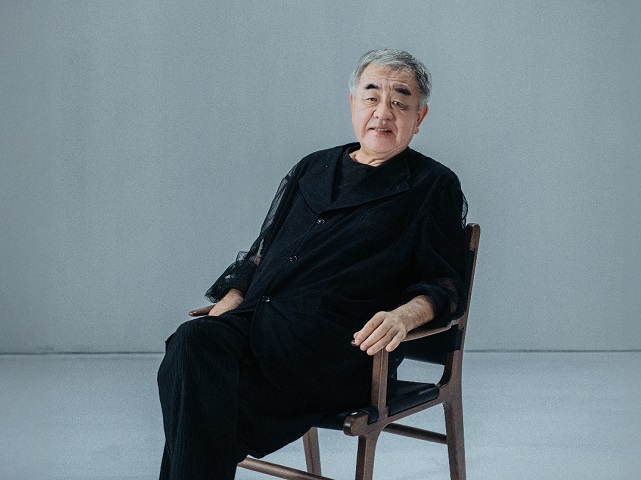
Kengo Kuma, a design legend and one of TIME Magazine’s Top 100 Most Influential People in the World.
|
Upon his first visit to survey the prime location of the HAUS Da Lat project (facing Xuan Huong Lake, Da Lat), architect Kengo Kuma was confident that he and his team could create something truly special. As major cities increasingly become concrete jungles, Kuma aims not only to build Vietnam’s first ESG real estate project but also to foster deep connections with the surrounding community, redefining global luxury standards.
As the project takes shape, Kuma is confident it will become one of the world’s most unique residential and resort complexes.
Kengo Kuma shares his insights on this extraordinary project.
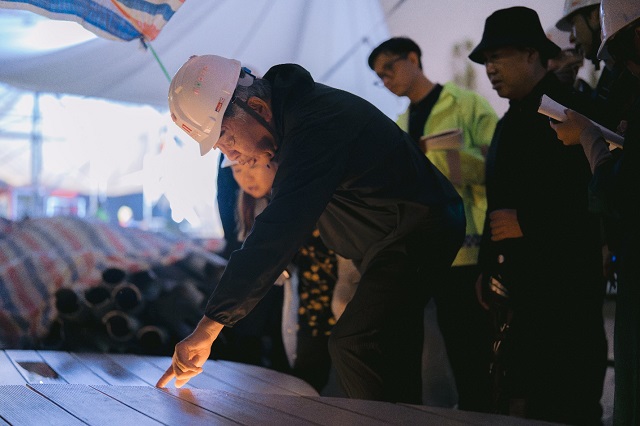
Kengo Kuma is renowned for his meticulousness and careful selection of projects and partners.
|
A Legacy for Future Generations
Mr. Kengo Kuma, thank you for sharing your insights. As a globally renowned design legend known for your meticulousness in selecting projects and partners, what made you choose Da Lat for your next masterpiece? How did the developers of HAUS Da Lat convince you?
Mr. Kengo Kuma: When I was first invited to join the project, I knew nothing about Da Lat, so I decided to visit and experience it myself. Walking around the site offered a completely different experience compared to viewing photos, and my first visit left a strong impression of the area’s uniqueness.
Amid global warming, Da Lat feels like a dreamland. I could feel the cool breeze from the pine forests and enjoy the vibrant yet refined street life, with fresh, green cuisine and specialties like avocados and yogurt.
The HAUS Da Lat site is a rare gem in the heart of Da Lat, facing Xuan Huong Lake. The combination of terrain and scenery gave me confidence that something truly special could be created here. It immediately reminded me of Karuizawa in Japan, also located at an altitude of over 1,000 meters, which attracts those with a unique taste for resorts.
Therefore, I believe HAUS Da Lat will be one of the most unique residential and resort complexes I’ve ever designed.
What convinced me even more was the developer, The One Destination. They are not just building this project for profit; they genuinely want to leave a legacy for future generations through Vietnam’s first ESG real estate project. Sustainability and harmony with the community are their top priorities, which aligns with my design philosophy. I’m truly excited about this collaboration.
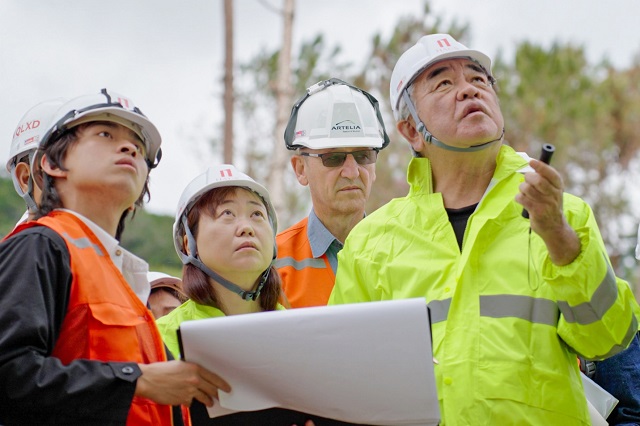
Kengo Kuma meticulously inspects every detail at the HAUS Da Lat construction site.
|
Some argue that Da Lat is losing its identity due to the rapid growth of tourism and real estate. With your philosophy of harmonizing with nature and respecting local characteristics, how do you plan to preserve Da Lat’s unique charm while still leaving your mark on this project?
I’ve noticed that most luxury resorts in Da Lat still mimic 20th-century projects, evoking a nostalgic European past.
With HAUS Da Lat, we aim to redefine luxury and set new standards for future resorts. Without classical architecture, marble, high ceilings, or secluded locations, we can create a sustainable residential and resort complex that harmonizes with nature and deeply connects with the community.
In addition to the wood I’ve used in my previous projects, Da Lat’s unique pine trees and pinecones inspired many design elements in this project. We also use specially colored stones and metals that suit Da Lat’s terrain, blurring the lines between architecture and nature.
HAUS Da Lat is also the city’s largest pine forest conservation project. We’re planting additional greenery suited to Da Lat’s soil and climate, with a focus on landscape design. Residents and visitors will be greeted by a four-season blooming flower gate with a unique curved design made from thin, handcrafted wooden slats, treated for durability and weather resistance. This is a major highlight of the project, and engineers and workers are actively installing it.
Above all, I want to revive Da Lat’s natural, intimate beauty within a modern context, as cities become increasingly concrete.
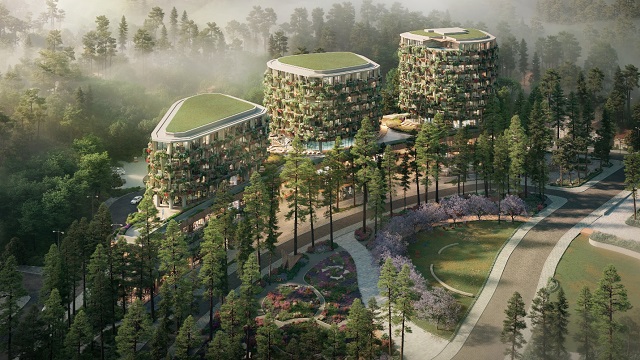
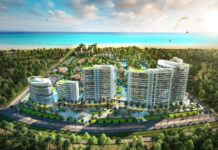
HAUS Da Lat draws inspiration from Da Lat’s natural landscape and pine forests.
|
How has the collaboration with other stakeholders been in bringing these ideas and designs to life?
Unlike some architects who only provide blueprints, we discuss design details and materials extensively with contractors. Sometimes we debate, but I believe it’s necessary for the project’s success, to create a truly unique residential and resort complex.
As you can see, my team and I are frequently on-site. Nine weeks ago, I flew here to check the lighting design, and today, before this interview, I inspected important mock-ups of each building. I don’t trust blueprints or images; I want to see and touch the models and materials myself.
So far, I’m very satisfied with the mock-up quality and believe this will be one of the world’s most unique residential and resort complexes.
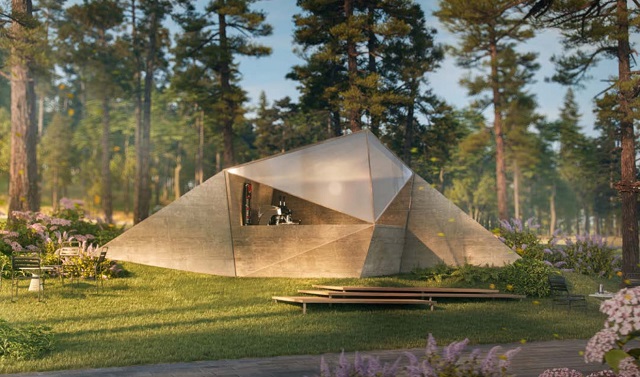
“My team and I are frequently on-site at the project.”
With your frequent site visits, do you also explore other parts of Vietnam? Based on your experiences, what advice do you have for Vietnamese developers and architects to create iconic projects that showcase Vietnam to the world?
I’ve actually visited many places in Vietnam, especially tourist destinations. This has given me a clear sense of Vietnam’s diversity.
Like Japan, Vietnam is not a large country but stretches from north to south, with unique regional characteristics in landscape, climate, culture, and cuisine. Before coming here, I had no idea about this diversity.
Therefore, I believe it’s essential to celebrate each region’s uniqueness, without copying resorts or urban designs from other countries. Vietnam should be Vietnam, a land of diversity and warmth.
In recent years, many international real estate developers have come to Vietnam to launch luxury and high-end projects. How can Vietnam embrace this development while preserving its unique identity?
Vietnam is emerging as a leader in luxury and high-end resort real estate.
I witnessed a similar boom in Japan in the 1980s, when foreign investors arrived to develop projects. However, most architects then failed to recognize Japan’s diversity and uniqueness, opting instead to copy Western postmodern styles, which ultimately harmed Japan’s identity.
I believe Vietnam should avoid Japan’s path. This country holds many hidden treasures, like Da Lat, waiting to be discovered. Identify each region’s unique identity and avoid copying anywhere else.
I’m confident that the HAUS Da Lat project will demonstrate that Vietnam can become a model for sustainable architecture, where modern development coexists with natural beauty and local identity.
Thank you for your insights!
|
Kengo Kuma is a contemporary Japanese architect known for his sustainable architecture, using materials that respect nature and local culture. He founded Kengo Kuma & Associates in 1990 and has completed over 300 projects in 20 countries, with many more underway in over 50 countries. TIME Magazine named him one of the 100 most influential people in the world in 2021. Beyond his architectural fame, he is a seasoned educator and honorary professor at the University of Tokyo, and the author of several highly regarded books in his field. |
– 16:51 07/01/2026
Exclusive Investment Opportunity: December 27, 2025 – January 2, 2026 – Three Mega Urban Projects, Nearly $850 Million in Capital
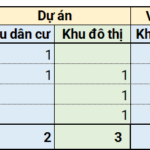
During the week of December 27, 2025, to January 2, 2026, four provinces attracted investment in five projects, totaling nearly VND 21.9 trillion. Among these, three urban development projects accounted for approximately VND 20 trillion. The most notable was a project in Hưng Yên province, with an investment of over VND 15.6 trillion.
Investment Outlook 2026: Capital Flows Seek Opportunities in the New Growth Cycle
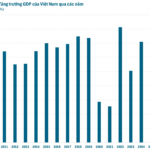
Amidst a global economy fraught with uncertainties, Vietnam’s high growth coupled with macroeconomic stability positions it as an increasingly attractive investment destination.
OCB: Swift Capital Solutions for SMEs During Year-End Peak Season

To ensure a seamless supply of credit for production, business operations, and inventory storage during peak seasons, Orient Commercial Joint Stock Bank (HOSE: OCB) has continuously enhanced its “Quick Business Capital Loan” product. This upgrade empowers small and medium-sized enterprises (SMEs) with greater flexibility in accessing funds while significantly streamlining the loan application process.
Vietnam’s FDI Disbursement Projected to Hit $27.62 Billion in 2025, Marking a 5-Year High
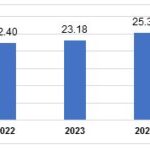
According to data from the General Statistics Office (Ministry of Finance), the total registered foreign investment capital in Vietnam as of December 31, 2025, comprises newly registered capital, adjusted registered capital, and the value of capital contributions and share purchases by foreign investors, reaching USD 38.42 billion. The realized foreign direct investment (FDI) in Vietnam for 2025 is estimated at USD 27.62 billion, a 9.0% increase compared to the previous year, marking the highest level in the past five years.
Secretary-General Tô Lâm: Firmly Abandon the Mindset of ‘If It Can’t Be Managed, Then Ban It’
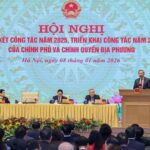
The General Secretary has called for a significant enhancement of the investment and business environment, emphasizing the need to expand decentralization and delegation of authority. This includes a thorough review and reduction of administrative procedures, empowering officials and civil servants with greater decision-making autonomy and accountability. Simultaneously, efforts must be made to minimize compliance time and costs for citizens and businesses. The directive firmly rejects the outdated mindset of “if it can’t be managed, it should be banned,” advocating instead for proactive and efficient governance.