














Addressing the Skepticism
When the U.S. announced significantly higher tariffs on Vietnamese goods, Mr. Vũ Bình Minh, Director of Capital and Currency Business, Capital Markets and Securities Services, HSBC Vietnam, noted widespread doubts about Vietnam’s ability to meet its ambitious 2025 economic targets set earlier that year.
However, macroeconomic data reveals impressive GDP growth in Q2 and Q3 2025, with each quarter outpacing the previous one. Despite an unpredictable trade environment, the Industrial Production Index (IIP) rose by 10% year-on-year in Q3. This growth was broadly based across sectors.
According to Mr. Minh, since early 2025, Vietnamese electronics have overtaken light industrial manufacturing as the top export to the U.S. market. Vietnam has elevated its role in the assembly of finished electronic products, reflecting its gradual ascent in the technology value chain.
While Vietnam remains focused on the lower segments of the tech supply chain, the surge in AI demand has positively impacted its export market share for smartphones and consumer electronics, driving significant growth.
Additionally, Vietnam is becoming increasingly vital in the production of processing chips, a higher-value segment compared to basic electronics assembly.
Citing a reputable report, Mr. Minh highlighted that by August 2025, Vietnam accounted for approximately 75% of gaming console exports to the U.S. These exports, averaging under $30 million monthly in 2024, skyrocketed to over $400 million monthly in a short period.
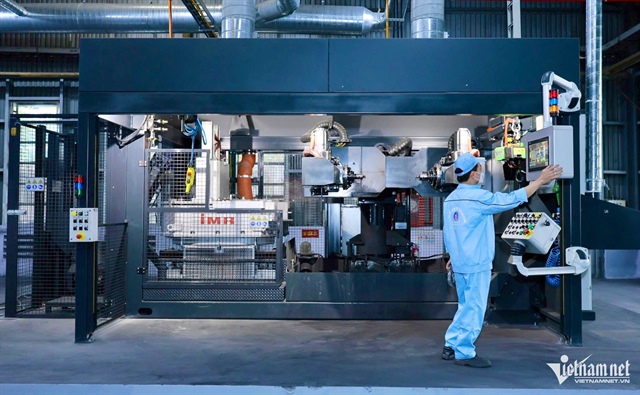
Vietnam is steadily climbing the value chain. Photo: Hồng Khanh |
International consulting firms have also acknowledged these positive developments. In KPMG’s recently released “Vietnam Outlook 2026” report, Mr. Warrick Cleine MBE, Chairman and CEO of KPMG in Vietnam and Cambodia, described 2025 as a pivotal year for Vietnam. This transformation is driven by the convergence of bold internal reforms and visionary planning.
Resolution 68 and the launch of the International Financial Center initiative reflect Vietnam’s ambition to become a regional financial hub. The National Semiconductor Industry Plan lays the groundwork for Vietnam to enter the global chip ecosystem. Most notably, the private sector is being empowered as never before, with reforms aimed at maximizing its potential.
According to Mr. Warrick, these changes are interconnected, propelling Vietnam toward high-value industries, digital transformation, and inclusive growth. For investors, the message is clear: Vietnam is open, ready, and moving swiftly.
Policies in Place, Execution is Key
HSBC Vietnam representatives noted that while 2026 remains unpredictable, indicators like the Purchasing Managers’ Index (PMI) offer encouraging prospects. The overall PMI remained in expansion territory at 53.8 in November 2025, with new export orders growing at a faster pace for the second consecutive month.
Vietnam has focused on boosting public investment, particularly in critical infrastructure. Public spending on infrastructure accounts for 6-7% of GDP, significantly higher than regional peers. This has been a key driver of economic growth, especially amid rising global trade risks.
On the trade front, diversification has become a critical strategy in response to U.S. tariff uncertainties.
According to Mr. Vũ Bình Minh, while the U.S. remains Vietnam’s top export destination, the country is actively pursuing long-term trade opportunities elsewhere.
In 2024, Vietnam’s trade with the EU grew by 36% compared to 2019, making it the EU’s most important trading partner in ASEAN. Vietnam has also signed numerous trade agreements and upgraded relations with various countries, highlighting significant diversification potential.

Experts assess Vietnam’s international position in 2026 as favorable. Photo: Nguyễn Huế |
Assoc. Prof. Võ Đại Lược, former Director of the Institute of World Economics and Politics, noted that by late 2025, Vietnam had established comprehensive strategic partnerships with all five permanent members of the UN Security Council: the UK, France, Russia, the U.S., and China. Additionally, Vietnam has signed and implemented 17 free trade agreements with major partners, creating an extensive economic network.
Domestically, key resolutions such as Resolution 68 on private sector development and Resolution 57 on breakthroughs in science, technology, innovation, and national digital transformation have been highly relevant to current conditions.
Based on Vietnam’s 2025 achievements, Mr. Võ Đại Lược stated, “Vietnam’s international position in 2026 is extremely favorable, perhaps unprecedented.”
However, effective policy implementation remains crucial.
“Vietnam’s 2026 economic outlook will certainly improve. But achieving double-digit growth depends on translating policies into action,” Mr. Lược told reporters.
For instance, the spirit of Resolution 68 regarding the private sector needs specific legalization. Historically, state-owned enterprises and foreign-invested firms have been prioritized over private businesses. Under the new framework, private enterprises should receive clearer and more substantial legal preferences, rather than being treated generically.
Additionally, a strategic focus on talent utilization is essential.
Assoc. Prof. Võ Đại Lược cited China’s example, where clear talent attraction policies offer overseas experts equivalent compensation to return home. Despite high costs, their economic contributions are substantial.
|
At the 4th Vietnam Economic Forum on December 31, 2025, Prof. Nguyễn Đức Khương, a member of the National Advisory Council on Science, Technology, Innovation, and Digital Transformation, highlighted several international models Vietnam could reference for policy implementation. Singapore is a global standard for policy execution, with strong coordination from the Prime Minister’s Office and Ministry of Finance, a transparent public service accountability system, and a focus on talent. South Korea exemplifies a developmental state model, with close collaboration between the government and private sector in long-term industrial strategies. It excels in rapidly deploying infrastructure, education, and technology programs, with rigorous oversight of priority projects. Japan stands out for its institutional discipline and policy continuity, unaffected by political cycles. Its technically skilled civil service and effective state-business-academia consultation mechanisms are key strengths. China demonstrates the ability to execute large-scale infrastructure projects through clear central-local responsibility division and a pilot-to-scale approach after successful trials. |
Trần Chung
– 05:30 05/01/2026
Vietnam’s Smart Home Market Surges in 2025: Ecovacs and Tineco Dominate Sales

Ecovacs witnessed a remarkable 70% surge in sales, while Tineco’s products soared to an astonishing fourfold increase.
Prime Minister: The Financial Sector Deserves to Be a Loyal “Guardian of the Treasury,” a Sharp “Think Tank,” and a “Driver of Development,” Leading the Nation into an Era of Growth and Advancement
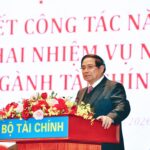
On the afternoon of January 6th, Prime Minister Pham Minh Chinh attended the 2025 financial sector year-end review conference in Hanoi. Organized by the Ministry of Finance, the event focused on summarizing achievements and outlining plans and directions for 2026.
Massive Offshore Oil Reserve Discovered in Vietnam: Over 430 Million Barrels Uncovered

This oil and gas field boasts an impressive daily production capacity of approximately 6,000 barrels of oil.
Mandatory Asset Declaration for Officials: Supplemental Reporting Required for Changes Exceeding 1 Billion VND from January 1st to 7th

The amended Law on Anti-Corruption, which revises and supplements several provisions of the existing legislation, will come into effect on July 1, 2026.
Vietnam’s GDP Growth Projected to Hit 8.02% in 2025

The latest data from the Statistics Bureau (Ministry of Finance) reveals that Vietnam’s GDP in 2025 experienced robust growth, with an estimated increase of 8.02% compared to the previous year. This growth rate stands as the second-highest within the 2011-2025 period, surpassed only by the growth recorded in 2022.