












High Growth, Yet Marked Disparity
In 2025, localities nationwide are navigating the “dual goal” of fostering socio-economic development while restructuring local administrative machinery. Despite these challenges, Vietnam’s economy demonstrated resilience, achieving an 8.02% GDP growth. This momentum has paved the way for sustained GRDP (Gross Regional Domestic Product) expansion across provinces.
According to Mr. Le Trung Hieu, Deputy Director of the Statistics Bureau at the Ministry of Finance, a notable shift toward sustainable restructuring in many regions stands out as a highlight of 2025. The primary growth drivers remain the manufacturing and processing sectors, fueled by production recovery and export-oriented expansion in industrial zones and economic clusters.
The construction sector has also thrived, bolstered by accelerated public investment disbursement and the rollout of transportation, urban infrastructure, and foundational projects. The service sector’s growth is attributed to domestic consumption stimulus policies and a surge in both international and domestic tourism. Foreign direct investment (FDI) has further catalyzed growth in numerous localities.
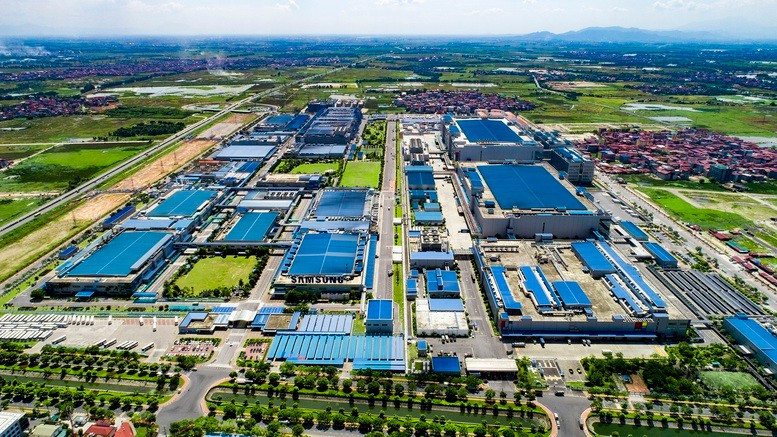
Breakthrough growth in leading localities is closely tied to the operation of large-scale industrial complexes and FDI projects.
However, GRDP growth reveals a stark regional disparity. Coastal areas and the Southeast region maintained high growth rates, while localities reliant on mining or raw agricultural exports faced setbacks due to global commodity price fluctuations, slowing their growth.
Six localities achieved growth rates exceeding 10%, with Quang Ninh and Hai Phong leading at 11.89% and 11.81%, respectively. Twenty-three out of 34 provinces and cities sustained stable growth between 7-10%, while seven grew below 7%. “Despite challenges, no locality experienced stagnant growth,” emphasized the Statistics Bureau’s leadership.
In 2025’s economic landscape, a group of localities stood out with remarkable GRDP growth. Quang Ninh, Hai Phong, Ninh Binh, Phu Tho, and Bac Ninh led the charge. Their breakthroughs are linked to the operation of large-scale industrial complexes and FDI projects.
Additionally, some smaller economies leveraged growth potential to achieve significant GRDP share increases through public investment disbursement breakthroughs and new sector development.
The “Locomotive” Group
Ho Chi Minh City, Hanoi, Hai Phong, Dong Nai, and Bac Ninh remain the economy’s pillars. These five largest economies contributed 55.4% to 2025’s GDP growth. Hanoi’s GRDP grew by 8.16%, and Ho Chi Minh City’s by 7.53%, collectively accounting for 36.1 percentage points of total growth.
The Statistics Bureau highlights that the service sector, particularly high-value-added industries like trade, finance, transportation, logistics, tourism, IT, and business support services, drives these economic powerhouses.
In Hanoi, the service sector expanded by 8.83%, contributing over 78.02% to total value-added growth. Similarly, in Ho Chi Minh City, services grew by 8.76%, contributing 65.98% to growth.
At the financial sector’s year-end review, Mr. Nguyen Xuan Luu, Vice Chairman of Hanoi People’s Committee, announced that 2025 marked the first time the capital’s budget revenue surpassed 700 trillion VND. GRDP growth not only exceeded targets but also significantly outpaced 2024’s 6.52%.
Hanoi also saw retail sales and service revenue reach 963 trillion VND, up 12.7%; average CPI rose 3.63%. The capital welcomed over 33.7 million tourists, generating 134.5 trillion VND in revenue, a 21.5% increase. Total import-export turnover hit 68 billion USD. In 2025, Hanoi initiated strategic infrastructure projects, including the Hong River scenic avenue, the Olympic Sports City, seven Hong River bridges, urban rail lines, and the Gia Binh airport connector.
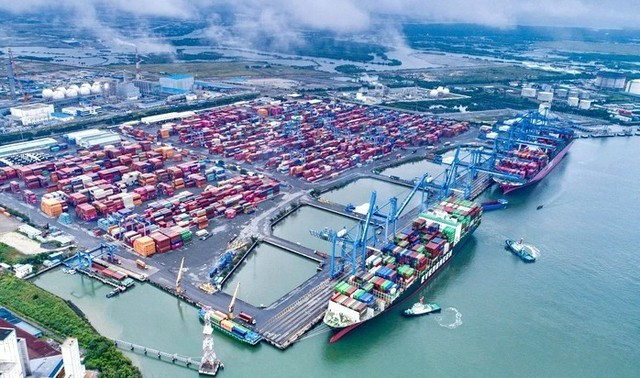
The free trade zone is expected to add 1.5-2% to Ho Chi Minh City’s GRDP.
Looking ahead to 2026, Ho Chi Minh City faces historic development opportunities amidst global and domestic economic uncertainties, noted Mr. Nguyen Cong Vinh, Vice Chairman of Ho Chi Minh City People’s Committee. To achieve double-digit growth, the city requires transformative solutions.
“The city aims to attract high-tech projects with a minimum investment of 100 million USD each. Once operational, the free trade zone is projected to contribute an additional 1.5-2% to GRDP by boosting import-export turnover,” Mr. Vinh stated.
Haiphong Achieves Double-Digit Growth for 11 Consecutive Years

In 2025, following its merger with Hai Duong, Hai Phong City achieved a remarkable GRDP growth rate of 11.81%, marking its 11th consecutive year of double-digit growth.
Unveiling Vietnam’s Top 5 Economic Powerhouses Driving Over 50% of GDP Growth in 2025
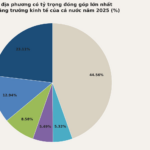
According to the General Statistics Office (Ministry of Finance), these five localities have contributed a staggering 55.4% to the nation’s overall growth.
Unveiling the Top 5 Fastest-Growing Localities in Vietnam for 2025
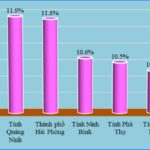
In 2025, local GRDP growth continued its robust recovery, with most regions surpassing a 7% increase. Quang Ninh and Hai Phong led the charge with remarkable growth exceeding 11%, while Hanoi and Ho Chi Minh City remained the backbone of the national economy.
Hanoi Intensifies Savings Efforts, Aims for Over 11% GRDP Growth by 2026

Hanoi aims to achieve an average per capita income of 198 million VND per person per year, while striving for a state budget revenue of approximately 546.930 trillion VND within the city.
From 8.02% Growth to Double-Digit Ambitions: What Does the Ministry of Finance Say About Vietnam’s Economic Resilience?

Following an 8.02% growth rate in 2025, the Ministry of Finance asserts that Vietnam’s economy has established a robust macroeconomic foundation, paving the way for a targeted double-digit growth trajectory beginning in 2026.