














At the Vietnam Real Estate Market Forum 2026 (VREF 2026) held on the morning of January 9th, Deputy Minister of Construction Nguyen Van Sinh stated that the real estate market in 2025 has shown significant positive changes. The supply of real estate has improved considerably, with nearly 1 million transactions recorded across the market.
Not only has the quantity increased, but the quality of projects has also been elevated, with more synchronized technical and social infrastructure. There’s also a growing trend of applying green technology and design to enhance living spaces and environmental friendliness.
However, property prices continue to rise, particularly in Hanoi and Ho Chi Minh City. The product structure remains imbalanced, with high-end properties dominating, while affordable and mid-range options are scarce. These are critical issues that require focused management to ensure a safe and healthy market development in the future.
Regarding regulations, several key laws such as the Land Law, Housing Law, Real Estate Business Law, Construction Law, and Planning Law have been amended to ensure consistency, reduce administrative procedures, and lower compliance costs for businesses.
Specifically, for social housing, there are currently 698 projects underway nationwide, totaling 657,000 units. Of these, 193 projects have been completed, providing 169,000 units to the market.
In 2026, the government aims to add approximately 160,000 social housing units, with prices expected to range from 20 to 25 million VND per square meter. Notably, the Prime Minister has set a new target to complete the 1 million-unit housing project by 2028, instead of 2030 as previously planned. With the current legal framework and incentives, Deputy Minister Nguyen Van Sinh is confident this goal is achievable.
Alongside increasing new supply, efforts to resolve stalled projects have been intensified. Currently, there are 2,991 stalled projects nationwide, equivalent to about 2.4 million billion VND. This is a massive untapped resource causing difficulties for businesses. The government’s task force has actively intervened, initially resolving 926 projects worth approximately 724,000 billion VND.
“The Government and the Ministry of Construction are committed to working alongside local authorities and businesses to overcome challenges, increase the supply of affordable housing, and strive for a safe, healthy, and sustainable real estate market,” shared Deputy Minister Nguyen Van Sinh.
 Vietnam Real Estate Market Forum 2026 (VREF 2026) held on the morning of January 9th. Photo: Screenshot
|
Luxury apartments demand a new approach
From a market perspective, Pham Lam, Vice Chairman of the Vietnam Real Estate Brokerage Association (VARS) and CEO of DKRA Vietnam, noted that new supply in the Southern region in 2025 reached nearly 30,000 units, a 2.5-fold increase compared to the same period last year. Market demand also rose, with transactions up approximately 2.6 times year-on-year.
However, legal and procedural bottlenecks continue to hinder supply growth, particularly in Ho Chi Minh City, where affordable housing and mid-range apartments remain limited, posing challenges for first-time homebuyers.
According to Mr. Lam, future supply growth is likely driven by developing transportation infrastructure in the South. Improved connectivity allows land expansion to areas 30-45km from city centers, enabling residents to accept greater distances while significantly reducing travel time.
In Ho Chi Minh City, the luxury segment remains underutilized, often viewed as high-value real estate rather than offering exceptional experiences. As Vietnam becomes increasingly attractive in Southeast Asia, luxury housing demands an approach focused on high-end living environments and services.
4 reasons luxury segments dominate
Explaining why high-end and luxury apartments dominate supply, Tran Van Binh, Vice Chairman and Secretary-General of VARS, cited four main reasons for the rise of luxury properties.
First, buyer demand has shifted upwards. In recent years, Vietnam’s affluent class has grown rapidly, increasing demand for higher living standards, services, and apartment quality.
Second, developers aim to create premium products to cater to this demographic. Many businesses target the luxury segment to align with consumer trends and market purchasing power.
Third, prolonged legal issues increase project costs. Longer processing times raise capital expenses, forcing developers to produce high-priced units to maintain profitability.
Fourth, rising input costs, including materials, labor, land clearance, and compensation, drive up project expenses, making luxury apartments more prevalent.
For sustainable market development, the key isn’t the number of luxury units but the growth of mid-range and affordable housing, which meets the real needs of most residents, especially middle- and low-income groups. When people can access and own suitable housing through coordinated efforts from regulators and developers, the market can operate healthily long-term.
Beware of the “luxury” label
According to economist Dr. Nguyen Minh Phong, the rise in luxury apartments stems from genuine buyer demand for higher living standards, space, and amenities. Additionally, modern technology and amenities in projects increase investment costs, raising prices.
However, Dr. Phong cautions that not all high-priced units are truly luxury. The term “luxury” is sometimes misused, equating high prices with superior quality. Objectively, many projects are average, especially given rising gold prices and input costs. The market tends to conflate high-end and luxury apartments based solely on price.
Dr. Phong believes buyers and brokers should clearly differentiate to avoid labeling high-cost units as “luxury” when quality, services, and living experiences don’t match expectations.
Long-term, Duong Quoc Thuy, Vice Chairman of VARS, notes that highways from North to South are nearing completion, providing more land for housing development. This is crucial for decentralizing populations from city centers and creating real estate development opportunities. It also prevents all projects from being labeled “high-end” based on location. With more land and supply, property prices can stabilize, fostering a balanced and sustainable market.
– 07:00 10/01/2026
Grand Opening of Vietnam International Financial Center in Da Nang
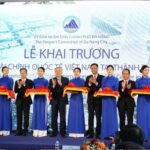
On the afternoon of January 9th, Deputy Prime Minister Nguyen Hoa Binh, standing member of the Government and Chairman of the Steering Committee for the Vietnam International Financial Center, attended and directed the inauguration ceremony of the Vietnam International Financial Center in Da Nang City.
Petrolimex: Pioneering Energy Conglomerate Strategies in the New Era

Petrolimex, the Vietnam National Petroleum Group, is poised for a transformative era, aspiring to evolve from a traditional petroleum conglomerate into a leading energy enterprise. With a bold vision, Petrolimex aims to spearhead the transition towards green, clean, and intelligent energy solutions, marking a significant shift in the industry.
Approved: 1.1 Trillion VND Social Housing Project Adjacent to Industrial Zone
The People’s Committee of Quang Ngai Province has officially approved the investment policy for a social housing project with a total capital of nearly VND 1.1 trillion. The project will be developed near the VSIP Industrial Park in Tho Phong Commune.
Unleashing Green Real Estate Excellence: Ngân Tín Group’s Breakthrough Projects

Amidst the relentless tide of integration and fierce competition, Ngân Tín Group has demonstrated unwavering resilience, securing its place once again in the prestigious Top 500 Largest Enterprises in Vietnam for 2025.
Vietnam’s Path to Development: Why 9-10% Growth Is Non-Negotiable, According to Dr. Trần Du Lịch
Dr. Trần Du Lịch shared insights on Vietnam’s ambitious goal of becoming a developed nation by 2045.