













On January 15th, Ho Chi Minh City is set to commence construction on four major infrastructure and transportation projects in celebration of the 14th National Congress of the Communist Party of Vietnam. These projects include the Rach Chiec National Sports Complex, Metro Line 2 (Ben Thanh – Tham Luong), Can Gio Bridge, and Phu My 2 Bridge.
Among these, the Rach Chiec National Sports Complex (located in An Khanh Ward) stands out with the largest investment, exceeding 145 trillion VND.
According to the plan, the project requires over 186 hectares of land, optimized for efficient land use, ensuring alignment with approved planning schemes and avoiding overlap with other local projects.
The complex is divided into multiple functional zones, centered around a cultural and sports hub. Key features include a stadium with a capacity of 65,000–75,000 seats, an arena seating approximately 18,000, and facilities such as an aquatic center, tennis courts, and multi-purpose sports halls. The stadium and arena are the largest structures within the project.
Notably, with a maximum capacity of 75,000 seats, the Rach Chiec Stadium surpasses many existing stadiums in Vietnam, including My Dinh Stadium (40,000 seats), Lach Tray Stadium (30,000 seats), and Viet Tri Stadium (20,000 seats).
In comparison, it is second only to the proposed Trom Dong Stadium in the Olympic Sports City, which is expected to seat 135,000.
Beyond the central sports area, the project includes urban public services such as athlete and coach accommodations, a central plaza, a sports hospital, and a conference center. Additionally, it allocates space for green areas, water features, public spaces, internal infrastructure, and specialized zones like the Bung Sau Xa Historical Site.
The total project duration is estimated at 8 years from the contract signing. The initial investment phase, lasting 1 year, focuses on feasibility studies, project approval, and contract finalization. The construction phase, spanning 7 years, begins after land clearance and handover.
The Ho Chi Minh City People’s Committee noted that timelines may be adjusted based on land handover progress. If earlier stages are expedited, subsequent phases could start sooner to accelerate the project.
With a preliminary investment of over 145 trillion VND, the project covers construction costs, interest, and investor profits. The Ho Chi Minh City People’s Committee oversees implementation, while Sun Group’s Vung Tau Sun Company proposed the project.

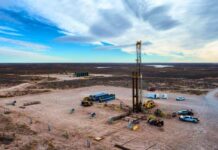
Construction site of the Rach Chiec Sports Complex (Photo: Vo Le/Nhan Dan Newspaper).
The project operates under a Public-Private Partnership (PPP) model with a Build-Transfer (BT) contract. The investor funds 100% of the construction and hands over the complex to the government for management. Ho Chi Minh City compensates the investor with land rather than budget funds.
Sun Group proposes using four land plots totaling over 360 hectares for payment. These include: a 23-hectare commercial plot within the Rach Chiec Complex (valued at 21.5 trillion VND), 195 hectares in Phuoc Kien Urban Area (46.55 trillion VND), 120 hectares in Truong Tho Urban Area (28.139 trillion VND), and 30.2 hectares in An Khanh Ward (39.864 trillion VND). The total land value is approximately 145.482 trillion VND, covering 99.89% of the projected investment.
The 23-hectare commercial plot along Mai Chi Tho Road is priced at 91.7 million VND/m² and is slated for premium commercial development.
The 195-hectare Phuoc Kien plot, near Tan Son Nhat Airport, includes 70 hectares of residential land valued at 66.5 million VND/m², totaling 46.55 trillion VND. This area is prioritized for modern urban development.
The Truong Tho plot, equivalent to 43.4 hectares of residential land, is valued at 64.8 million VND/m² along Nguyen Van Ba Road, totaling 28.139 trillion VND. Its infrastructure advantages make it ideal for real estate projects.
The 30.2-hectare An Khanh plot, valued at 132 million VND/m² along Mai Chi Tho Road, totals 39.864 trillion VND. However, legal issues flagged by the Government Inspectorate must be resolved before land handover.
Urgent Development: Cat Lai and Long Hung Bridges; CC1 CEO Announces 100 Million Shares Issued at VND 11,100 per Share
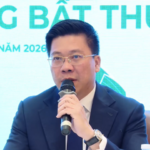
At an extraordinary shareholders’ meeting on the morning of January 9th, the leadership of Construction Corporation No. 1 (UPCoM: CC1) focused on plans to develop two bridges connecting Ho Chi Minh City with Dong Nai Province. Additionally, they outlined a private placement proposal to issue 100 million shares at a price of 11,100 VND per share.
Ho Chi Minh City’s Banking Sector: Prioritizing Credit for Emerging Growth Drivers and Realizing the Vision of an International Financial Hub
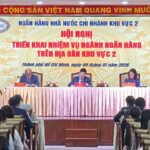
On the morning of January 9, 2026, during the Banking Sector Task Deployment Conference for Zone 2, leaders from the State Bank of Vietnam (SBV) and the People’s Committee of Ho Chi Minh City outlined the strategic vision for the year. The focus will be on channeling credit capital into emerging growth drivers and key infrastructure projects, while accelerating the transition from proposal to execution in establishing the International Financial Center.
Ho Chi Minh City and Surrounding Areas: Land Plots Remain Stable, Apartment Market Surges Ahead
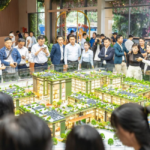
After a prolonged period of stagnation, the real estate market in Ho Chi Minh City and its surrounding areas witnessed a significant improvement in supply during 2025. While land plots remained relatively quiet due to limited availability and investor caution, the apartment segment experienced a remarkable surge in both supply and price levels.
Land Price Adjustment Coefficient Application: Balancing Interest Calculations

Crafting the land price adjustment coefficient is a complex task that demands precision and expertise. This intricate process involves meticulous analysis and strategic calibration to ensure accurate and fair land valuation, reflecting the dynamic nuances of the real estate market.
Ho Chi Minh City: Addressing 108 Cases of River and Canal Encroachments
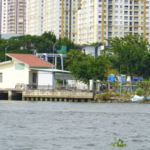
Across the city, 108 construction projects have encroached upon and violated the protective corridors of rivers, canals, and streams through unauthorized building and land reclamation activities.