
















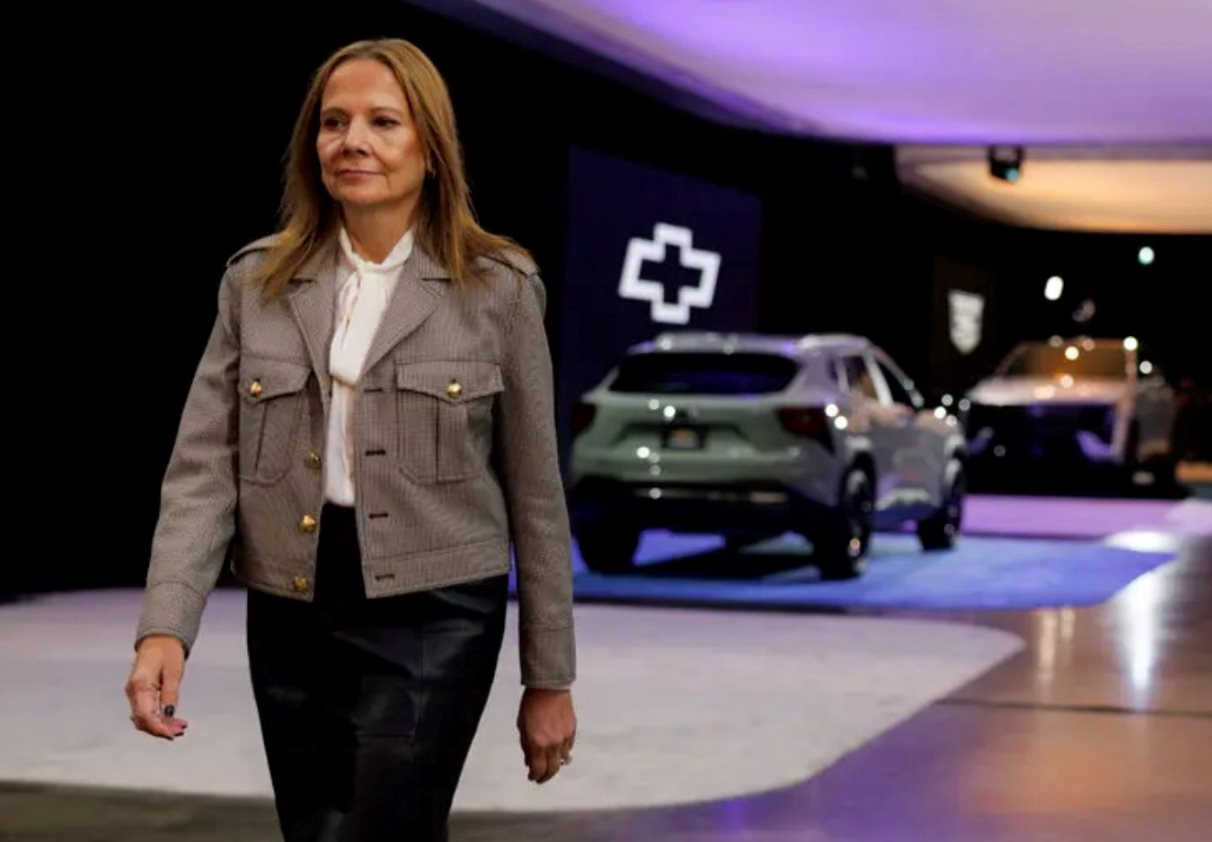
General Motors (GM) has joined the growing list of automakers reporting significant losses in their electric vehicle (EV) investments. The downturn stems from a sharp decline in sales, exacerbated by federal policies favoring fossil fuels under President Donald Trump’s second term.
The American automotive giant announced a staggering $7.1 billion loss in the final quarter of 2025, primarily attributed to diminished valuations of its EV battery plants and assembly lines. Of this total, approximately $1.1 billion represents restructuring costs unrelated to EVs, specifically tied to GM’s operations in China.
Policies enacted since Trump’s re-election have compelled automakers to undertake costly adjustments. GM noted, “With the rollback of consumer tax incentives and relaxed emissions standards, EV demand across North America began to slow in 2025.”
Reuters reports GM’s EV sales plummeted by nearly 43% in Q4 2025, a stark contrast to its ambitious target of selling 1 million EVs annually by 2025. The company sold only 169,887 units last year, a fraction of its initial goal.
In October, GM disclosed a $1.6 billion loss in Q3 tied to its EV division. The company has since scaled back EV production, pivoting toward more profitable SUVs and trucks. Its Orion, Michigan plant is transitioning from EV production to internal combustion engine vehicles.
GM offers one of the most diverse EV lineups outside China, ranging from luxury models like the Cadillac Escalade IQ to affordable options such as the Chevrolet Equinox EV. However, achieving profitability requires significantly higher production volumes to leverage economies of scale.
Industry executives and analysts predict EV sales will rebound this year as more sub-$30,000 models enter the market, including GM’s revived Chevrolet Bolt. There’s widespread consensus that U.S. automakers must continue investing in EVs to compete with Chinese manufacturers like BYD, which dominate markets in Asia, Europe, and Latin America. While tariffs currently block Chinese EVs from the U.S., industry leaders doubt this barrier will hold indefinitely.
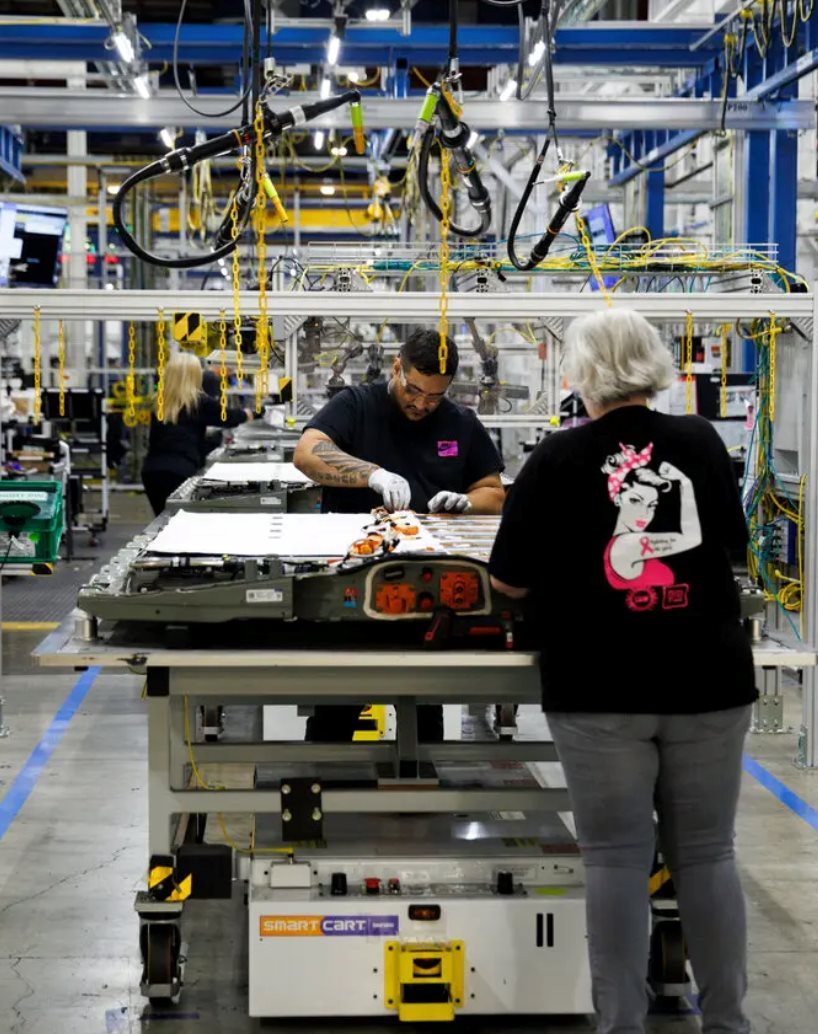
GM assured, “Our EV production restructuring does not impact our current retail lineup of Chevrolet, GMC, and Cadillac EVs. We remain committed to delivering these models to consumers.”
GM isn’t alone in its EV struggles. Ford Motor reported a $19.5 billion loss tied to canceled or scaled-back EV programs, shifting focus to hybrids and gasoline vehicles amid weaker-than-expected demand. Across the industry, from Europe to the U.S., automakers are reporting slower-than-anticipated EV sales, with many seeing sharp Q4 declines.
These challenges underscore a broader reality: despite EVs being the future of automotive, the path to global dominance is fraught with obstacles. High investment costs in batteries, new production lines, charging infrastructure, coupled with shifting policies and consumer demand, are forcing automakers to recalibrate their strategies.
The narrative highlights a global EV strategy in flux, where companies must balance financial sustainability, market demand, and long-term growth rather than solely chasing EV sales targets. Amid this transition, automakers are navigating a high-stakes period, juggling massive EV investments while relying on traditional vehicles to sustain profitability.
Sources: Reuters, The NY Times
The Volkswagen Crisis: A Town’s Lifeline at Stake, 60,000 Residents Fear for their Livelihood as Minister Steps In

“Wolfsburg wouldn’t exist without Volkswagen,” as a Volkswagen employee once stated.