










Streamlining Internal Organizations: A Continued Effort
The Ministry of Home Affairs has released a report on administrative reform efforts, highlighting key directions and tasks for 2026.
The Ministry emphasizes that 2026 will see continued efforts to review and streamline internal organizations within ministries, central agencies, local departments, and public service units and state-owned enterprises.
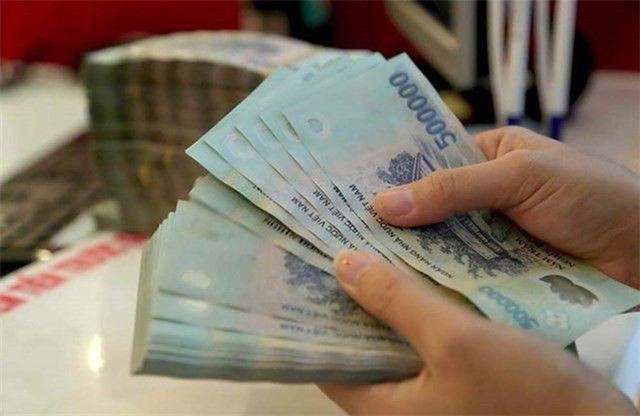
The Ministry of Home Affairs will propose salary and allowance adjustments for civil servants and military personnel.
Additionally, the year will see the continued implementation of Conclusion No. 192 by the Politburo and the Secretariat, focusing on the enforcement of laws related to decentralization, delegation, and the delineation of authority in the operation of two-tier local governments.
The Ministry of Home Affairs also announced plans to reorganize public service units, schools, healthcare facilities, and state-owned enterprises, as well as streamline internal organizations within agencies, units, and political system organizations.
This will be carried out in accordance with Directive No. 59 of the Central Steering Committee on the summarization of Resolution No. 18 and Plan No. 130 regarding the reorganization of public service units, state-owned enterprises, and internal organizations within the state administrative system.
The Ministry will advise the Government to issue documents amending and supplementing regulations on organizational structure, staffing, planning, training, and development of officials in line with the Politburo’s new regulations, providing a unified basis for local implementation.
Deploying Civil Servants According to Job Positions
The Ministry of Home Affairs urges localities to urgently fill vacant civil servant positions, ensuring both quantity and quality, while also learning from experience and proposing solutions to enhance the effectiveness of personnel work, ensuring the smooth and efficient operation of the two-tier local government apparatus.
A notable point emphasized by the Ministry is the continued implementation of the policy on staff reduction, restructuring, and improving the quality of the civil servant, public employee, and official workforce.
The Ministry affirms its commitment to strictly implementing the Politburo’s regulations and conclusions on staffing management for the 2022-2026 period, reporting to competent authorities on the results of staffing management during this period, and proposing staffing plans for the 2026-2031 period for ministries, sectors, and localities.
The Ministry will continue to monitor and inspect the review, arrangement, and deployment of civil servants, public employees, and officials to ensure they are assigned to the correct job positions, meeting task requirements.
Furthermore, the Ministry of Home Affairs will propose salary and allowance adjustments for civil servants, public employees, and military personnel following the reorganization of the apparatus and the two-tier local government structure.
The Ministry of Home Affairs requests that relevant ministries, sectors, and localities urgently complete provincial, communal, and special zone planning; take the lead in coordinating with localities to allocate funds, complete headquarters, equipment, and working facilities, and handle surplus headquarters to ensure stable and efficient operational conditions.
Continue to review, arrange, tightly manage, and effectively use public assets, proposing to the Government a handling plan and progress for surplus physical facilities and public assets to prevent loss and waste, ensuring that resources are used for the right purposes and efficiently.
Five New Institutional Pillars Shaping Vietnam’s Economic Landscape Ahead of the 14th National Congress
Five new institutional pillars are gradually reshaping Vietnam’s economic landscape in the lead-up to the 14th National Party Congress. These changes go beyond political slogans, manifesting in concrete resolutions, legal reforms, and tangible shifts in the operational mechanisms of the state apparatus.
Prime Minister Mandates Completion of Administrative Procedure Reductions by December 31, 2025
Prime Minister’s Directive 242 mandates that all ministries, sectors, and localities achieve a minimum 30% reduction in business conditions and ensure 100% of enterprise procedures are conducted online by the end of 2025. This initiative aims to deliver substantive reforms, prioritizing genuine change over mere formalities.
“Economic Boom: 28 Out of 34 Provinces and Cities Achieve 8% GRDP Growth or Higher”
Alongside maintaining economic stability and fostering growth, the Prime Minister has called for focused efforts to address the aftermath of storms and floods, ensuring social welfare and security.
Deputy Prime Minister Pham Thi Thanh Tra Urges Thorough Review of Civil Servant Evaluation Methods
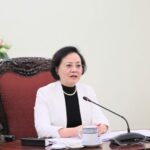
Working closely with the Ministry of Home Affairs on the afternoon of December 4th, Deputy Prime Minister Phạm Thị Thanh Trà emphasized that this is the final stretch, requiring the Ministry to work tirelessly by the hour and day to accelerate the completion of critical decrees in December. Among these priorities is the meticulous review of methods for evaluating officials and civil servants.
Accelerating the Implementation of Key Projects in Phú Thọ Province

The Government Office has issued Announcement No. 636/TB-VPCP dated November 24, 2025, outlining Deputy Prime Minister Bùi Thanh Sơn’s conclusions from his working session with the leadership of Phú Thọ Province.