















The Ministry of Agriculture and Environment has recently issued a consolidated document of decrees guiding the implementation of the Land Law. This document clearly outlines the functions and duties of the Land Registration Office and its branches.
Accordingly, these offices are organizations responsible for land registration, operating under the provincial land management agencies as public service units.
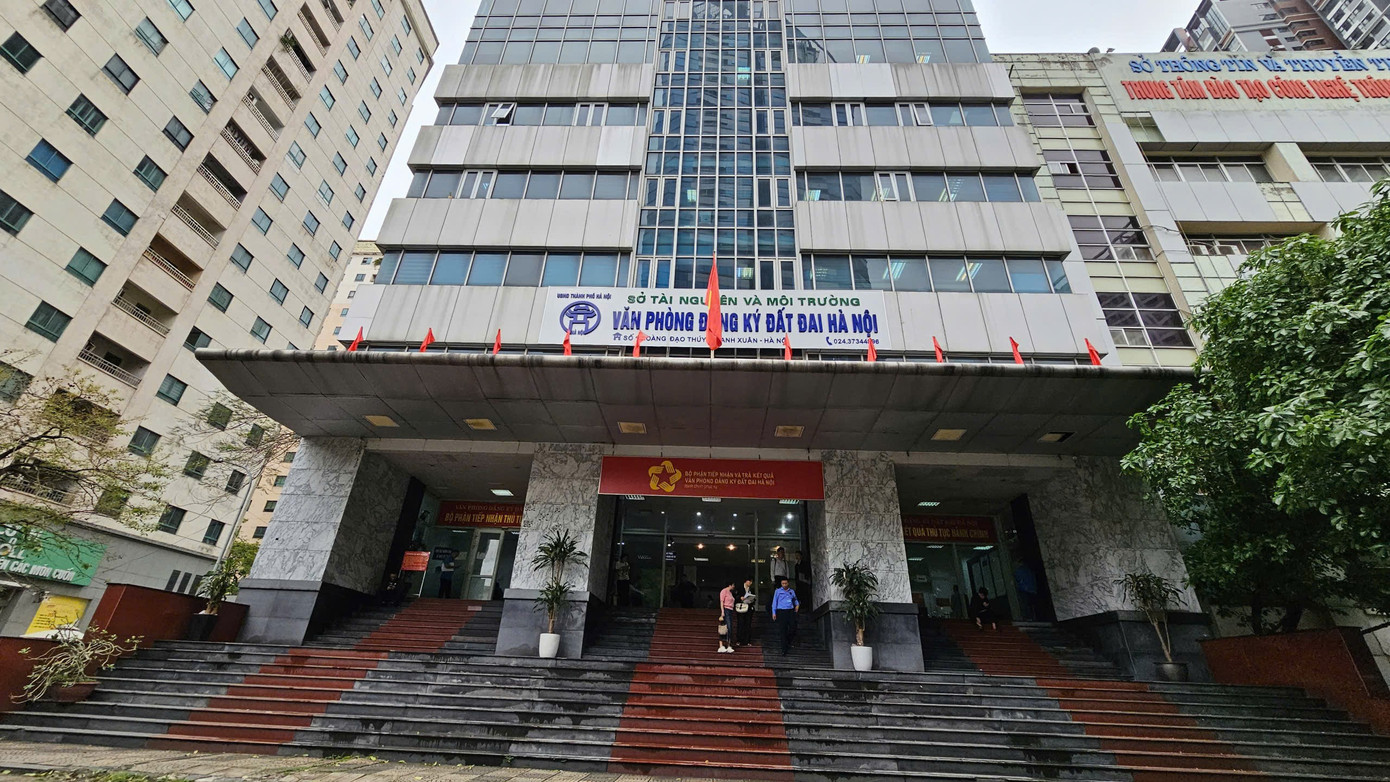
The structure of the Land Registration Office and its branches remains unchanged. Photo: Phan Thiên.
The Land Registration Office is tasked with several key responsibilities, including organizing land registration, issuing land use right certificates and property ownership certificates, conducting land measurements, updating cadastral maps, and managing the land information system. Additionally, it provides public land-related services across the province.
In terms of organizational structure, the Land Registration Office comprises specialized departments and a network of affiliated branches.
Thus, the current model of the Land Registration Office and its branches remains intact, rather than being transferred to commune-level People’s Committees.
Both the Land Registration Office and its branches possess legal entity status, have their own seals, and are authorized to open bank accounts. They operate in accordance with regulations for public service units and are financially managed as per provincial government decisions.
Their operations cover the entire process of handling land and property files, from registering state-managed land and land use rights to processing post-certification changes such as buying, selling, and transferring properties.
Furthermore, these units perform specialized technical tasks, including land measurements, cadastral map updates, issuing, correcting, and revoking certificates, canceling registration changes, verifying cadastral extracts, confirming property diagrams provided by individuals or organizations, and registering security measures as per legal requirements.
Previously, there was debate over whether to transfer over 700 Land Registration Office branches to commune-level authorities.
The Ho Chi Minh City Institute of Natural Resources and Environment Economics submitted a proposal to the Standing Committee of the Secretariat, the Prime Minister, and the Ministry of Agriculture and Environment, advocating for the retention of the current Land Registration Office branch model.
According to the proposal, local authorities at two levels are facing challenges due to staff unfamiliarity with new policies. While the new model is stable, it requires time for approval in accordance with related laws.
Notably, the 2024 Land Law mandates the digitization of land data, and local governments have begun compiling databases within a 90-day timeframe, as coordinated between the Ministry of Public Security and the Ministry of Agriculture and Environment.
Eliminating Land Registration Office branches by October 15, 2025, to enable commune-level authorities to handle land procedures through a one-stop-shop approach would present significant obstacles…
Clarifying the K Coefficient: HoREA’s Urgent Plea to Prevent Housing Price Hikes

The Ho Chi Minh City Real Estate Association (HoREA) has proposed clarifications on the land price adjustment coefficient (K factor) in the draft decree guiding Resolution 254. Their aim is to prevent potential spikes in housing prices by ensuring transparency and accuracy in land valuation.
Retain the Land Registry Office Model

The land registration office model and its branches remain intact, operating as public service units at the provincial and regional levels, rather than being decentralized to the commune-level People’s Committees.
Shaping the 2025 Real Estate Market: Key Policies to Watch

Over the past year, the real estate market has witnessed a series of pivotal policy developments, spanning credit, land management, and frameworks for both social and commercial housing. These initiatives underscore the government’s concerted efforts to unlock supply bottlenecks and invigorate market momentum.
Exciting News for 100 Projects in Ho Chi Minh City

Residents are increasingly hopeful of receiving their land-use rights certificates as the proposed expansion of the land-use fee calculation method gains traction, with project developers expected to fulfill their financial obligations promptly.
Ultimate Guide to Changing Land Use Rights Certificate Registered Under Family Name
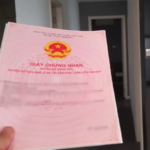
Under the new provisions of the 2024 Land Law, the process of exchanging Land Use Right Certificates for family households has been streamlined. Now, family members can mutually agree on the exchange without requiring confirmation from any authorized agency.