












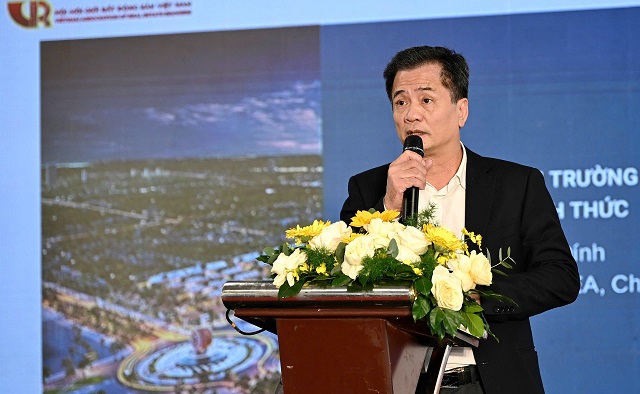
Dr. Nguyen Van Dinh, Vice Chairman of the Vietnam Real Estate Association, shares insights at the forum.
|
According to Dr. Nguyen Van Dinh, Vice Chairman of the Vietnam Real Estate Association, the merger of 34 provinces and cities has marked a significant turning point for Vietnam’s real estate market. This transformation impacts market structure, investment capital flows, and investor behavior.
“Real estate is entering a new development cycle, presenting both expansion opportunities and challenges,” said Dr. Dinh.
The 2025 real estate market overview reveals several positive indicators. Supply has surged to its highest level since 2020, as numerous projects have resolved legal issues and re-entered the market. Transactions have rebounded significantly, nearing pre-2020 stability levels. Property prices, which spiked early in the year, stabilized mid-year due to effective government regulation.
The consolidation of 34 provinces and cities has created large-scale real estate markets in Ho Chi Minh City, Hai Phong, Da Nang, and Lam Dong, among others. This shift has disrupted short-term speculative waves, curbed skyrocketing prices, and fostered more stable, long-term development.
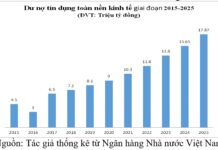
Notably, public investment continues to surge, driving real estate demand. Credit capital reached a record high of over 4 million billion VND, with approximately 1.8 million billion VND allocated to real estate. The second half of 2025 accounted for 63% of the year’s total transactions, signaling a significant improvement in market confidence.
A standout highlight is the social housing segment. In 2025, social housing supply grew robustly, achieving 102% of the development plan. This segment plays a crucial role in balancing supply and demand and stabilizing the market.
Dr. Nguyen Van Dinh attributes these achievements to extensive institutional reforms. Numerous decrees, resolutions, and directives related to land, planning, social housing, and decentralization were issued in 2025.
Significantly, the Prime Minister’s direct leadership of the Central Steering Committee for the Real Estate Market and Housing Policy underscores a strong commitment to consistent and decisive governance. As a result, thousands of projects have resolved bottlenecks, supply has been revitalized, capital flows remain stable, and property prices are on a more sustainable trajectory.
Additionally, socio-economic drivers continue to support the real estate market. Tourism has rebounded strongly, with 21.5 million international and 135.5 million domestic visitors. Infrastructure development has accelerated, with Vietnam boasting approximately 3,188 km of highways by 2025. Two major construction waves in 2025 included nearly 500 projects, totaling around 5 million billion VND in investment, with 78% from private sources.
As 2026 begins, the real estate market faces numerous opportunities, driven by double-digit economic growth targets, sustained capital flows, flexible monetary policies, and the development of new urban models like compact cities and transit-oriented development (TOD).
However, challenges persist, including a supply focus on high-end segments, rising input costs, and heavy reliance on credit.
“The market no longer tolerates speculative investments. The upcoming phase demands greater professionalism, transparency, and strict adherence to market discipline within a data- and technology-driven ecosystem,” emphasized Dr. Nguyen Van Dinh.
Vietnam’s real estate market enters a phase of comprehensive restructuring
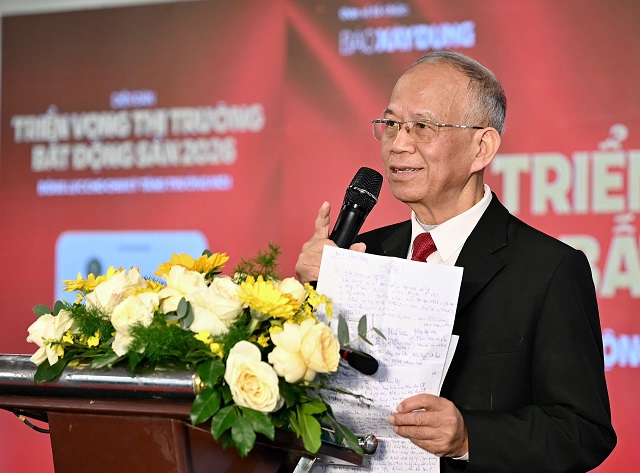 Dr. Nguyen Minh Phong, Economic Expert, presents his paper: “Mechanisms Unblocked, Resources Mobilized: Vietnam’s Real Estate Market Enters a Phase of Comprehensive Restructuring.”
|
At the forum, Dr. Nguyen Minh Phong, Economic Expert, observed: Vietnam’s real estate market, particularly in the southern region, is undergoing a comprehensive restructuring.
This restructuring is synchronized across all aspects, from market participants and product structure to pricing, support services, and state management mechanisms. It aims to align with practical requirements, local conditions, business needs, and consumer demands. The process is closely tied to enhancing quality of life, applying technology, and adopting new development standards.
Concurrently, institutional reforms are being implemented on an unprecedented scale. Over the past five years, the National Assembly has passed numerous laws and ordinances, and the Government has streamlined thousands of administrative procedures. In 2025 alone, hundreds of decrees, resolutions, and legal documents were issued.
Several special mechanisms have been introduced, including provisions allowing project implementation with majority owner consent, helping resolve long-stalled projects. This presents both opportunities and challenges, requiring businesses to adapt.
Market restructuring trends are evident in three key areas: developers, product structure, and institutions. Real estate products are increasingly tailored to actual needs, emphasizing quality, amenities, functionality, and smart features.
Models like renewable energy-powered homes, smart homes, and carbon credit-linked properties are gaining traction. Social housing is also evolving to be more “livable,” focusing not only on quantity but also on quality, amenities, and human-centric design.
The market is shifting from small-scale projects to large-scale megaprojects and modern urban complexes with integrated infrastructure, public transportation, and contemporary living spaces. These projects demand developers with strong financial capabilities, management skills, social responsibility, and long-term vision.
This transformation is also driving a rigorous selection process, eliminating subpar and non-transparent projects, thereby elevating overall market quality.
In his message, Dr. Phong emphasized: Effective implementation of key resolutions, particularly those from the Politburo, could propel Vietnam’s real estate market beyond recovery to breakthrough growth. This would significantly contribute to shaping the nation’s new development landscape in the modern era, characterized by sustainability and efficiency.
– 09:30 09/01/2026
The 2026 Real Estate Market: No Room for Short-Term Investors

In the upcoming phase, market entities must embrace heightened professionalism, transparency, and strict adherence to discipline as the real estate market transitions to data-driven and digital technology governance, according to Dr. Nguyễn Văn Đính.
2026 Investment Outlook: Real Estate Enters a New Cycle, Market Moves Beyond “Overheating”

In 2026, the real estate market is projected to enter a phase of steady, selective growth. This is not a speculative boom but a period where capital flows return with a focus on caution, capital safety, operational efficiency, and long-term sustainability.
Why More Banks Are Raising Interest Rates on Social Housing Loans
Unlock exclusive savings with Agribank’s unbeatable 5.6%/year interest rate for the first 5 years of your loan. Meanwhile, top banks like Vietcombank, BIDV, and Vietinbank have halted their special 5.2-5.5% fixed-rate offers for borrowers under 35, making Agribank’s deal even more irresistible. Act now to secure your financial future!
Hanoi Announces 39 Social Housing Projects for 2026-2030 with Total Investment of Nearly VND 71.5 Trillion
Hanoi has officially released the list of 39 social housing projects slated for investment in Phase 1, spanning from now until 2030. These projects collectively cover a total area of 115 hectares, with an estimated preliminary capital of nearly 71.5 trillion VND.
Surge of 120,000 Affordable Homes: Hanoi Braces for a Wave of Low-Cost Housing

Hanoi has unveiled its plan to select investors for the development of approximately 120,000 social housing units across the city during the 2026-2030 period.