









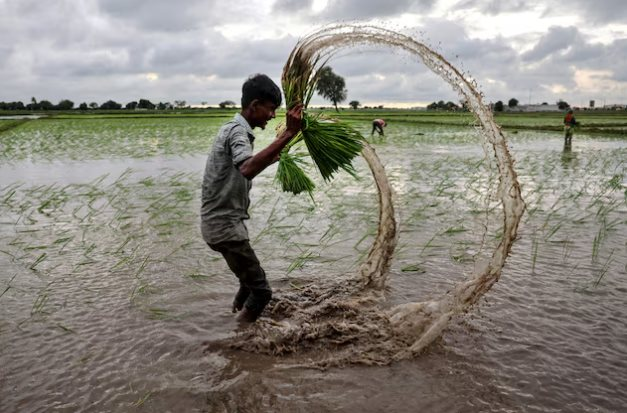
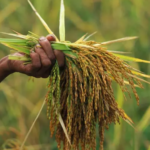
Illustrative Image
Indonesia’s achievement of self-sufficiency in rice, a staple food, is significantly impacting the global rice market. According to Indonesian Agriculture Minister Andi Amran Sulaiman, the country’s drastic reduction in rice imports has contributed to a 44% decline in global rice prices.
Speaking at a major event celebrating the harvest season and food self-sufficiency in Karawang, West Java, Minister Sulaiman highlighted that global rice prices have plummeted from approximately $650 per ton to $340 per ton. “This represents a 44% decrease, clearly indicating an oversupply in the international market,” he emphasized.
The primary driver of this trend, as explained by Minister Sulaiman, is Indonesia’s shift from being one of the world’s largest rice importers to halting imports altogether, thanks to a surge in domestic production. With Indonesia’s demand absent, rice exports from key suppliers such as Vietnam, Thailand, India, and Pakistan are not being absorbed as before, leading to excess inventory and global oversupply.
Minister Sulaiman credited President Prabowo Subianto’s robust food security policies, which focus on farmer support and productivity enhancement, for this transformation. These measures have significantly boosted domestic rice output, ensuring Indonesia’s food security while indirectly stabilizing global rice prices.
Data from Indonesia’s Ministry of Agriculture reveals that national rice reserves at the start of 2026 reached approximately 3.25 million tons. This marks the highest opening reserve in Indonesia’s history, surpassing the previous benchmark of 3 million tons, a level rarely achieved at the beginning of the year. Notably, all of this reserve, known as CBP (Government Rice Reserve), is domestically produced, with no contributions from imports.
“Currently, Indonesia is not importing rice, which means there is an oversupply in Vietnam, Thailand, India, Pakistan, and other exporting countries. Indonesian farmers are indirectly contributing to the global market,” stated Minister Sulaiman.
Global rice price fluctuations are monitored through the FAO’s Global Rice Price Index (FARPI), a monthly indicator reflecting average prices of various rice types from major exporting nations. FARPI data shows that the lowest point in the past five years was recorded in November 2025, when the index dropped to 96.9 points. The previous record low was 97.9 points in August 2021.
Significantly, both periods when FARPI hit its lowest—2021 and 2025—coincided with Indonesia’s absence from the rice import market to replenish its national reserves. According to Minister Sulaiman, this underscores Indonesia’s growing role in shaping global rice supply, demand, and pricing dynamics.
Over the past 18 years, CBP’s year-end inventory, excluding imports, has never exceeded 3 million tons. In 2008, when Indonesia did not import rice, year-end stocks were approximately 1.1 million tons; in 2009, they reached 1.6 million tons. During 2019–2021, the figures were 2.2 million tons, 1.9 million tons, and 0.8 million tons, respectively.
Compared to these historical benchmarks, the current reserve levels demonstrate a significant shift in Indonesia’s rice production capacity and supply management, with far-reaching implications for the global agricultural commodity market.
Vietnam’s Largest Rice Importer Set to Resume Purchases
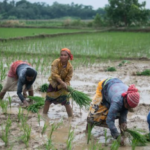
After a period of restricted rice imports, the Philippines is set to resume purchases under a new tariff scheme.
Philippines Unveils New Rice Import Policy Effective January 1, 2026: Vietnam and Thailand Take Note
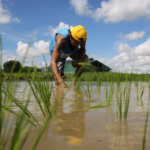
The recent announcement comes as the government prepares to resume imports following a temporary suspension.
Asia’s Rice Exporters Face Dilemma: World’s Third-Largest Importer Set to Surplus 4 Million Tons, Following Philippines in Halting Imports
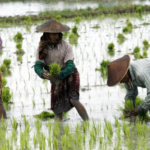
Emerging as a new force in the global rice market, this nation is not India or the Philippines, yet it’s reshaping the dynamics of international rice prices.
What Did the VFA Chairman Say About the Philippines’ Rice Import Halt Until 2025?
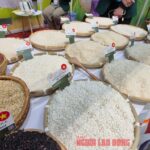
Philippines, the world’s largest rice importer and Vietnam’s top rice export market, has officially extended its rice import suspension until the end of 2025.
The World’s Largest Rice Importer to Halt Imports by April 2026: Where is Vietnamese Rice Pivoting Next?
While the Philippine market is expected to halt rice imports until early 2026, Vietnamese rice continues to receive positive news from other markets.