

















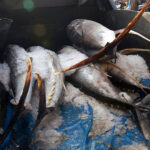
Illustrative Image
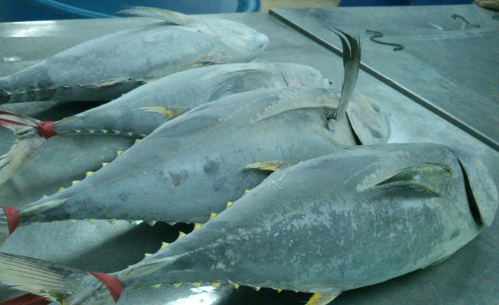
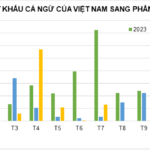
According to statistics from Vietnam Customs, Vietnam’s tuna exports to Canada in the first 11 months of 2025 reached nearly $38 million, a 10% increase compared to the same period in 2024. In 2025, Vietnam’s tuna exports to this market did not follow a steady growth trajectory but exhibited alternating patterns of increase and decrease month by month.
Among the exported tuna product groups, frozen tuna loin and canned tuna are Vietnam’s two main export items to Canada, accounting for 70% and 26% respectively. Exports of these two product groups in the first 11 months of 2025 showed strong growth compared to the same period, both increasing by 15%.
However, cumulative growth does not fully reflect market dynamics. Examining monthly market data, Vietnam’s tuna exports to Canada in 2025 remained stable, with periods of rapid increase followed by quick declines, and a decrease in the final months of the year.
In the Canadian market, Thailand, Italy, and Vietnam are the top three tuna suppliers. Canada’s tuna imports have been steadily increasing in recent years, presenting significant export opportunities. However, this competitive market requires Vietnamese businesses to directly compete with major suppliers.
Sustainable tuna products are no longer a niche market in Canada. The Marine Stewardship Council (MSC) reports that 99.5% of MSC-labeled tuna in Canada is sold canned. During 2023/24, Canadian seafood companies sold nearly 94 million MSC-certified tuna cans. The report also notes that 81 MSC-labeled canned tuna products are available in major retail systems, with more expected in 2025, indicating that sustainability standards are becoming mainstream.
According to the International Trade Centre (ITC), Canada imports tuna from over 43 countries, valued at approximately $214 million—a large enough market for intense supplier competition and buyer alternatives. In this context, Vietnam’s 15% export growth to Canada in 2025, despite monthly fluctuations, reflects market characteristics: importers and brands optimize inventory seasonally, allocate orders in batches, and are sensitive to price-quality differences among suppliers.
Moving into 2026, prospects in Canada will depend on Vietnamese businesses meeting two concurrent requirements: supply chain stability and market standards (especially sustainability, labeling, and compliance). In Canada, compliance is not just about border checks but also a condition for distribution channel entry. The Canadian Food Inspection Agency (CFIA) has specific labeling guidelines for fish and fish products, applicable to imports.
Vietnam’s ‘Superfood’ Sensation Captivates Russia: 0% Import Tax & Over 75 Markets Hooked

Since the beginning of the year, this product has generated nearly $800 million in revenue.
Vietnam’s ‘Superfood’ Sweeps Thailand, Outshining Durian: $700M Revenue, 100+ Markets Competing to Secure Orders
This Vietnamese product ranks among the top 5 globally in export value.
Vietnam’s ‘Golden Mine’ Sparks Global Rush: Surging Past $500 Million in 8 Months, Propelling Nation into World’s Top 5
Thailand is significantly ramping up its imports of this product from Vietnam, with a remarkable growth rate of 248%.
From a Finnish Launchpad: Vietnamese Exports Aim High and Head North
“Vietnam has emerged as the world’s fifth-largest exporter of this particular commodity in terms of revenue. With a steady growth in exports, the country has firmly established itself as a key player in the global market for this product.”
A Vietnamese Product Gaining Traction in Europe: Reaping Over Half a Billion USD, Our Country Ranks Among the Top 5 Global Leaders

Vietnam has raked in a whopping $542 million in revenue from exports of this particular commodity since the beginning of the year.