



















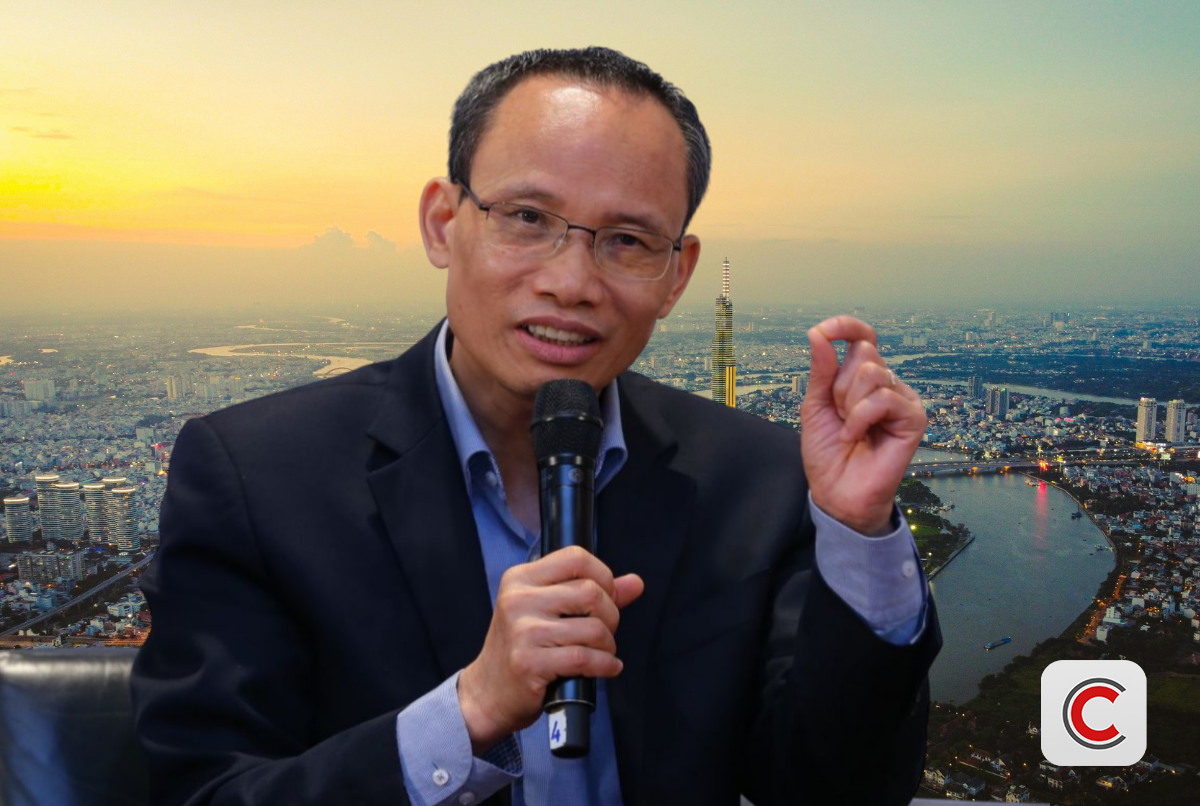
During the roundtable discussion at the Vietnam Real Estate Market Forum (VREF 2026), Dr. Can Van Luc, Chief Economist at BIDV, delivered candid warnings regarding cash flow, interest rates, and credit risks in the real estate market for 2026.
According to Dr. Luc, the most significant positive development in 2025 was the notable recovery of the construction and real estate sectors. Citing data from the General Statistics Office, he noted that the construction industry grew by 9.62%, surpassing the national average GDP growth rate of 8.02%. Meanwhile, the real estate business sector expanded by 4.63%, the highest in six years, contributing approximately 3.5% to GDP.
“These figures demonstrate that the real estate and construction markets have rebounded quite positively,” Dr. Luc emphasized. Additionally, 2025 saw the establishment of around 2,700 new real estate companies, a 27% increase compared to the previous year—a rare occurrence in recent years.
Addressing the outlook for real estate capital flows, Dr. Luc opined that capital continued to flow robustly into the market in 2025. Specifically, real estate credit grew by approximately 22%, outpacing the average credit growth of the entire banking system (18.5%). Within this, loans for real estate investment and business rose by about 24%, while loans for home purchases and renovations increased by 14–15%.
Beyond bank credit, other capital channels also recorded positive results. FDI in real estate reached roughly $6.3 billion, accounting for nearly 20% of total registered FDI in Vietnam, with disbursements nearing $2 billion. Corporate bonds issued by real estate firms totaled about VND 123.5 trillion, a 40% increase from 2024.
“Therefore, I believe that capital for the real estate market was not lacking last year. The issue lies in the regulation and allocation of capital,” Dr. Luc stated.
Dr. Luc highlighted a new interest rate landscape that businesses must heed. In 2025, while credit surged, capital mobilization only grew by about 14.5%, forcing banks to raise both input and output interest rates.
“Real estate is not a priority sector for the banking system, except for social housing and industrial zones. Real estate businesses will have to accept higher lending rates, a general trend in line with regulatory directives,” Dr. Luc explained.
Furthermore, Dr. Luc noted that real estate credit currently constitutes about 24% of the total outstanding debt in the economy—a relatively high level. Loans for real estate investment and business are growing faster than overall system credit.
Given these realities, Dr. Luc issued a direct warning to businesses: “Many real estate companies are currently over-extending themselves, with some undertaking 10–15 projects simultaneously. I ask, where is the funding coming from?”
He cautioned that while risks may not surface immediately in a favorable market, “if the market encounters issues, businesses will undoubtedly face problems,” especially with higher interest rates, tighter credit controls, and less accessible capital.
Dr. Luc also advised businesses to restructure their product portfolios, carefully considering the high-end segment while focusing on the mid-range, social housing, and affordable housing segments, which remain in short supply. Regarding property prices, he stressed the need for businesses to collaborate with the government and homebuyers to regulate prices in a reasonable and healthy manner.
“The government has three key tools to regulate the real estate market: supply, fiscal policy (taxes and fees), and monetary policy (credit and interest rates). The challenge is finding a balance—controlling risks without overly tightening the market and causing a downturn,” Dr. Luc concluded.
Nationwide Real Estate Gridlock: Nearly 3,000 Projects Stalled, Totaling $100 Billion in Value

The Deputy Minister of Construction revealed that 2,991 real estate projects nationwide, with a combined capital of approximately 2.4 quadrillion VND, are currently facing bottlenecks. These projects represent a significant potential supply that could be unlocked in the upcoming period if obstacles are resolved.
Real Estate Supply Doubles, Yet Prices Continue to Soar

In 2025, the market witnessed a remarkable surge with over 80,000 new condominium units, doubling the figures from 2024. Strikingly, nearly 25% of these new offerings, totaling more than 20,000 units, were priced above 100 million VND per square meter—a tenfold increase compared to the previous year.
Beware the “Luxury” Label: High-Priced Apartments Falling Short on Living Experience

According to Mr. Pham Lam, Vice Chairman of the Vietnam Association of Realtors (VARS) and CEO of DKRA Vietnam, the ultra-luxury real estate segment in Ho Chi Minh City remains underutilized. Many projects merely boast high price tags without delivering commensurate living experiences. As Vietnam emerges as a prominent destination in Southeast Asia, the demand for ultra-luxury residences necessitates a more sophisticated approach, integrating world-class amenities and environments that redefine opulent living.
Four Pillars Shaping the Real Estate Market in 2026

Legal frameworks, public investment infrastructure, interest rates, and the shift towards suburban areas are the four key factors poised to drive the real estate market in 2026, according to KBSV Securities.
TCBS Issues VND 500 Billion Bond with 30-Month Maturity

From December 31, 2025, to January 5, 2026, TCBS issued the TCX12505 bond with a total value of 500 billion VND and a 30-month maturity.