














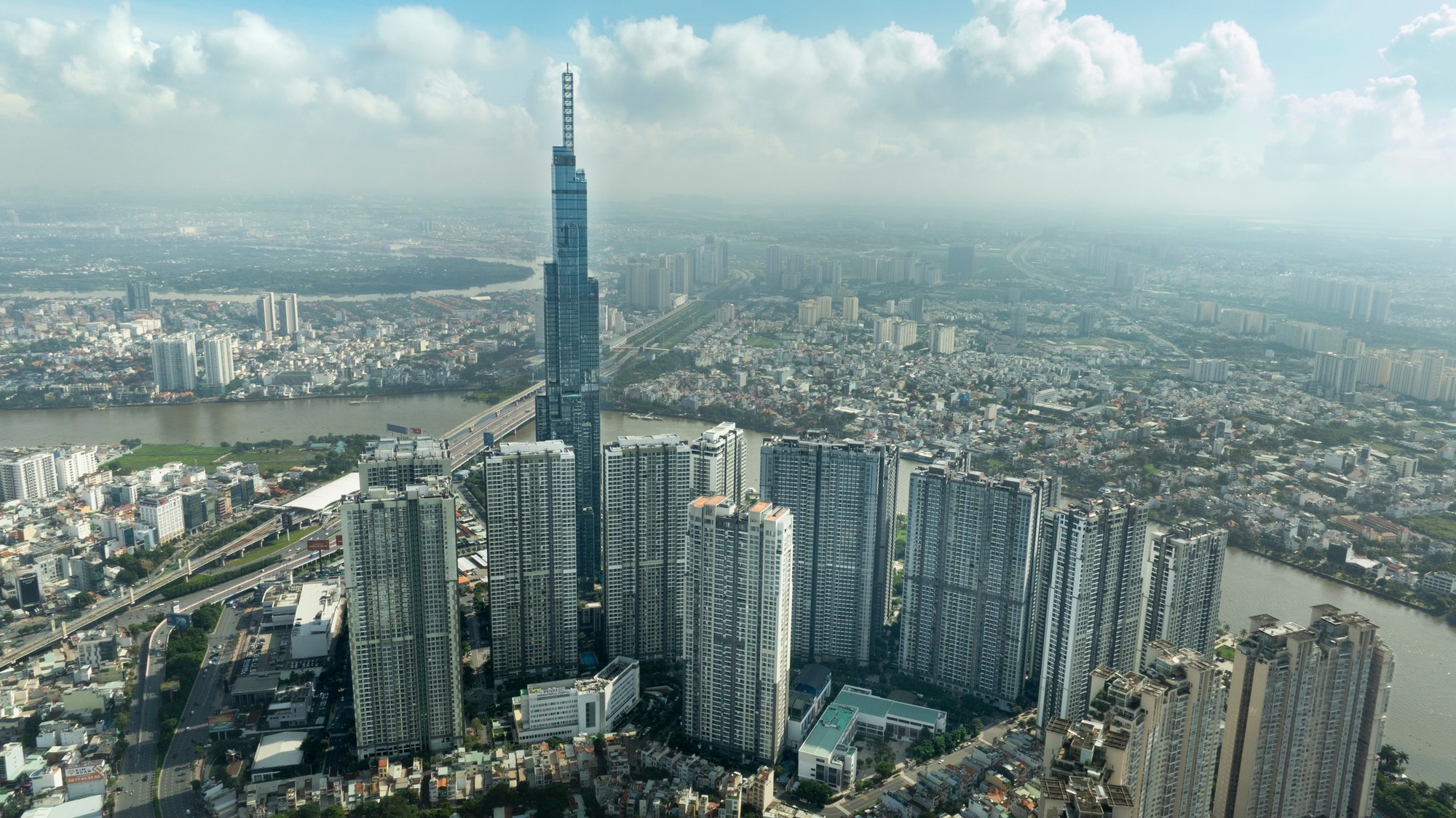
Experts predict positive shifts in the real estate market for 2025, with sustainable growth expected in 2026. Photo: Quốc Hoàng
At the “2026 Real Estate Market Outlook – Driving New Growth Cycles” forum held on January 8th at Saigon Marina International Financial Center (Ho Chi Minh City), experts highlighted that accelerated public investment has significantly boosted demand for infrastructure development and investment.
Additionally, the economy’s credit reached a record high of over 4 million trillion VND, with real estate loans accounting for approximately 1.8 million trillion VND, becoming a crucial pillar for the market. Investment capital has also notably shifted southward, towards areas with high urbanization and industrialization rates, acting as growth engines.
Assessing the 2025 market landscape, Mr. Nguyễn Văn Đính, Vice Chairman of the Vietnam Real Estate Association, noted that supply surged to its highest level since 2020, thanks to numerous projects overcoming legal hurdles and re-entering the market. Liquidity improved as transaction volumes approached pre-slowdown levels, while prices rose sharply at the beginning of the year, stabilized mid-year, and were better controlled under macroeconomic policy adjustments.
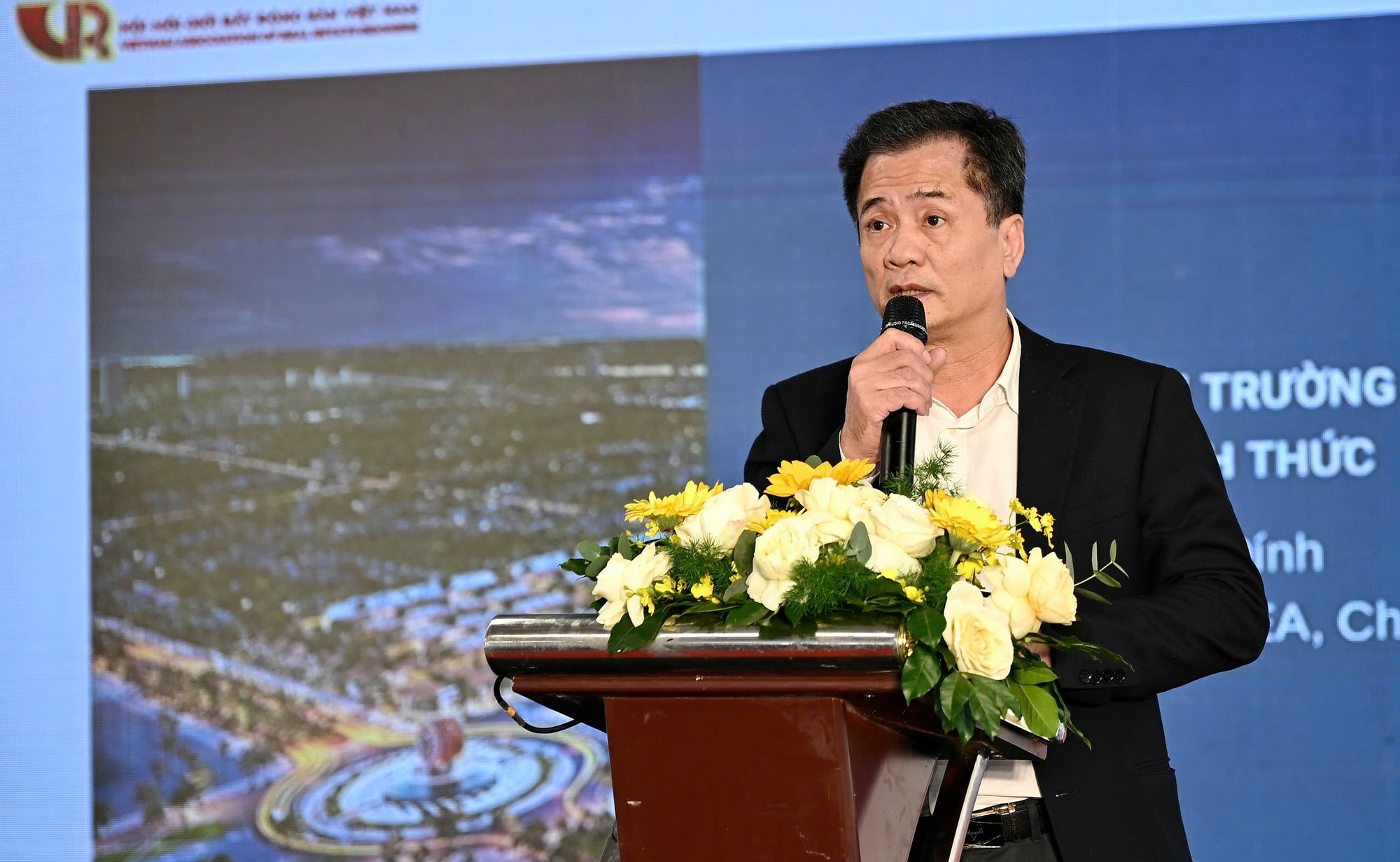
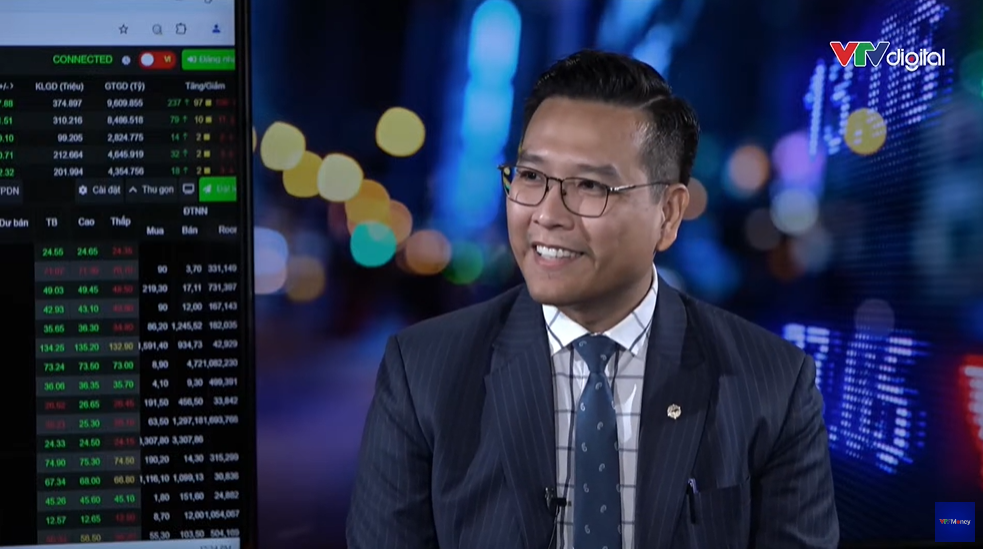
Mr. Nguyễn Văn Đính, Vice Chairman of the Vietnam Real Estate Association, speaks at the forum.
Notably, transactions in the last six months of 2025 accounted for 63% of the year’s total, reflecting a significant improvement in market sentiment. The social housing segment grew robustly, contributing to the 2025 development plan reaching approximately 102%.
According to Mr. Đính, the sharp increase in projects resolving legal issues has led to a strong influx of supply, gradually balancing the supply-demand relationship.
“Over the past period, numerous documents and institutions have been enacted, positively impacting all market activities. Thousands of projects have overcome difficulties, increasing supply and maintaining capital stability,” Mr. Đính commented.
Data from the Ministry of Construction shows that nationwide supply is recovering notably, with 1,114 commercial housing and urban area projects underway, offering approximately 529,000 units, along with 698 social housing projects totaling over 657,000 units, equivalent to about 62% of the 1 Million Social Housing Scheme target.
In 2025 alone, over 102,000 social housing units were completed, exceeding the set plan. The market also recorded approximately 580,000 successful real estate transactions, while 926 out of 2,991 stalled projects nationwide were resolved, helping to unlock investment resources and add new supply to the market.
Following the merger into 34 provinces and cities, the real estate market has formed large-scale “super markets,” notably in Ho Chi Minh City and high-impact localities such as Bac Ninh, Hai Phong, Da Nang, Ninh Binh, Lam Dong, and Phu Tho. Expanding development space reduces localized pressure, disrupts short-term speculative waves, curbs runaway price increases, and steers the market toward more sustainable operation.
Regarding 2026 prospects and opportunities, Mr. Đính believes that high economic growth targets will continue to strongly drive forces directly linked to real estate, such as industry, services, and infrastructure investment. The increasing number of completed real estate projects will enrich supply, offering more options for investors and consumers.
According to Mr. Đính, diversified economic growth provides investors with additional channels like industrial, tourism, commercial, office, and residential real estate. Flexible monetary policies and stable interest rates will continue supporting capital flow into the economy. New urban models such as compact cities and transit-oriented development (TOD) are prioritized, while digital market management and data transparency will reduce risks for investors and consumers.
Current positive signals indicate that the market has passed its volatile phase but also require developmental structure adjustments, especially in the southern region.
Dr. Nguyễn Minh Phong, an economic expert, notes: “Vietnam’s real estate market, particularly in the south, faces comprehensive restructuring demands.”
This synchronized restructuring process spans market entities, product structures, price levels, service systems, and state management, aiming to adapt to development realities, align with local and business specifics, meet consumer needs, enhance living quality, and apply new development standards.
Green housing models, such as those using renewable energy, smart homes, and carbon credit-linked real estate, are becoming more prevalent. Social housing is shifting from quantity-focused to quality and amenity-focused development, centered around human needs.
Simultaneously, the market is moving from small-scale projects to large-scale mega-projects and super urban areas, developed in tandem with infrastructure, public transport, and modern living spaces. These projects require investors with strong financial capacity, governance, social responsibility, and long-term vision.
This process also involves rigorous investor screening, eliminating low-quality, non-transparent projects, thereby enhancing overall market quality.
“If key resolutions, especially those from the Politburo, are effectively implemented, Vietnam’s real estate market will not only recover but also surge, positively contributing to shaping the nation’s new development landscape in the new era, toward modernity, sustainability, and greater efficiency,” Mr. Phong emphasized.
From a management perspective, Mr. Trần Sĩ Nam, Deputy Director of Ho Chi Minh City’s Department of Construction, stated that the city is shifting from a “management” mindset to “accompaniment and creation” to revitalize the real estate market.
Specifically, the Department of Construction has advised applying Resolution 201/2025/QH15, creating an “administrative green channel” by reducing investor selection time from approximately 200 days to 52 days, while eliminating 1/500 planning task reviews and feasibility report reviews at specialized agencies.
The city has also implemented special resolutions to unblock stalled projects, committing to protect investors’ legal rights, not only resolving legal hurdles but also addressing cash flow bottlenecks.
Thanks to these measures, Ho Chi Minh City’s real estate market in 2025 saw positive changes, with 18,143 social housing units completed during 2021–2025, including 13,040 units in 2025 alone.
In 2026, the city plans to launch over 17,000 new social housing units and complete investment procedures for 47 projects (approximately 34,000 units) approved for commencement in Q1/2026.
Highlands Coffee Confirms Use of Canned Products from Hạ Long
Amid growing concerns over the discovery of more than 120 tons of African swine fever-infected pork at the warehouse of Ha Long Canned Food Joint Stock Company, Highlands Coffee has announced the immediate cessation of using all ingredients sourced from this supplier.
How Does Ha Long Canned Food Company Operate, and Who Is Managing It?
Founded in 1957, Ha Long Canned Food Joint Stock Company stands as one of Vietnam’s oldest and most esteemed canned food producers, renowned for its signature pâté, canned meat, and canned fish products.
Prime Minister Urges Accelerated Disbursement of Nearly $43 Billion in Public Investment Capital Starting Early 2026

On the afternoon of January 9th, Prime Minister Pham Minh Chinh chaired the National Conference to Promote Public Investment for 2025 and 2026, connecting online from the Government Office to various localities across the country.
Da Nang Pledges Optimal Support for Business and Investor Growth

At the annual business and investor meeting held in the city on the afternoon of January 8th, Chairman of the Da Nang People’s Committee, Pham Duc An, emphasized that the city will vigorously enhance its investment and business environment. The city remains committed to standing alongside businesses and investors, ensuring the most favorable conditions for them to confidently expand production, operations, and scale, while elevating their competitive capabilities.
Over 70 Million Motorcycles to Undergo New Emission Inspections Starting June 30

Circular 92, which sets the National Technical Standards for Emissions from Motorcycles and Scooters on Public Roads, will officially come into effect on June 30th. However, the specific implementation timeline will follow the regulations outlined by the Prime Minister.