













Maximizing Vacant Land in Prime Central Districts
Following directives from the Ho Chi Minh City People’s Committee, the city’s Department of Agriculture and Environment has conducted a thorough review of vacant land parcels across multiple wards in District 1 and former District 3.
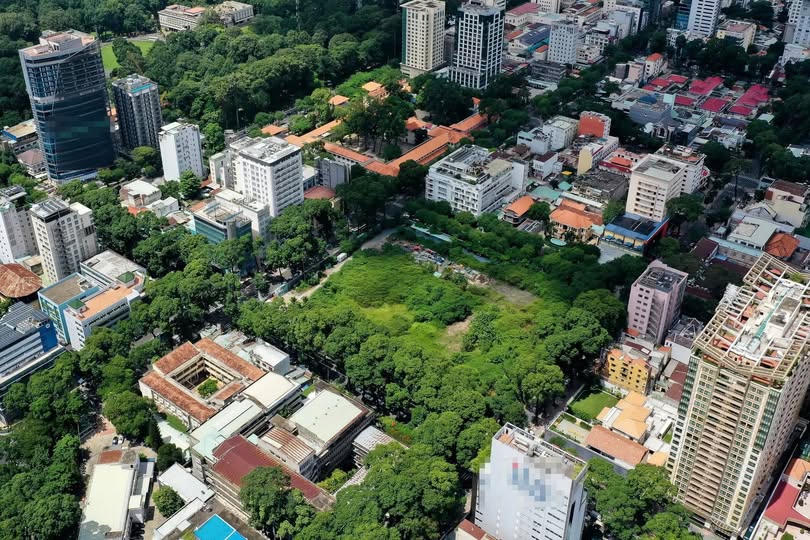
The plot at 8 Vo Van Tan, Xuan Hoa Ward, formerly the site of the Phan Dinh Phung Stadium project. Photo: Nguyen Le.
These areas, known for their high population density and status as top tourist destinations, include wards such as Sai Gon, Tan Dinh, Ben Thanh, Cau Ong Lanh, Ban Co, Xuan Hoa, and Nhieu Loc.
The initiative aims to create temporary green spaces, offering residents and visitors vibrant areas for leisure and enjoyment during the peak Lunar New Year 2026 celebrations.
Nine Prime Land Parcels Slated for Transformation
In a report submitted to the Ho Chi Minh City People’s Committee, Director of the Department of Agriculture and Environment Nguyen Toan Thang proposed nine specific land parcels for the development of temporary parks and flower gardens.
Notably, many of these sites are considered “prime real estate” due to their strategic locations, despite remaining undeveloped.
Leading the list is the plot at 8 Vo Van Tan in Xuan Hoa Ward, previously designated for the Phan Dinh Phung Stadium project. With its dual frontage, transforming this area into a flower garden is expected to significantly enhance the urban landscape at this intersection.
In Sai Gon Ward, the Department has proposed utilizing plots at 33 Nguyen Du and 34-36, 42 Chu Manh Trinh. The site at 135 Nguyen Hue, once home to the iconic Thuong Xa Tax, is also earmarked for conversion into a temporary green space.
Expanding floral spaces here will seamlessly integrate with the Nguyen Hue pedestrian street during the Tet festivities. Additional locations include: 2-4-6 Hai Ba Trung and 8-12 Le Duan (Sai Gon Ward); the quadrilateral bounded by Le Thanh Ton, Nam Ky Khoi Nghia, Nguyen Trung Truc, and Le Loi (planned site for the SJC Building); 87 Cong Quynh and 74 Ho Hao Hon – 289 Tran Hung Dao (Cau Ong Lanh Ward); and 152 Tran Phu in Cho Quan Ward, bordering Cau Ong Lanh Ward.
The proposal to repurpose dormant or uninitiated project sites into temporary parks and gardens is seen as a flexible solution by Ho Chi Minh City. It not only prevents land resource wastage but also addresses the shortage of public spaces, particularly green areas, in the city’s core.
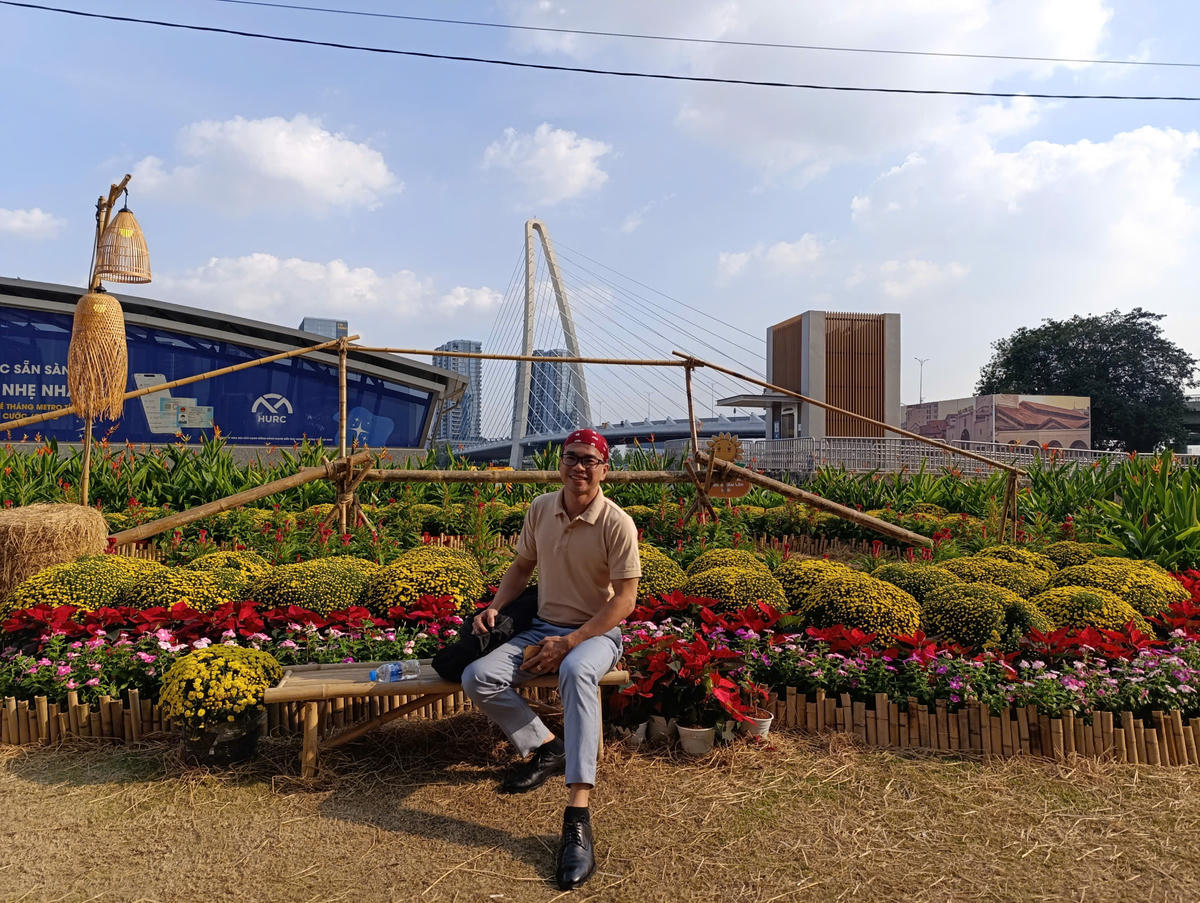
The Tet flower garden near Ba Son Station (Metro Line 1) attracts young visitors for photos and check-ins during Tet 2026. Photo: Hong Phuc.
According to the Department of Agriculture and Environment’s proposal, these flower gardens will be temporary, specifically for the 2026 Year of the Horse celebrations. Post-Tet, adjustments will be made based on actual conditions and the progress of original projects.
The Department has completed its review and submitted the report for the Ho Chi Minh City People’s Committee’s consideration and final decision. If approved, this initiative will be a welcome development for residents, promising a vibrant Tet 2026 filled with floral splendor and new spaces for relaxation in the bustling city center.
Transforming the stark metal fences of vacant plots into vibrant flower beds is akin to giving the city a fresh new look, making Ho Chi Minh City more welcoming and verdant in the eyes of international friends and Vietnamese citizens alike during the festive season.
Unlocking the Future: The 2026 Real Estate Market Valuation Infrastructure
The multi-CBD model is emerging as the backbone of Ho Chi Minh City’s expansion strategy. Instead of concentrating all functions within the traditional core, the city is cultivating multiple new hubs, interconnected by infrastructure to distribute employment, services, and population flow.
“Groundbreaking Ceremony in 5 Days for Masterise’s $1 Billion Bridge Project, Featuring an Unprecedented Model in Ho Chi Minh City”

The most distinctive feature of the Phu My 2 Bridge is its innovative multi-tiered road design.
Social Housing to Propel the Real Estate Market in 2026
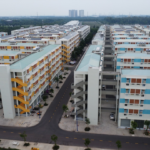
By 2026, an anticipated 160,000 social housing units will be added to the market. This substantial supply not only enhances housing accessibility for residents but also plays a crucial role in stabilizing the real estate market.
New Residential Projects in Ho Chi Minh City: More Apartments and Land Plots Receive Legal Titles
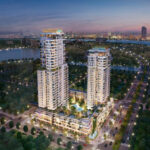
The residential complex at lots 3-11 in the Thu Thiem New Urban Area, the low-rise housing project by Doan Nguyen Company in Binh Trung Ward, and the mixed-use apartment and commercial services buildings at 765 and 751/8 Hong Bang Street in Binh Tay Ward have been prioritized by Task Force 1645 to resolve outstanding issues, paving the way for the issuance of property certificates to homebuyers.
Unusual Trends in Land Plots Across Ho Chi Minh City, Dong Nai, and Tay Ninh
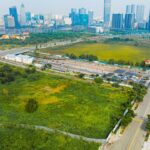
In 2025, the primary land plot supply in Ho Chi Minh City and its surrounding areas saw a 2% increase compared to 2024. However, this figure remains significantly lower than the levels recorded before 2022.