











Illustrative Image
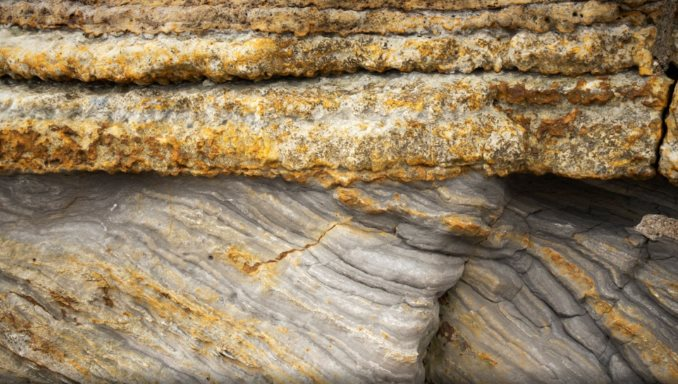
China has recently announced the discovery of a massive reserve of high-purity quartz (HPQ) in the Altay region of Xinjiang and the Qinling mountain range, with total estimated resources exceeding 35 million tons. This is considered one of the most significant mineral discoveries in the country’s high-tech materials sector in recent years.
According to China’s Ministry of Natural Resources, initial analyses reveal that the quartz in these areas boasts a purity level exceeding 99.995%, meeting the stringent standards required for semiconductor manufacturing, solar panel production, and optical fiber fabrication. HPQ is now classified as a strategic mineral, akin to rare earth elements, graphite, and gallium—critical materials in the high-tech value chain.
High-purity quartz is an indispensable input for silicon production, the backbone of the electronics and solar energy industries. Every semiconductor wafer is manufactured in quartz crucibles capable of withstanding temperatures above 2,000°C without introducing impurities. Even trace amounts of metals like iron or titanium can render silicon unsuitable for industrial use.
For decades, the majority of the world’s semiconductor-grade HPQ has been supplied by the Spruce Pine mine in North Carolina, USA, along with limited sources in Norway. China currently imports approximately 70% of its HPQ needs, leaving its semiconductor and solar industries heavily reliant on foreign suppliers.
The discovery of substantial domestic reserves could enable Beijing to gradually reduce this vulnerability in its technology supply chain.
However, experts caution that extracting HPQ ore is only the first step. The greatest challenge lies in the refinement process. According to Dr. Yin Guangwei, a mineralogist at the Chinese Academy of Geological Sciences, elevating natural ore purity to levels of 4N5–4N8 (99.995–99.998%) requires highly precise and costly processing technologies.
Pilot facilities in Henan and Xinjiang are currently testing refinement processes to achieve 99.998% purity, suitable for semiconductor crucibles and optical components. If successful, these facilities could directly supply domestic wafer manufacturers and the solar energy sector, reducing import costs and risks.
China’s inclusion of HPQ in its list of national strategic resources underscores its importance on par with rare earth elements and rare metals. Amid tightening export controls on sensitive technologies and materials by the U.S. and its allies, securing HPQ supplies could strengthen China’s position in the semiconductor, photovoltaic, and precision optics value chains.
International studies note, however, that only a small fraction of naturally occurring HPQ ore can meet industrial standards after impurity removal. Thus, large geological reserves do not necessarily translate to equivalent commercial supply capabilities.
In the short term, the quartz deposits in Altay and Qinling remain at the potential stage. However, if China masters advanced refinement technologies, these resources could become a significant advantage in the global technology competition, particularly in semiconductors and clean energy.
The Sizzling $1 Trillion Economy: Chinese Giants Double Down on Vietnam Investments

This Chinese enterprise has established a manufacturing facility in Vietnam.
Global Largest Silver Fund Aggressively Buys In: Experts Predict Prices Could Double
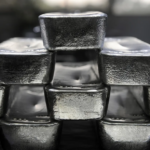
Since the beginning of 2025, the world’s largest silver fund, managed by BlackRock, has invested $1.7 billion to acquire approximately 32 million ounces of silver (1,000 tons), bringing its total holdings to over 500 million ounces (roughly 15,600 tons).
Exciting News for Dong Nai Residents: A $215 Million Industrial Zone is Coming, Expected to Create 18,000 Jobs
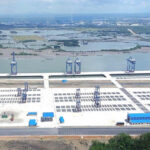
Nestled across 330 hectares, the Phuoc An Industrial Park stands as a strategic hub, located a mere 14 kilometers from Long Thanh Airport. Slated to break ground in Q4 2025, this transformative project is poised for full completion by Q4 2030, marking a new era of industrial excellence.
Nikkei Asia: FPT Targets Opening Chip Testing Plant in Vietnam “Soon”
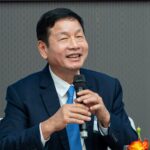
In a recent interview with Nikkei Asia, FPT Chairman Truong Gia Binh revealed that the move is strategically designed to capitalize on the global shift in the semiconductor supply chain, particularly amid escalating tensions between the U.S. and China.