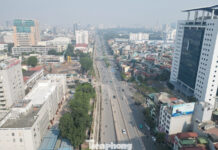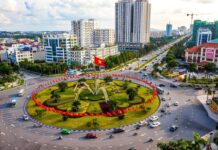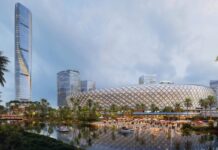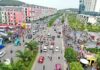















As the green space, transportation, and urban axis takes shape, real estate in Eastern Hanoi enters a new growth cycle, with Ocean City at the heart of this long-term development flow.
A Century-Defining Development Axis for the Capital
Commencing on December 19, 2025, the Red River Scenic Boulevard project marks a significant milestone in Hanoi’s urban infrastructure history. With an estimated preliminary investment of 855 trillion VND, the project spans approximately 80km along both banks of the Red River, from Hong Ha Bridge to Me So Bridge, covering 19 wards and communes.
The Red River Scenic Boulevard is envisioned as a multi-functional development axis, integrating inter-regional transportation, riverside landscaping, and systematically redeveloped urban land. Upon completion, it will directly connect with vital bridges such as Tu Lien, Tran Hung Dao, and Ngoc Hoi, alleviating pressure on the historic inner city and fostering regional connectivity, linking Hanoi with key northern economic provinces.
On a broader scale, this “spine” axis is a breakthrough in overcoming the historical connectivity challenge between the two riverbanks, restructuring urban space by expanding eastward. This area boasts large land reserves, robust infrastructure investment, and long-term growth potential.
Alongside the Red River Scenic Boulevard, numerous strategic infrastructure projects are underway in the Eastern region, including key bridges (Tran Hung Dao, Ngoc Hoi), radial transportation routes (Ring Road 3.5, Ring Road 4), and large-scale educational, sports, and entertainment centers. These developments are positioning the Eastern region as the capital’s new growth hub in the upcoming phase.
Experts view the simultaneous implementation of these large-scale infrastructure projects as a positive signal, demonstrating the central government and Hanoi’s strong investment commitment. As infrastructure becomes more integrated, the real estate market will gain a stable and sustainable growth foundation, bolstered by increased confidence.
Ocean City Enters Long-Term Growth Trajectory
In real estate, infrastructure not only determines connectivity but also directly influences property values, population shifts, and the economic vitality of an urban area. For Ocean City, the impact of the Eastern region’s extensive infrastructure is no longer just a prospect but a tangible reality, enhancing an already operational mega-urban area.
The Red River Scenic Boulevard, along with the network of bridges and radial transportation routes, is redefining Ocean City’s connectivity. With reduced travel times to Hanoi’s inner city and northern economic hubs, Ocean City is becoming an ideal choice for living, working, business, and inter-regional trade.
Infrastructure advancements are significantly altering the resident profile. Ocean City increasingly attracts young professionals, experts, entrepreneurs, and the international community—groups prioritizing high-quality living while requiring quick access to economic and administrative centers. The growing resident population fuels demand for commerce, services, education, and entertainment, creating a vibrant, continuous urban life rather than a “dormitory city” model.
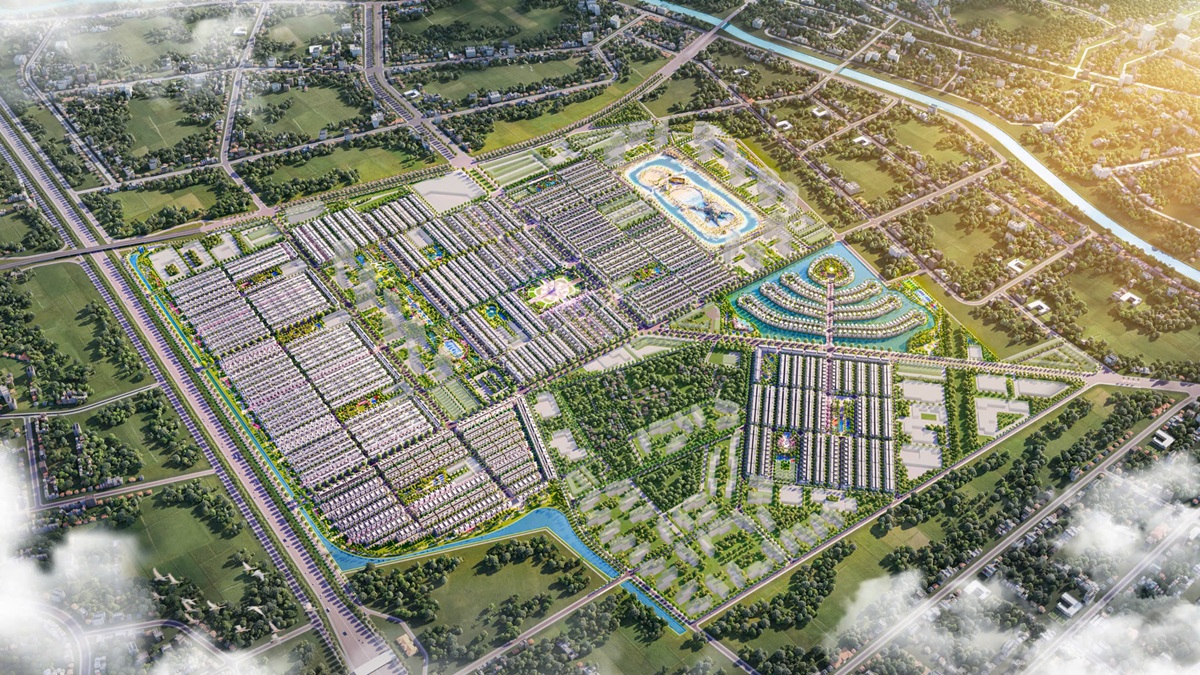
Eastern Hanoi’s real estate, particularly Ocean City, thrives with infrastructure-driven growth
From an investment perspective, infrastructure is crucial for expanding real estate growth potential, especially for low-rise properties. Improved transportation connectivity, an established resident community, and a stable living environment not only increase property values cyclically but also sustain them through real demand and long-term exploitation potential.
In operational Vinhomes urban areas, low-rise real estate has shown significant growth with integrated infrastructure. According to Batdongsan.com.vn, over the past 5-6 years, this segment has averaged over 10% annual price growth. Notably, projects like Vinhomes Green Bay, Vinhomes Thang Long, and Vinhomes Ocean Park 1 have seen 20-40% annual increases, linked to infrastructure completion, rapid community growth, and vibrant commercial activity.
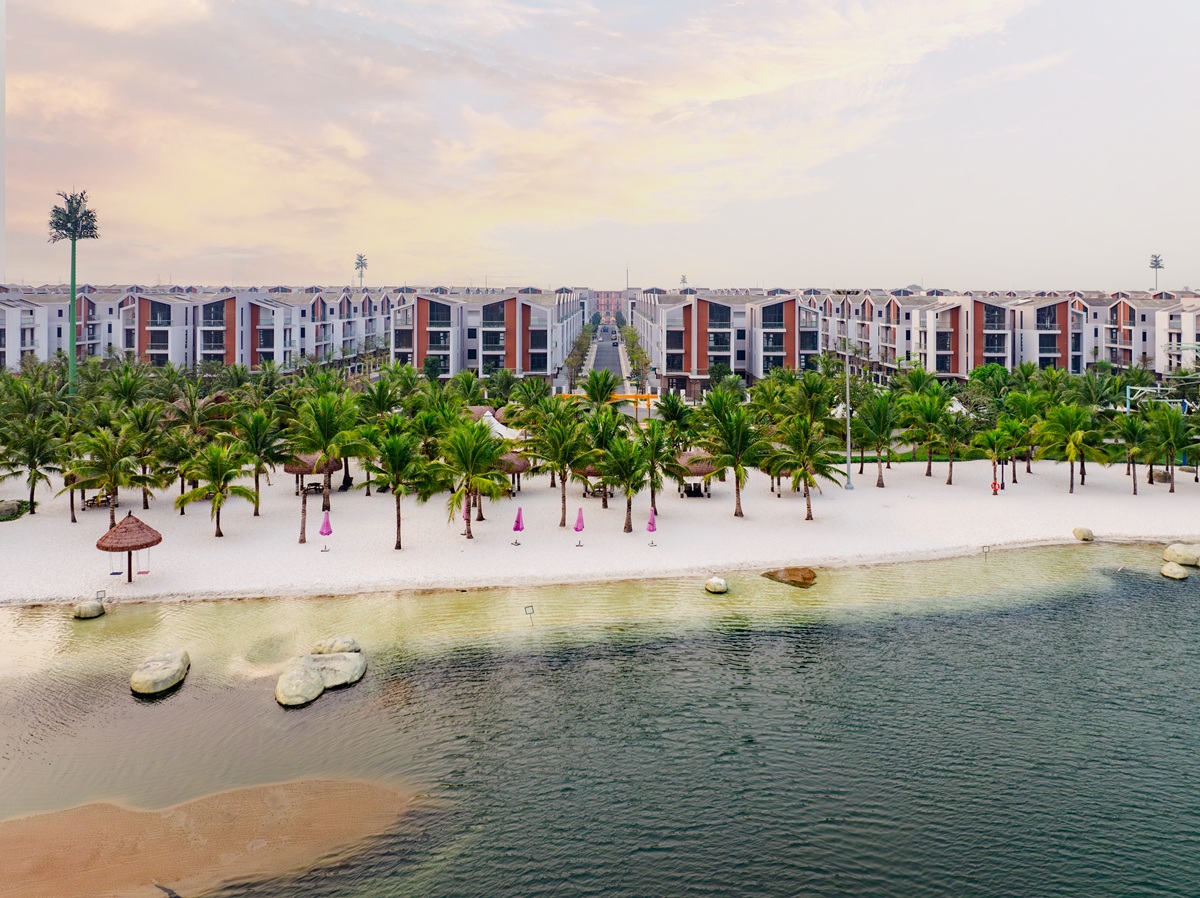
Vinhomes low-rise properties appreciate by at least 10% annually
Within Eastern Hanoi’s development framework, Ocean City is emerging as a large-scale living, working, and leisure hub with significant influence. As the Red River Scenic Boulevard becomes operational, it will propel Ocean City’s real estate value. This eastern seaside mega-city will further expand its impact, solidifying its position in the capital’s urban development structure.
Which Area is Leading the Growth Wave on Ho Chi Minh City’s Real Estate Map?
For over a decade, South Saigon, particularly the former District 7, has been recognized as one of Ho Chi Minh City’s earliest and most systematically developed urban areas, anchored by the exemplary Phu My Hung urban center. However, the region’s growth potential has long been constrained by a critical bottleneck: infrastructure development that has failed to keep pace with its ambitions.
West Thang Long Opens to Traffic: Opportunities for Investors and Homebuyers?
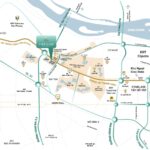
West Thang Long Avenue (the section through Tu Liem) is nearing its final stages, poised to become a strategic transportation artery connecting Hanoi’s core with satellite cities. This milestone not only enhances regional connectivity but also catalyzes the local real estate market. Which key locations stand to benefit most from this transformative project?
Final Sprint at the Tân Vạn Interchange Mega Project This Year-End
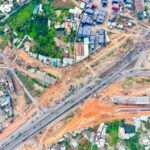
In early 2026, the Tan Van Interchange, the most complex segment of Ho Chi Minh City’s Ring Road 3, is bustling with simultaneous construction efforts across multiple fronts to meet the technical completion deadline of April 30, 2026.
Unleashing New Momentum: Steadfastly Pursuing Double-Digit Growth Targets
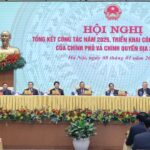
Localities unanimously agree that by 2026, priority must be given to allocating resources for the development of science, technology, innovation, and digital transformation. The focus will be on ensuring transparent, disciplined, and constructive governance at the two levels of local administration, enhancing efficiency and capacity to better serve citizens and businesses. Additionally, efforts will be made to strengthen national defense, security, and foreign affairs initiatives.
Billion-Dollar Undersea Tunnel: Vingroup Proposes Ambitious Link Between Can Gio and Vung Tau
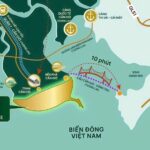
The Cần Giờ – Vũng Tàu expressway will feature a groundbreaking marine segment, utilizing a bridge for seamless travel and an underwater tunnel for waterway passage, employing technology akin to the Thủ Thiêm Tunnel.