



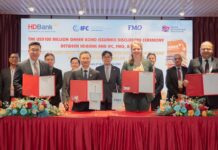










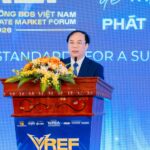
Speaking at the 2026 Market Trends Discussion within the framework of the Vietnam Real Estate Market Forum – VREF 2026, Mr. Pham Lam, Vice Chairman of the Vietnam Real Estate Brokerage Association and CEO of DKRA Vietnam, provided an overview of the supply and liquidity in the Southern real estate market.
According to Mr. Pham Lam, market research reports indicate a significant recovery in supply during 2025. “Specifically, in the Southern region, our statistics recorded nearly 30,000 new housing units launched in 2025, a 2.5-fold increase compared to the same period last year,” he stated.
Alongside supply, market demand has also shown notable improvement. “Market liquidity increased by approximately 2.6 times compared to the previous year, reflecting a positive recovery signal after a period of stagnation,” Mr. Pham Lam noted.
However, the CEO of DKRA Vietnam pointed out that the market has not yet reached a balanced state when examining the product structure. “Although supply has shown positive signs compared to previous years, the market still faces many bottlenecks, particularly legal and procedural issues in project implementation, limiting the potential for breakthrough new supply,” he observed.
Notably, Mr. Pham Lam highlighted that affordable housing and first-time buyer homes are significant gaps in Ho Chi Minh City. “Specifically in Ho Chi Minh City, the supply of Class C housing and affordable options for first-time buyers shows little sign of breakthrough,” he said, adding that this has been a persistent issue for many years.
He emphasized that the government, businesses, and associations have made considerable efforts to address challenges in policies, finance, and communication. However, creating a sufficient and suitable supply to meet real housing needs still requires more time and coordinated solutions.
On the other hand, the leader of DKRA Vietnam noted that the Southern real estate market is seeing new momentum from infrastructure investment. The accelerated development of transportation infrastructure in Ho Chi Minh City and surrounding areas like Dong Nai and Binh Duong is unlocking new land resources, previously not effectively integrated into the urban space.
“With robust infrastructure investment, new transportation axes will generate housing supply along development corridors. Buyers can travel farther distances but significantly reduce commuting time,” Mr. Pham Lam analyzed.
He predicted that in the future, housing development could extend to areas 30–45 km from Ho Chi Minh City’s center, helping address long-term supply challenges.
In addition to affordable housing, Mr. Pham Lam also addressed the ultra-luxury real estate segment. He noted that this market remains underutilized, with many products currently only offering asset value without delivering exceptional living experiences. As Vietnam’s position in Southeast Asia strengthens, demand for this segment is expected to rise.
The CEO of DKRA Vietnam concluded that the 2026 real estate market has grounds for optimism regarding supply improvement, particularly driven by infrastructure. However, affordable housing and product structure balancing remain significant challenges, requiring continued efforts for sustainable market development.
Unlock Financial Confidence: Earn Over $2,100/Month to Afford Your Dream Home
A recent survey by Batdongsan.com.vn reveals that only those earning over 50 million VND per month show a significant increase in their ability to purchase new homes. For the income group ranging from 30 to 50 million VND, confidence levels remain predominantly moderate.
Why Property and Real Estate Prices Are Surging: Insights from the Ministry of Construction
The Ministry of Construction attributes the recent surge in housing and real estate prices to multiple factors, including price manipulation and artificial market creation by real estate brokers.
“Transforming States, Shifting Paradigms: Revolutionizing Government Leadership”
On the morning of January 11th, during the 2025 year-end review and 2026 task deployment conference of the Government Party Committee, Prime Minister Pham Minh Chinh emphasized the need for a transformative shift in leadership and management. This shift aims to turn the tide and lay the groundwork for a new phase of development.
Dr. Can Van Luc: Are Real Estate Firms Stretching Themselves Too Thin With 10–15 Concurrent Projects?

Dr. Can Van Luc, Chief Economist at BIDV, asserts that capital for real estate has not been scarce in recent times. However, risks are becoming increasingly evident for companies that overextend their investments or rely heavily on leverage. This vulnerability is particularly pronounced in the current environment of elevated interest rates and the diminished priority of real estate lending within the banking sector.
Nationwide Real Estate Gridlock: Nearly 3,000 Projects Stalled, Totaling $100 Billion in Value
The Deputy Minister of Construction revealed that 2,991 real estate projects nationwide, with a combined capital of approximately 2.4 quadrillion VND, are currently facing bottlenecks. These projects represent a significant potential supply that could be unlocked in the upcoming period if obstacles are resolved.