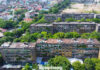














Large plots of land in the heart of Ho Chi Minh City, long fenced off due to legal hurdles and delayed projects, are set to be revitalized. According to a proposal by the city’s Department of Agriculture and Environment, nine prime land areas will be temporarily repurposed as public parks, gardens, and community spaces during the 2026 Lunar New Year celebrations.
Preventing Waste
This initiative stems from directives by Tran Luu Quang, Secretary of the Ho Chi Minh City Party Committee, and Nguyen Van Duoc, Chairman of the People’s Committee, emphasizing the need to combat resource wastage and optimize urban land use while legal procedures for projects are finalized.
After a thorough review, the Department identified nine vacant plots, primarily in former District 1 and District 3, now part of Saigon, Tan Dinh, Ben Thanh, Cau Ong Lanh, Ban Co, Xuan Hoa, and Nhieu Loc wards. These prime locations, with high commercial value, have been underutilized or left vacant for years.
Many of these sites were tied to major projects stalled by legal issues. During this limbo, they have been used as parking lots, leased for minor purposes, or left derelict, wasting valuable land and detracting from the city’s aesthetics.
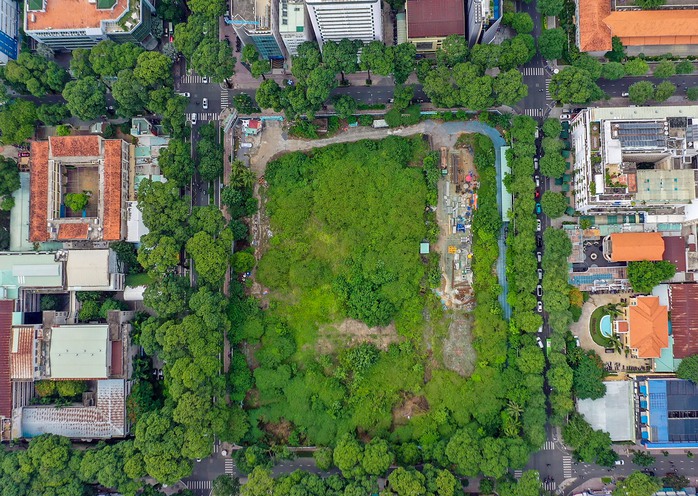
The former Phan Dinh Phung Stadium site, with four prime street fronts. Photo: HOÀNG TRIỀU
The proposal suggests temporary upgrades with lightweight structures and cost-effective improvements, transforming these areas into parks, gardens, and community spaces. Planned activities include spring flower displays, mini flower streets, fitness zones, and outdoor cultural events, fitting the festive spirit of Tet.
This temporary use ensures that the land can be returned to its original state when projects resume, showcasing flexible urban management and preventing land stagnation.
With central land increasingly scarce, leaving prime plots unused for years raises questions about public asset efficiency. Urban experts note that every square meter in central Ho Chi Minh City holds significant economic and social value.
The city currently falls short of international standards for green spaces and public areas per capita. During Tet, popular spots like Nguyen Hue Flower Street, Tao Dan Park, and September 23 Park often become overcrowded due to high visitor demand.
Adding temporary parks and gardens on prime land is expected to disperse crowds, ease traffic pressure, and offer new destinations for residents and visitors during the holiday.
Enhancing Quality of Life
The former Phan Dinh Phung Stadium site at 8 Vo Van Tan, Xuan Hoa Ward, with four street fronts along Pasteur, Nguyen Dinh Chieu, Nam Ky Khoi Nghia, and Vo Van Tan, has been abandoned for 16 years. It now lies overgrown and fenced off.
Approved in 2010 as a Build-Transfer (BT) project, it has seen two investor changes but remains undeveloped after 16 years.
The Le Thanh Ton, Nam Ky Khoi Nghia, Nguyen Trung Truc, and Le Loi quadrilateral (SJC building) is also fenced off. Nguyen Trung Truc’s sidewalk serves as parking and food stalls, while the interior houses a few vehicles. The Le Loi entrance remains closed.
The 135 Nguyen Hue site (former Tax Trade Center) is more active. Pasteur Street features a food kiosk with tables on the sidewalk and public restrooms installed years ago.
Le Loi Street is fenced off with vending machines. Inside, a parking lot bustles with activity, a long-standing use. Nguyen Hue Street is quieter, with ads and vending machines at the corner.
The 8-12 Le Duan site is serene, with ads along Le Duan and Hai Ba Trung – Nguyen Van Chiem Streets. A closed kiosk stands at the Hai Ba Trung – Nguyen Van Chiem corner.
The 2-4-6 Hai Ba Trưng site has transformed from an overgrown plot into a high-end seafood restaurant. Accessible via Gate 3 of Me Linh Square, it includes a large parking area and dining space.
Many believe that opening these abandoned sites demonstrates flexible governance within legal bounds to serve the public good. If well-organized, ensuring safety, security, hygiene, and aesthetics, these temporary parks and gardens will enhance residents’ quality of life, especially during peak times like Tet.
9 Prime Land Sites
8 Vo Van Tan (former Phan Dinh Phung Stadium); 33 Nguyen Du; 34-36 and 42 Chu Manh Trinh; 135 Nguyen Hue (former Tax Trade Center); 2-4-6 Hai Ba Trưng; 8-12 Le Duan; Le Thanh Ton – Nam Ky Khoi Nghia – Nguyen Trung Truc – Le Loi quadrilateral (SJC building); 87 Cong Quynh; 74 Ho Hao Hon – 289 Tran Hung Dao (Cau Ong Lanh Ward); 152 Tran Phu (Cho Quan Ward).
Mr. NGUYỄN MINH TÂN (Tan Dinh Ward):
Supporting Green Spaces
Temporarily opening prime land during Tet is a sensible approach, reflecting the government’s flexibility in urban management. For years, central residents have had limited spring festival options, leading to overcrowding. More public spaces will encourage natural dispersal, enhancing comfort and safety.
I commend the “temporary but not sloppy” approach. Simple improvements like walkways, greenery, and Tet flowers can greatly benefit the community. Unused land is a waste. Opening it to the public, even briefly, shows leaders prioritize residents’ interests.
Mrs. LÊ THỊ HỒNG (Ben Thanh Ward):
Residents Are Delighted!
This initiative meets urban residents’ needs, especially the elderly. Abandoned land not only wastes resources but also harms aesthetics and hygiene. Transforming it into temporary parks for walking and fresh air is far more meaningful than leaving it overgrown and littered.
The city should focus on greenery, clear paths, seating, and safety for all ages, ensuring convenience and comfort. Tet is a time for family outings. Adding green spaces in the center will make the holiday more enjoyable.
Need for Detailed Planning
Ho Chi Minh City Proposes Transforming 9 Vacant Plots into Vibrant Tet Parks and Flower Gardens
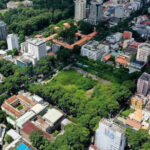
To create vibrant recreational spaces for residents during the 2026 Lunar New Year of the Horse, the Ho Chi Minh City Department of Agriculture and Environment has proposed a comprehensive review and utilization of vacant land in the city center. The initiative aims to transform these underutilized areas into lush parks and festive flower gardens, offering a refreshing escape for the community during the holiday season.
Unlocking the Future: The 2026 Real Estate Market Valuation Infrastructure
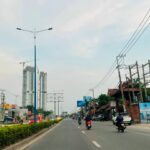
The multi-CBD model is emerging as the backbone of Ho Chi Minh City’s expansion strategy. Instead of concentrating all functions within the traditional core, the city is cultivating multiple new hubs, interconnected by infrastructure to distribute employment, services, and population flow.
“Groundbreaking Ceremony in 5 Days for Masterise’s $1 Billion Bridge Project, Featuring an Unprecedented Model in Ho Chi Minh City”

The most distinctive feature of the Phu My 2 Bridge is its innovative multi-tiered road design.
Social Housing to Propel the Real Estate Market in 2026
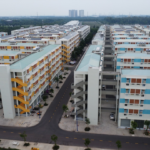
By 2026, an anticipated 160,000 social housing units will be added to the market. This substantial supply not only enhances housing accessibility for residents but also plays a crucial role in stabilizing the real estate market.
New Residential Projects in Ho Chi Minh City: More Apartments and Land Plots Receive Legal Titles
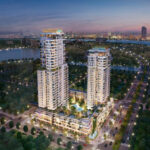
The residential complex at lots 3-11 in the Thu Thiem New Urban Area, the low-rise housing project by Doan Nguyen Company in Binh Trung Ward, and the mixed-use apartment and commercial services buildings at 765 and 751/8 Hong Bang Street in Binh Tay Ward have been prioritized by Task Force 1645 to resolve outstanding issues, paving the way for the issuance of property certificates to homebuyers.