

















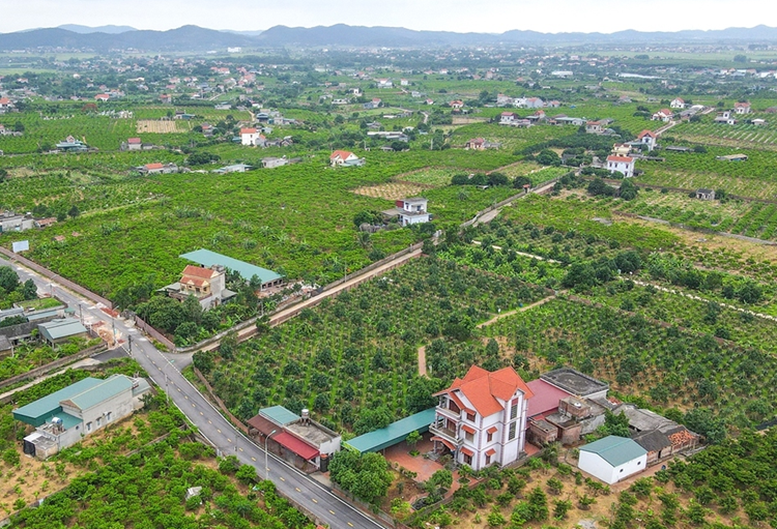
Addressing land project bottlenecks and implementing the National Target Program for new rural development, sustainable poverty reduction, and socio-economic development in ethnic minority and mountainous regions.
Resolving Numerous Obstacles
In the aforementioned notification, the Prime Minister emphasized the significance of implementing two resolutions: Resolution No. 170/2024/QH15 dated November 30, 2024, and Resolution No. 257/2025/QH15 dated December 11, 2025. These resolutions aim to tackle challenges in land projects and promote new rural development, poverty reduction, and socio-economic growth in ethnic minority and mountainous areas. They represent groundbreaking initiatives from the 10th session of the 15th National Assembly.
Many obstacles have been resolved, allowing projects to resume and yield tangible results. This has liberated resources for the nation, businesses, and citizens, significantly contributing to the 2025 economic growth target of over 8% and double-digit growth in subsequent years. It also fosters development, prevents resource wastage, ensures legal discipline, and motivates citizens, businesses, and investors to drive national progress.
However, numerous projects nationwide remain stalled due to legal, land management, and planning issues. Some projects exhibit signs of misconduct, risking inefficiency due to impractical policies, local impatience for growth, and businesses lacking project implementation experience and resources. The recent implementation of three National Target Programs faced challenges such as overlapping content, fragmented resources, unmet targets, delayed disbursements, and complex policies.
To address these issues, the Prime Minister has outlined principles and assigned tasks to ministries, sectors, and localities for the effective execution of the two resolutions.
Untangling Land Project Complications in Inspections and Audits
Resolution No. 170/2024/QH15, dated November 30, 2024, introduces innovative policies to address land project issues identified in inspections and audits. Following the implementation of Conclusion No. 77-KL/TW dated May 2, 2024, and Resolution No. 170/2024/QH15, positive outcomes have been achieved. These measures are crucial for optimizing land resources and fostering socio-economic development.
To date, 5,203 projects have been addressed or are in the process of resolution, including 3,289 land projects with a total investment of approximately 1.67 million billion VND and over 70,000 hectares of land. Localities have updated the Database System of the Steering Committee for Resolving Difficulties in Prolonged Projects (Steering Committee 751), identifying 2,991 projects requiring resolution, covering over 153,000 hectares with a total investment of 2.46 million billion VND.
Ministries and sectors should empower local authorities rather than directly approving or executing specific projects.
The Prime Minister stresses that resolving project challenges is complex and sensitive. A balanced approach is necessary—avoiding haste but seizing opportunities. Ministries, agencies, and localities must proactively address issues comprehensively and propose policy enhancements to unlock resources, address public and business concerns, and ensure accountability.
Leaders of ministries, sectors, and localities are responsible for promptly resolving issues within their jurisdiction without evasion. They must report to the Government on progress, coordinate with the Ministry of Finance and Steering Committee 751, and ensure efficient task completion.
Projects requiring inspection, audit, or review should proceed without delay to propose solutions, prevent wastage, and ensure timely implementation.
A committed and disciplined approach is essential, with clear assignments regarding personnel, tasks, timelines, responsibilities, authority, and deliverables. Regular monitoring and strict discipline enforcement are crucial. Ministries and sectors should delegate project approval and execution to local authorities, emphasizing local decision-making and accountability.
Urgently propose solutions for unresolved legal issues in challenging projects.
To achieve economic growth targets, prevent resource wastage, and bolster business confidence, the Prime Minister directs the Ministry of Finance to collaborate with relevant bodies. They must compile and submit a list of eligible projects under Resolution No. 170/2024/QH15 by January 2026, issue a resolution on resolving BT project transition issues, and maintain an updated project database for proactive local handling.
Relevant ministries must guide localities in implementing Resolution No. 170/2024/QH15 and Decree No. 76/2025/NĐ-CP by January 2026, reporting any emerging issues promptly.
Ministries, agencies, and localities should propose solutions for legal gaps in challenging projects, clarify handling authority, and report to competent authorities for approval. They must coordinate with the Ministry of Finance to efficiently manage tasks, ensure project eligibility, and prioritize resolving issues for projects with inspection conclusions or similar legal situations by December 31, 2025.
Prioritizing Disadvantaged Communes, Ethnic Minorities, Border, and Island Areas
Resolution No. 257/2025/QH15, dated December 11, 2025, approves the National Target Program for new rural development, sustainable poverty reduction, and socio-economic development in ethnic minority and mountainous regions (2026-2035). The 2021-2025 programs achieved significant results, with most targets met or exceeded, transforming rural areas and establishing Vietnam as a global model for Millennium Development Goals.
The Prime Minister highlights the importance of Resolution No. 257/2025/QH15 for institutional improvement, obstacle removal, and sustainable agricultural and rural development. This initiative has garnered public support and requires renewed commitment, innovation, and community engagement to build prosperous and sustainable rural areas, ensuring inclusive development.
The resolution prioritizes disadvantaged communes, ethnic minorities, border, and island areas, emphasizing local decision-making and accountability. Central authorities will manage mechanisms and monitoring tools, while local governments will allocate resources based on actual conditions to achieve shared goals. Stakeholders must actively participate, demonstrate creativity, and ensure focused and effective implementation.
Expedite the allocation of the 2026 central budget plan for January 2026 implementation.
To ensure the resolution’s swift implementation, the Prime Minister instructs the Ministry of Agriculture and Rural Development to collaborate with relevant agencies. They must prepare a feasibility study, issue an investment decision for the 2026-2030 program by January 2026, and establish capital allocation criteria prioritizing disadvantaged areas. This aims to significantly enhance socio-economic development, new rural construction, and sustainable poverty reduction.
The Committee for Ethnic Minority Affairs, in collaboration with relevant ministries, must publish a list of ethnic minority and mountainous areas, including disadvantaged villages and communes, by January 2026.
The Ministry of Finance should accelerate the allocation of the 2026 central budget plan for January implementation and issue regulations on program fund management, prioritizing investments in disadvantaged and ethnic minority regions.
Relevant ministries must promptly issue detailed guidelines for program implementation, ensuring transparency and technology integration. Local authorities should focus on sustainable and green growth models, aligning new rural criteria with local needs, and encouraging farmers to adopt sustainable practices and digital transformation.
Da Nang Leaders Urgently Direct National Target Program Fund Disbursement
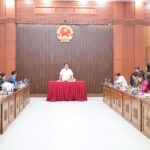
Mr. Tran Anh Tuan, Vice Chairman of the Da Nang City People’s Committee, commended the units for their successful completion and commitment to achieving 100% capital disbursement by 2025.
Unlocking $53.47 Billion in Resources: Establishing a Legal ‘Safe Zone’ to Empower Officials to Think Boldly and Act Decisively

To prevent investment inefficiencies, a National Assembly delegate proposed a resolution mandating full disclosure of all project portfolios, capital, progress, and outcomes on a digital platform. Additionally, a legal “safe zone” is essential to encourage officials to innovate and take bold actions.
Over 125 Trillion Allocated for Healthcare and Population Programs Over the Next Decade

Our program aims to enhance physical and mental well-being, improve stature, extend lifespan, and elevate the overall quality of life for all citizens. We ensure that every individual receives accessible, high-quality primary healthcare and management.
Investing 580 Trillion VND to Modernize and Enhance Education Quality Nationwide
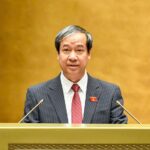
The National Target Program for Modernization and Quality Enhancement of Education and Training for the 2026-2035 period, spearheaded by the Ministry of Education and Training, is set to be implemented nationwide.
Vietnam Pioneers as the World’s First Nation to Achieve This Milestone

Dr. Bùi Sỹ Lợi, former Deputy Chairman of the National Assembly’s Committee on Culture and Society, emphasizes that the 2021-2025 term is an exceptionally unique and pivotal period.