


















According to Dinh Minh Tuan, Director of PropertyGuru Vietnam in the Southern region, 2026 marks a pivotal shift in the real estate market. He highlights that foundational elements established in 2025 will begin to yield tangible results, setting the stage for significant changes.
Operational infrastructure, emerging growth hubs, and the return of medium to long-term capital will create ample opportunities in the property sector. However, this period will also witness heightened market segmentation, with new price benchmarks and thinner profit margins. Stricter legal, product quality, and financial requirements for developers will further define the landscape. The market will favor well-structured, transparent projects over speculative or incomplete developments reliant on short-term leverage.
Tuan identifies two key trends for 2026. First, opportunities will arise from the shift to peripheral areas supported by functional infrastructure. As ring roads, highways, metro systems, and airports become operational, economic activity and residential demand will expand into neighboring regions and satellite cities. These areas will evolve into viable living and working spaces, with property values driven by real demand and connectivity rather than short-term speculation.
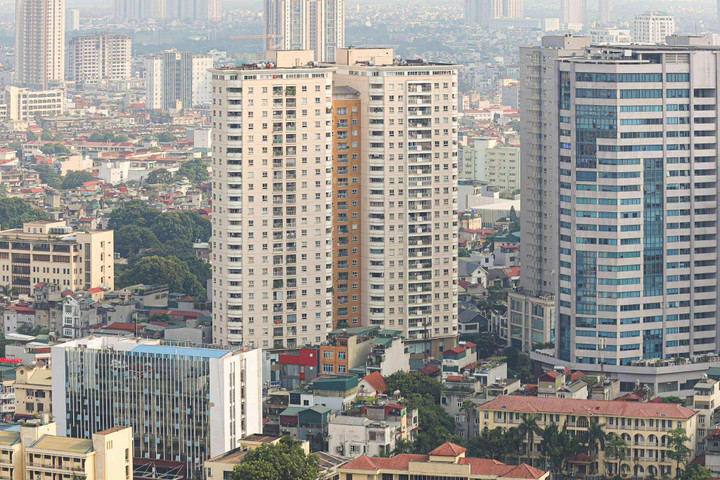
The real estate market in 2026 is predicted to stabilize. (Photo: Minh Đức)
Second, the primary opportunities will stem from genuine housing demand, encompassing both condominiums and low-rise homes catering to long-term residents. Products with strategic locations, affordable pricing, transparent legal frameworks, and practical utility will drive liquidity in 2026.
Tuan emphasizes that 2026 will not see uniform growth across all segments but rather pronounced differentiation. Sustainable segments will align with real demand, tangible capital, and long-term adaptability rather than short-term price appreciation.
Specifically, condominiums in major urban centers and satellite cities will be market mainstays, alongside low-rise homes in integrated urban developments. These properties offer clear legal status, established infrastructure, amenities, and communities, making them suitable for rental, small businesses, or combined living and investment purposes.
“2026 will be a year of ‘challenging yet healthy’ market dynamics. Opportunities will exist, but only for capable developers with well-executed projects and investors with a medium to long-term vision. This is no longer a playground for speculative crowds but a phase of selection and sustainability,” Tuan asserts.
Nguyen Van Dinh, Chairman of the Vietnam Real Estate Brokerage Association, shares this view. He notes that the consolidation of 34 provinces and cities has created large-scale real estate markets in Ho Chi Minh City, Hai Phong, Da Nang, and Lam Dong. This has disrupted short-term speculation, curbed rapid price increases, and fostered more stable, long-term development.
“In 2026, the real estate market faces numerous opportunities with double-digit economic growth targets, sustained capital flows, flexible monetary policies, and prioritized development of compact and transit-oriented urban models. However, the market will no longer tolerate speculative investments. Participants must demonstrate greater professionalism, transparency, and adherence to market discipline within a data-driven, digitally managed ecosystem,” Dinh observes.
Nguyen Hoai An, Senior Director at CBRE Hanoi, anticipates that 2026 will mark a new, more stable, and selective cycle for Vietnam’s real estate market. Active participation from long-term visioned developers, investors, and genuine buyers will characterize this phase.
An notes that supply will remain diverse across segments and locations. However, increased competition among developers to attract buyers and tenants will necessitate product restructuring, quality enhancements, improved sales policies, and operational strategies. Rising project development costs will further compress profit margins and investment returns.
She warns that robust supply in Hanoi and surrounding provinces could outpace demand, leading to inventory risks and price pressures in certain segments. Additionally, the concentration of new supply in high-end segments may exacerbate housing accessibility challenges for young and lower-middle-income groups.
Amid abundant supply and macroeconomic fluctuations, buyers and investors will adopt a cautious yet resolute approach, prioritizing assets with appreciation potential, clear legal status, and stable cash flows.
Vo Hong Thang, Deputy General Director of DKRA Group, forecasts that 2026 will see more pronounced growth in the real estate market, albeit with segmentation between residential and resort properties. Residential real estate is expected to sustain its recovery and growth momentum from 2025, driven by improved supply from legally cleared projects and restored buyer and investor confidence. However, affordability-focused products catering to genuine demand will be the primary growth drivers.
The market will maintain a positive yet selective trajectory: Projects with transparent legal frameworks, strategic locations, and alignment with key infrastructure developments will enjoy strong liquidity, while those with legal delays, poor connectivity, or inadequate infrastructure will struggle to attract buyers.
Prices are projected to rise due to input cost pressures, interest rate levels, and infrastructure expectations, but increases will vary by segment rather than occurring uniformly.
Social Housing to Propel the Real Estate Market in 2026
By 2026, an anticipated 160,000 social housing units will be added to the market. This substantial supply not only enhances housing accessibility for residents but also plays a crucial role in stabilizing the real estate market.
Vietnam Real Estate Market 2025: A Pivotal Moment Ushering in a New Cycle
Avison Young Vietnam predicts that the robust developments in the real estate market in 2025 will serve as pivotal factors, ushering in a new cycle of growth and transformation.
“The Diamond Quartet” of Real Estate Converges – Setting the Stage for a Vibrant 2026

In the context of Vietnam’s real estate market entering a new development cycle following a period of rigorous consolidation, the emergence of an alliance uniting four leading property distribution agencies—Đất Xanh Miền Bắc, AHS Property, MSH Group, and Trung Thực Land—stands as a notable milestone in early 2026.
Revamping Real Estate Tax and Credit Policies: A Call for Comprehensive Review

The Ministry of Construction has proposed that the Prime Minister direct the State Bank and the Ministry of Finance to review credit and tax policies related to real estate. This aims to promptly suggest appropriate regulatory measures, contributing to the control of property prices.
Vietnam JLL CEO: Real Estate M&A to Rise in 2026, Yet Caution and Scrutiny Prevail
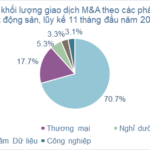
According to the Managing Director of JLL Vietnam, M&A activity in the real estate market for 2026 will not experience a sudden surge but will instead see deep-rooted growth, prioritizing quality over quantity. This shift signifies a more mature and sustainable development of the market.