













Can you share Vietnam’s achievements in fulfilling its international commitment to greenhouse gas (GHG) mitigation, aiming for the 2050 net-zero target?
Vietnam ranks among the nations most severely impacted by climate change. In recent years, extreme weather events have increased in frequency, significantly affecting all facets of the country’s socio-economic life.
Acknowledging the profound challenges climate change poses to sustainable development, countries made robust commitments to the 1.5°C goal under the Paris Agreement at COP21 and pledged to achieve net-zero emissions by 2050 at COP26.
Addressing climate change is of paramount importance and serves as a core, cross-cutting task throughout Vietnam’s development process, necessitating the involvement of the entire political system and society.
To fulfill Vietnam’s COP26 commitments, the Prime Minister established the National Steering Committee for implementing these commitments, chaired by the Prime Minister, and approved the implementation plan.
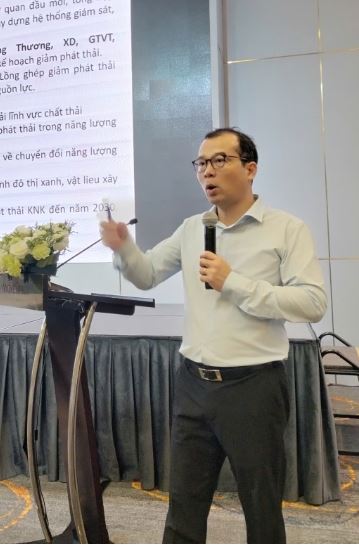
Additionally, the Prime Minister issued several critical strategies and plans, including Decision No. 888/QD-TTg, which approved the Scheme on tasks and solutions to implement COP26 outcomes, and Decision No. 896/QD-TTg, which approved the National Climate Change Strategy to 2050.
Building on this foundation, the Department of Climate Change at the Ministry of Agriculture and Environment, in collaboration with relevant ministries and sectors, has developed GHG mitigation and climate adaptation plans aligned with the 2050 net-zero commitment.
Numerous concrete programs and projects have been implemented, including renewable energy development, forest carbon absorption, GHG mitigation in agriculture, and sustainable, climate-resilient development projects in the Mekong Delta. Banks and enterprises have actively partnered with the government to fulfill international commitments.
In recent years, the Department of Climate Change, alongside ministries and sectors, has organized hundreds of workshops to engage with and guide enterprises on conducting GHG inventories and understanding the benefits of green transition and emission reductions.
The business community plays a pivotal role in GHG mitigation. How would you evaluate their capacity and engagement in contributing to national emission reduction goals?
Implementing GHG mitigation and green transition solutions is a dominant global trend. It is also a mandatory requirement for Vietnamese enterprises seeking to participate in global markets, particularly those with stringent green standards like the EU.
While this presents significant challenges, it also offers new development opportunities, enhancing enterprise competitiveness.
Government regulations, coupled with market-driven green standards, create both pressure and motivation for enterprises to transform and comply.
Based on this, we have accelerated the implementation of legal regulations and emission reduction goals while providing guidance to support enterprises in transitioning, initially focusing on energy-intensive industries such as thermal power, steel, and cement, which are also piloting GHG allowance allocation.
Given market trends and volatile energy prices, enterprises increasingly recognize that adopting alternative production technologies and energy sources, such as biomass or waste-to-energy, can offer cost advantages and economic benefits.
In practice, enterprises have implemented technology-based solutions within current constraints, achieving positive results. However, beyond a certain point, these solutions will require complete technology upgrades.
Technologies are available, but the primary challenge remains mobilizing financial resources for enterprises to invest in new technologies.
At this stage, enterprises clearly understand the economic and market-driven imperative for green transition. Vietnam has also established a comprehensive legal framework. What enterprises need most now are stronger incentives for fundamental change.
In your opinion, what additional drivers are needed to accelerate and realize green and sustainable development policies in Vietnam?
The government requires support policies to stimulate the financial, banking, and credit sectors, creating additional incentives for enterprises to transform. This will yield long-term benefits, fundamentally reshaping corporate culture in line with the green transition.
For instance, in steel production, four major technologies exist. The blast-furnace / basic oxygen furnace (BOF) route consumes large amounts of fossil fuel. Transitioning to electric-arc furnaces (EAF) or induction furnaces (IF) can reduce emissions to below 20% of BOF levels, with even greater reductions possible with IFs. Steel manufacturers are gradually adopting these technologies.
In cement production, enterprises are increasingly using waste and biomass as fuel to reduce fossil-fuel consumption and emissions.
Furthermore, adopting new technologies, emission reduction solutions, and clean energy transitions creates opportunities to participate in the carbon market. Through internationally recognized measurement, reporting, and verification (MRV) systems, enterprises’ mitigation efforts can be certified for carbon market participation.
The carbon market’s essence is to deploy market-based mechanisms that incentivize enterprises to accelerate emission reduction actions, obtain green certification, and trade carbon credits. It has become a global trend.
Green transition and low-carbon development are not only about legal compliance but are also essential for global market access. In this process, economic development and environmental protection go hand in hand, contributing to sustainable development for both national and corporate goals.
We will continue to support enterprises in achieving economic performance, business growth, profitability, and environmental protection.
Based on the practical implementation of GHG inventories, how would you assess enterprises’ current awareness of green development and low emissions?
I have observed significant improvements in awareness, particularly among enterprises with high fossil-fuel consumption and emissions. However, understanding remains uneven across sectors.
GHG inventories encompass three scopes. Scope 1 covers direct emissions from fossil-fuel use. Scope 2 includes indirect emissions from electricity or steam consumption. Scope 3, the most comprehensive, covers emissions across the entire product life-cycle.
Currently, most enterprises conduct inventories up to Scope 2. Full life-cycle emission inventories require cross-sector alignment. It is estimated that over half of energy-intensive enterprises prioritize inventories and green transition measures, while the remainder, mostly support industries and SMEs, lack financial and human resources.
This marks a significant improvement compared to five years ago, with Vietnamese businesses considered more agile than many in the region.
A key factor is that enterprises clearly recognize global trends, market pressures, and the economic benefits of mitigation and green transition. Meanwhile, Vietnam has strengthened policies, implementation activities, and practical guidance, creating momentum for enterprises.
Vietnam has set a double-digit growth target for the immediate future. What new requirements does this create for harmonizing economic growth with environmental protection and emission reduction goals?
Higher growth targets will inevitably demand more resources and energy. This is a natural rule.
In this context, a critical factor is transforming corporate culture in resource and energy use. In recent years, Vietnam has made clear progress in shifting enterprise awareness.
Additionally, tools and technologies must be deployed to help enterprises translate this cultural shift into concrete action, ensuring economic growth while achieving climate and environmental goals and reducing GHG emissions.
If core industries transform in this direction, related industries, commerce, and services will also shift within the overall supply chain ecosystem.
This requires time, human resources, financial capacity, and technological readiness. Vietnam has made strong initial progress, and with continued effort, I believe we can achieve both economic growth and sustainable development goals.
THACO Strategically Positions Itself for Billion-Dollar Infrastructure Battle, Targeting Highways, Metro Systems, North-South High-Speed Rail, and Unprecedented Mega-Projects

After solidifying its position in the automotive industry and establishing a robust foundation in mechanics and logistics, THACO, led by Tran Ba Duong, is making a notable shift. The company is now re-emerging as a formidable player in the strategic infrastructure sector, presenting a series of large-scale investment proposals and commitments since 2025.
Redefining Vietnam’s Global Image: CMC Chairman’s Visionary Proposal
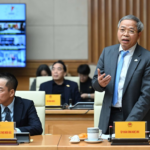
At the online conference with Vietnamese ambassadors and heads of representative agencies abroad, summarizing economic diplomacy in 2025 and outlining tasks for 2026, the Chairman of CMC Technology Group proposed that Vietnam proactively craft and communicate a new global image: “New Vietnam.” This vision emphasizes technological capabilities, aspirations for advancement, and a commitment to fair collaboration in emerging fields such as AI.
“Transforming States, Shifting Paradigms: Revolutionizing Government Leadership”
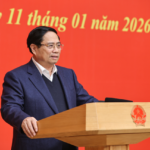
On the morning of January 11th, during the 2025 year-end review and 2026 task deployment conference of the Government Party Committee, Prime Minister Pham Minh Chinh emphasized the need for a transformative shift in leadership and management. This shift aims to turn the tide and lay the groundwork for a new phase of development.
Sustainable Business Quality: The Cornerstone of a Robust Stock Market

This is the insight shared by Mr. Nguyễn Hoàng Tùng, Director of the Southern Branch of Agribank Securities Company (Agriseco), as he forecasts the outlook for the stock market in 2026.
“Stocks ‘Cheap by the Crowd, Expensive by the Index’: Brokerages Highlight Key Investment Opportunities for 2026”
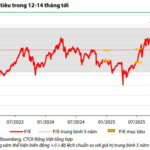
Leveraging the synergy between anticipated foreign capital inflows and supportive domestic fiscal policies, VDSC identifies three pivotal investment themes for 2026.