











Managing the Real Estate Market with “Red Book” Limitations
Government Decree 357 stipulates that, starting March 1, the information system and database for housing and the real estate market will operate synchronously. Each property, including single-family homes, apartments, and project units, will have a unique electronic identification code. However, experts suggest adding an electronic identification contract to complement this regulation.
In an interview with Tiền Phong, Dr. Nguyễn Văn Lộc, an economist from the University of Economics, noted that Vietnam’s real estate market has been caught in a cycle of overheating, freezing, and rebounding for years. Property prices have surged, speculation has spread, and regulatory bodies struggle to accurately track transactions and regulate the market. A key issue lies in the management model’s heavy reliance on the “Red Book,” a crucial legal tool that has shown limitations in the digital economy.
“The Red Book confirms ownership after a transaction is completed, serving as a post-audit tool. Meanwhile, critical market information such as transaction timing, actual value, and trading frequency is not fully or promptly recorded. This leaves tax policies data-deprived, making it hard to distinguish speculation from genuine housing needs, and nearly impossible to manage the market based on behavior,” said Dr. Lộc.
Dr. Lộc believes that transitioning from the “Red Book” model to “legally authenticated electronic contracts” is not just an administrative improvement but a systemic reform that could fundamentally change real estate market management.

Unlike the Red Book, which only reflects post-transaction ownership, legally authenticated electronic contracts allow transactions to be recorded and verified at the time of occurrence. Core details such as parties involved, signing time, transfer value, and payment method are instantly identified and logged in the digital system. This enables the government to monitor the market in real-time, proactively manage risks, control speculation, and design tax policies aligned with actual transaction behavior.
Electronic Contracts Curb Speculation and Flipping
Dr. Lộc added that electronic real estate contracts address current market inefficiencies.
First, accurately determining the moment ownership arises is crucial for applying modern real estate tax policies, especially holding-period taxes. When ownership is transparently recorded, authorities can clearly differentiate between short-term speculative transactions and long-term transactions for genuine housing needs. This allows tax policies to curb speculation and flipping without burdening homebuyers.
Second, accurately recording transaction values is key to preventing tax evasion. Underreporting transfer prices has been a long-standing issue, stemming not only from compliance but also from a lack of control data. Electronic contracts enable unified transaction value recording and integration with banking and payment systems. As actual values are verified, the “dual pricing” issue will gradually be resolved. This enhances tax collection efficiency and provides a foundation for market-aligned land price tables.
Third, electronic contracts contribute to a national real estate transaction database. Centralized, standardized, and continuously updated data helps regulators track market trends, early detect speculation, price spikes, or bubbles. This is essential for transparent, proactive, and sustainable market governance.
Dr. Phạm Ngọc Hương Quỳnh, an economist from Hanoi National University, agrees that for electronic contracts to effectively manage the real estate market, four clear enforcement conditions must be met. First, the law must unequivocally establish the full legal validity of electronic contracts in real estate transactions, recognizing them as the official basis for determining rights and obligations, not just a supporting method.
This requires harmonization between the Law on Electronic Transactions and the Land Law, Housing Law, and Real Estate Business Law, particularly in recognizing electronic timestamps as the sole legal marker for ownership duration.
Additionally, the electronic contract registration and storage system must be nationally centralized, avoiding fragmented local or sector-specific platforms. Each transaction must be uniquely identified, tamper-proof, and automatically linked to tax, notary, and banking authorities.
Furthermore, business processes must be standardized, from signing and authentication to payment and registration, to eliminate gaps exploitable for misreporting transaction times or values.
“Policies should follow a clear pilot roadmap, prioritizing major cities and common transaction segments, alongside transparent communication to build social consensus and reduce resistance to change,” said Dr. Quỳnh.
Accelerating Construction of Nearly 15km Elevated Ring Road 3 Through Urban Ho Chi Minh City

The 14.7 km urban stretch of Ho Chi Minh City’s Ring Road 3 is undergoing a transformative upgrade, with asphalt paving, noise-reducing glass installation, and milestone markings, signaling a pivotal phase in the completion of this critical infrastructure project.
What to Invest in for a ‘Sure Win’ in 2026?

According to experts, 2026 is not a poor year for investment, but heightened uncertainty means no asset class can be considered a “sure bet.” In this landscape, stocks and real estate remain the most promising channels, though significant polarization and capital shifts will be evident.
Secure Your Property ID Code: Preventing ‘Useless Codes’ in Real Estate Transactions

Every property is assigned a unique electronic identifier, ensuring seamless management from land and projects to transactions, thereby establishing a transparent data foundation for the real estate market.
Mortgage Rate Hikes Spark Panic Among Homebuyers

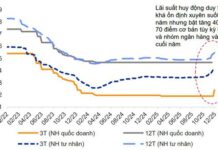
Mortgage rates have surged by 1-2% since November 2025, sparking widespread concern. This upward trend in lending rates poses significant challenges for homebuyers and threatens to destabilize the real estate market.
Real Estate 2026: Surging Supply, Cooling Prices

With over 1,000 projects unlocked, nearly 580,000 successful transactions in 2025, record-breaking credit, and accelerated public investment, the real estate market is entering a pivotal phase on the cusp of a new growth cycle.