










Illustrative image
Rice production in several African nations is witnessing significant growth, thanks to South Korea’s large-scale agricultural support program. According to South Korea’s Ministry of Agriculture, Food, and Rural Affairs, in 2025, rice varieties developed and transferred under the K-Ricebelt project achieved a total yield of 3,562 tons across seven African countries, a substantial increase from the 2,321 tons recorded in 2023.
Uganda led with the highest yield at over 1,760 tons, followed by Ghana (689 tons), Guinea (640 tons), Senegal (267 tons), Gambia (146 tons), Kenya (31 tons), and Cameroon (24 tons).
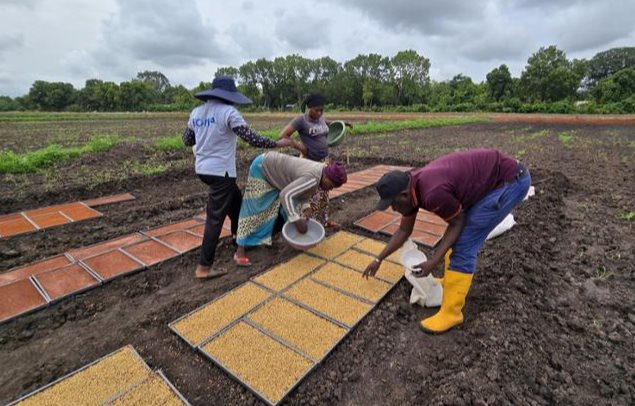
Launched in 2023 by the South Korean government and the Rural Development Administration (RDA), the K-Ricebelt project aims to establish high-yield rice seed production complexes in Africa. It directly supplies farmers, contributing to enhanced food security and poverty reduction.
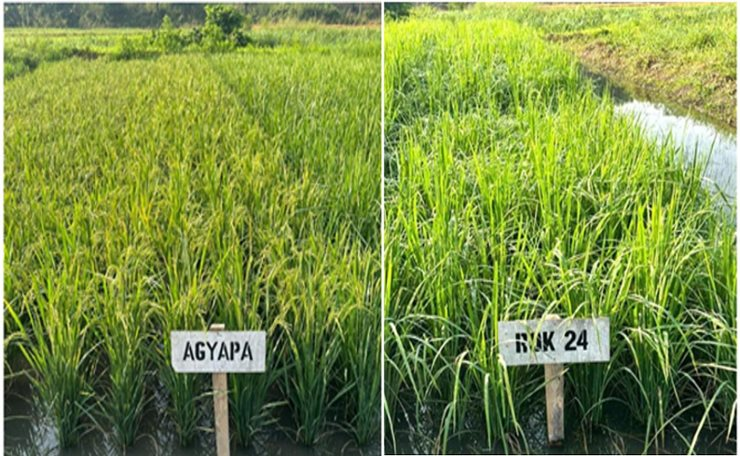
South Korea’s Ministry of Agriculture reports that its rice varieties are outperforming local strains in Africa. In 2025, the average yield reached 4 tons/ha, 1.7 times higher than the 2.4 tons/ha of indigenous varieties. This represents an 8% increase from 2023, when yields were 3.7 tons/ha.
Trials in Sierra Leone, Ivory Coast, and Guinea-Bissau—countries considering joining the project—showed South Korean rice varieties averaging 5.23 tons/ha, 23% higher than the local 4.26 tons/ha.
African rice experts highlight that South Korean rice varieties have shorter growth cycles, better pest resistance, and superior grain quality, flavor, and aroma compared to many local strains.
Jackariawo Ahmed Jalloh, Head of Agricultural Food Security in Sierra Leone, stated he personally verified the quality of South Korean rice varieties and expects K-Ricebelt to become a vital tool in addressing food shortages in his country.
Based on these results, South Korea’s Ministry of Agriculture anticipates growing demand for its rice varieties in Africa. These seeds will be widely distributed to farmers and vulnerable communities to expand cultivation areas.
In 2025, South Korea signed memorandums of understanding with Madagascar, Malawi, Zimbabwe, and Angola to implement the K-Ricebelt project in these nations.
An official from the International Cooperation Bureau of South Korea’s Ministry of Agriculture noted that the 2025 yields set a new international benchmark for K-Ricebelt’s effectiveness. They suggested the initiative could expand to more African countries to enhance regional food security.
South Korea has deployed expert and technical teams from Agricultural Innovation Partnership Centers to seven African nations to collaborate with local authorities and farmers on project implementation.