








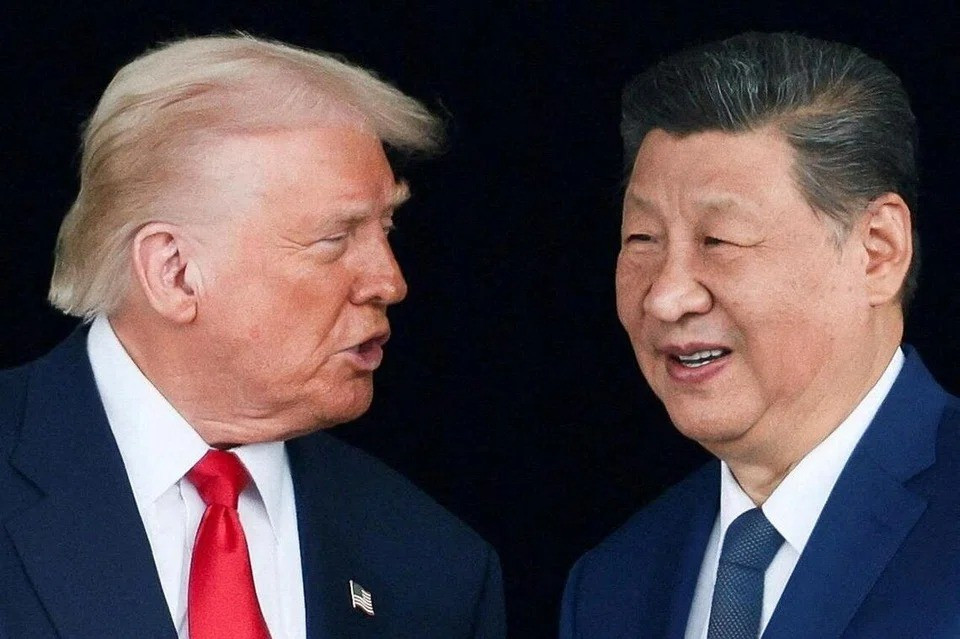
U.S. President Donald Trump and Chinese President Xi Jinping. (Photo: Reuters)
“Any nation trading with Iran will face a 25% tariff on all transactions conducted with the U.S.,” President Trump posted on social media on January 12th, adding that this tariff “takes effect immediately.” However, he did not specify its scope or implementation details.
President Trump’s warning comes months after his agreement with Chinese President Xi Jinping at a summit in South Korea, where the U.S. agreed to suspend tariffs in exchange for continued imports of rare earth materials from China.
According to Bloomberg Economics, the average U.S. tariff on Chinese goods dropped from 40.8% to 30.8% following the October 2025 trade truce. However, the new tariff announcement could reverse this agreement, casting doubt on Trump’s planned April visit to Beijing.
It remains unclear whether President Trump will apply the new tariff alongside existing ones or announce exemptions for China. His administration previously warned that higher tariffs could harm domestic markets. In August 2025, White House advisor Peter Navarro opposed penalizing China for purchasing Russian oil, stating, “We’ve already imposed over 50% tariffs on Chinese goods. We don’t want to harm ourselves.”
Following Trump’s announcement, Chinese Foreign Ministry spokesperson Mao Ning stated that Beijing would firmly protect its rights and interests. “We’ve always believed no one wins in a tariff war,” Ms. Mao said.
China’s imports from Iran fell nearly 28% in the first 11 months of 2025 (compared to the same period last year), dropping to $2.86 billion.
Dr. Zhou Mi, a senior researcher at an institute under China’s Ministry of Commerce, advised that if the U.S. fails to honor its agreement with China, Beijing has the right to take “appropriate actions.”
“Previously, the U.S. justified retaliatory tariffs by citing trade deficits as a national security threat,” Dr. Zhou said. “But now, how does trade between other nations and Iran affect U.S. security?”
Stock and bond markets showed little reaction to Trump’s statements. “Markets aren’t concerned with tariff threats,” said Ling Vey-Sern, Managing Director at Union Bancaire Privee in Singapore. “He’s unlikely to break the trade truce with China just to pressure Iran.”
Similarly, the oil market is expected to react only if the U.S. seizes an Iranian crude oil tanker. This could signal a potential escalation similar to the Venezuela situation, noted Emma Li, Vortexa’s lead China market analyst.
Beyond trade, Iran is a key strategic partner for China, according to Dexter Roberts, a senior fellow at the Atlantic Council’s Global China Hub.
“The question is whether Trump will actually follow through,” he said. “I wouldn’t be surprised if he suddenly declares China exempt from the new tariff. Who knows what could happen?”
Iran, an OPEC member, exported products to 147 trading partners in 2022, according to the latest World Bank data. Its top export destinations include China, the United Arab Emirates, and India.
Iran is currently experiencing its largest anti-government protests in years, accusing the U.S. and Israel of fueling the unrest.
President Trump indicated the U.S. could meet with Iranian officials and has contacted Iran’s opposition, while pressuring its leadership, including threatening military action. Iran responded that it maintains communication channels with Washington.
While airstrikes are among Trump’s options, “diplomacy is always the president’s first choice,” White House Press Secretary Karoline Leavitt stated on January 12th.
In his second term, President Trump has frequently threatened and imposed tariffs on nations for their ties to U.S. adversaries and for trade policies he deems unfair to Washington.
However, Trump’s trade policies face legal challenges as the U.S. Supreme Court considers overturning several existing tariffs.
Breaking News: Google to Manufacture Premium Smartphones in Vietnam This Year

Google is set to commence the development and production of high-end smartphones in Vietnam starting this year, following in Apple’s footsteps in India as U.S. tech giants move closer to establishing complete supply chains outside of China.
HSBC Forecasts Vietnam’s GDP Growth at 6.7% in 2026, with Inflation at 3.5%
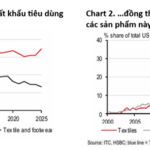
HSBC forecasts Vietnam’s GDP growth to reach 6.7% by 2026, with inflation remaining moderate at 3.5%.
China Hunts for Discounted Asian Oil, Securing $10/Barrel Deals Beyond Russia and Venezuela
China is ramping up its crude oil purchases from this nation, securing the deepest discounts among all available supply sources.
China Investigates Imported Goods from Japan
China has announced the initiation of an anti-dumping investigation into imported dichlorosilane from Japan.
Massive Underground Vein of Gold Oxide Ore Discovered in Asia, Outside of India and China

A newly discovered ore deposit boasts an impressive reserve of approximately 7.95 million tons of oxidized gold ore and 53.1 million tons of sulfide gold ore.