














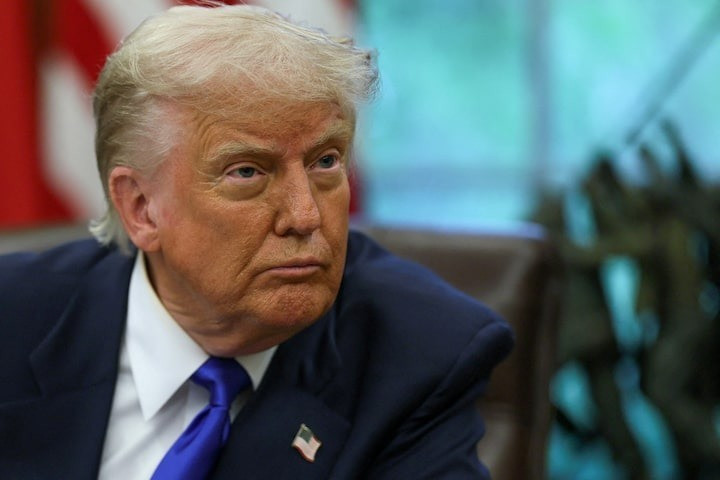
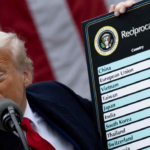
U.S. President Donald Trump. (Photo: Reuters)
“This decision takes effect immediately. Any nation trading with Iran will face a 25% tariff on all transactions with the United States,” President Trump announced on Truth Social.
The tariffs will be paid by U.S. entities importing goods from those countries.
“This is a final and irreversible decision,” Trump stated, without providing further details.
Iran, a member of OPEC, exported products to 147 trading partners in 2022, according to the World Bank’s latest data. Its top export destinations include China, the United Arab Emirates, and India.
No official statement from the White House has been issued regarding this policy, nor is there information on the legal authority Trump would use to impose the tariffs or whether they target all of Iran’s trading partners. The White House did not respond to requests for comment.
Iran is currently experiencing its largest anti-government protests in years. Tehran has accused the U.S. and Israel of fueling the unrest.
Trump indicated that the U.S. could engage with Iranian officials and has communicated with Iranian opposition groups, while pressuring the country’s leadership, including threats of military action. Iran has stated it maintains open communication channels with Washington.
While airstrikes are among the options Trump may consider, “diplomacy is always the president’s first choice,” White House Press Secretary Karoline Leavitt said on January 12.
During his second term, President Trump has frequently threatened and imposed tariffs on nations over their ties to U.S. adversaries and trade policies he deems unfair to Washington.
However, Trump’s trade policies face legal challenges as the U.S. Supreme Court considers overturning several existing tariffs.
India’s Rice Exports Face New Asian Challenge After Overtaking China

Over $240 million worth of Indian goods are currently stranded at international ports due to sanctions targeting the country.
America’s Extreme Thirst for This Metal – Not Gold, Not Silver

The Trump administration is leveraging tariffs and industrial policies to rapidly expand domestic production of this critical metal and reduce reliance on foreign sources.
U.S. Issues Official Announcement
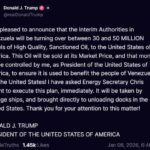
President Donald Trump announced that Venezuela will supply the U.S. with 30 to 50 million barrels of oil. The revenue generated from selling this oil will be utilized for the benefit of both the Venezuelan and American people.
Reflecting on a Year of Trade Tensions
Following the initial shock, Vietnam and other Asian export nations steadily moved toward trade agreements with the U.S. administration. Meanwhile, export activities continued to grow.
Trump Warns of Tariff Hike on Asia’s Rice Export Giant: Already Taxed at 53%, Second-Largest Supplier to the U.S.
The United States has accused this nation of dumping rice into the American market at unfairly low prices.