















Mr. Đinh Ngọc Dũng, Chairman and CEO of Bảo Tín Capital
On January 13th, the FChoice 2025 Awards Ceremony and the “Drivers of Double-Digit Economic Growth and Investment Opportunities in 2026” Seminar officially took place at the Sheraton Hotel (Hanoi).
The event honored outstanding businesses, entrepreneurs, and milestones of Vietnam’s economy in 2025, while opening a platform for in-depth dialogue on the path towards achieving a growth target of over 10% during 2026–2030.
Session 2 of the seminar, themed “Investment Opportunities in 2026,” featured the following speakers:
– Ms. Nguyễn Thị Thu Hiền (CEO of TCBS)
– Mr. Đinh Ngọc Dũng (Chairman and CEO of Bảo Tín Capital)
– Mr. Nguyễn Quốc Hiệp (Chairman of GP Invest)

Session 2 Overview
Host: Ms. Hiền, 2026 is expected to be a pivotal year for Vietnam’s economic boom with double-digit growth. Alongside economic growth, numerous investment opportunities across various sectors are emerging. How do you assess Vietnam’s efforts to turn extraordinary goals into the “new normal” and its impact on investment prospects? How can we confidently invest in the country’s economic future?
We’ve just experienced an exciting 2025 with Vietnam’s economic growth surpassing 8% and the stock market recording a 40% increase. I believe 2026 will be a pivotal year for a new development cycle, driven by the government’s strong commitment to achieving double-digit economic growth.
This goal is accompanied by a series of decisive actions in institutional and policy reforms, with a higher level of openness than before. The legal framework for many new products, already prevalent globally, is gradually being perfected in Vietnam. For those of us in the securities market, these are very positive signals for market prospects.
Looking ahead to 2026, I foresee several key growth drivers. Public investment will continue to play a crucial role in driving economic growth in the coming years. Alongside this, the private sector is expected to recover strongly. These factors will create a foundation for the production and business sectors to develop, thereby supporting the stock market.

Ms. Nguyễn Thị Thu Hiền – CEO of TCBS
For the stock market to develop sustainably, a prerequisite is to have high-quality listed companies. With forecasts of listed companies’ profits potentially growing by 15–20% next year, I believe the market will present many attractive investment opportunities. Following TCBS’s IPO, the IPO market is gradually becoming more vibrant, with many companies preparing to list. Simultaneously, expectations for a wave of IPOs and M&A are also anticipated to bring new capital to the market.
Regarding investment strategies, I want to emphasize that from a wealth management perspective, we don’t just focus on stock investments. Wealth needs to be viewed holistically, encompassing stocks, bonds, fund certificates, structured products, gold, real estate, and in the future, digital assets.
The role of financial institutions is to unlock and guide these capital flows because the economy still has many untapped resources. Therefore, we aim to develop diverse investment products, helping investors better allocate assets, rather than just tracking indices or selecting a few individual stocks.
I believe the trend in the coming period will be portfolio diversification, investing in stock baskets, investment products, or funds. This will be the development direction in the new phase, and the 2026–2030 period will open up many opportunities in this direction, with positive signals already emerging in 2026.
Host: Besides securities, gold has also attracted significant attention. However, the domestic market still exhibits certain inefficiencies, causing this investment channel to sometimes fluctuate excessively. In 2026, the gold market is expected to undergo transformative changes, opening a new cycle of healthier growth, such as eliminating the monopoly on gold bars, increasing imported gold supply, and launching a gold exchange. How do you assess the impact of these developments on the gold market?
Gold is an internationally recognized asset, commodity, and currency, so domestic gold prices generally move in tandem with global gold prices.
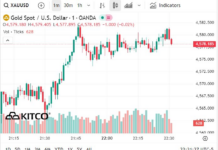
In 2025, gold prices recorded a growth rate of approximately 70%. As of the end of the year, global gold prices reached around $4,500/ounce, and overnight, they even rose to about $4,600/ounce. In Vietnam, domestic gold prices have reached approximately 160 million VND/tael, compared to around 95 million VND/tael at the beginning of the year.
However, Vietnam has not yet fully integrated with the international gold market. Therefore, a long-standing characteristic is that the gap between domestic and international gold prices remains high, currently at around 10%, equivalent to 15 million VND/tael, primarily due to supply and demand factors. Every morning, we witness people lining up to buy gold at gold shops, reflecting the significant demand for gold investment and accumulation, while the domestic gold supply is still limited.

Mr. Đinh Ngọc Dũng, Chairman and CEO of Bảo Tín Capital
Decree 232 is expected to partially address this issue. Accordingly, the new regulation gradually eliminates the monopoly of SJC gold, allowing large enterprises and eligible banks to import gold materials, produce, and supply gold bars. Currently, there are about 10 large enterprises and banks in the country that meet the conditions, thereby helping to increase the gold supply. In reality, after breaking the monopoly, the prices of SJC gold and 24K gold from enterprises have converged much more closely. At that point, the remaining challenge is mainly to narrow the gap between domestic and international gold prices.
Currently, the government has issued very decisive directives regarding the establishment of a national gold exchange in 2026. When this exchange comes into operation, it can be envisioned similarly to the stock market, with transparent and public transactions, and prices determined by actual supply and demand. At that time, the gap between domestic and international gold prices will gradually narrow, and in the next phase, it may even be completely eliminated.
This process can be likened to a battle: the initial stages are very challenging, but once major “obstacles” are overcome, the development momentum will be much stronger. In the international market, gold prices have repeatedly tested the $4,500/ounce mark and have now surpassed this threshold. This opens up expectations for a more attractive growth cycle for investors in the near future.
Host: In the past, the real estate market experienced several periods of overheated growth accompanied by very high leverage ratios among real estate companies. This made extraordinary waves unsustainable in the long term. With profound changes in the legal framework, will 2026 be the beginning of a stable, sustainable growth cycle based on real demand, or will it still be driven by monetary policy speculation?
We assess that in 2026, the real estate market will partially address the supply-demand imbalance. Firstly, by the end of 2025, there were over 700 approved social housing projects, providing a large supply of social housing in line with the Prime Minister’s target of 1 million social housing units by 2030. Therefore, this will pull down prices in the low-end housing segment.
Additionally, the implementation of Resolution 171, which allows landowners without residential land to develop commercial housing, will also create a significant supply.
Thirdly, the renovation of old apartment buildings, with strong determination from Hanoi and Ho Chi Minh City, will also be a considerable supply source.
Particularly, with strong infrastructure investment in outlying areas, there is a shift in real estate segments towards these areas. As social amenities are being improved and are sufficient, projects outside the second and third ring roads are starting to increase. I see this as a shift and change in the real estate market. Therefore, for projects that developers are currently interested in, they need to anticipate infrastructure development, urban rail systems, and transportation axes. Developers need to consider future infrastructure to predict urbanization rates.
One thing is certain: the real estate market is undergoing strong selection. If 10 years ago, we assessed that there were many left-handed investors from construction entering real estate. Now, the real estate investors who have survived to this point are all developers with vision and experience.
Furthermore, in 2023–2024, some major brands that invested beyond their means faced legal issues and significant risks.
The 2026 market will be selective. Additionally, customers are becoming smarter, and the market is becoming more demanding and competitive.
Host: Ms. Hiền, given the strong performance of the stock market in 2025, is there still room for growth in 2026? What keeps investors betting on Vietnamese stocks instead of withdrawing their money?
After the strong growth in 2025, 2026 still presents many positive drivers. These drivers come from both macroeconomic growth and the fundamentals of Vietnamese enterprises. An important point is that the current market uptrend is no longer as “wild” and uncontrolled as in previous cycles.
Market growth is accompanied by better fundamentals, with increasingly savvy investor participation. Investors have become accustomed to the market rising, then entering accumulation phases, testing thresholds, adjusting, and re-evaluating before forming new uptrends. These adjustment phases are necessary and healthy for the market, rather than the sharp and sudden corrections seen in the past.
The core factor remains the quality of listed companies. More and more good companies are listing, while existing companies are continuously improving governance and risk management capabilities. With expected profit growth rates of around 15–20%, I believe this is a quite positive outlook for the market. If the current market valuation is around a P/E of 16 times, with such profit growth, the expected future valuation dropping to around 13 times is quite attractive. Therefore, considering the stock market alone, I believe it remains an investment channel worth considering.
Regarding market upgrades and foreign capital inflows, I believe the impact of the upgrade will be medium-term, spanning several years, rather than creating an immediate effect in 2026. According to estimates, over approximately 5 years, total foreign capital inflows into Vietnam through the upgrade could reach around $25 billion. Specifically, in 2026, the scale of this capital inflow is forecast to be only $2–6 billion, mainly from passive investment funds (ETFs) and a portion of active capital.
The positive aspect is that foreign capital will enter the market gradually, steadily, and with a roadmap, rather than in a rush. This aligns with the market’s technical movements. As Vietnam is gradually included in indices, the index baskets will expand with the participation of more blue-chip stocks, thereby sustainably attracting passive investment capital. However, the high interest rate environment in international markets currently makes the cost of capital for foreign investors no longer cheap, coupled with exchange rate fluctuations, causing them to carefully consider the effectiveness of investing in Vietnam compared to their domestic markets. Therefore, foreign capital will be selective and cautious.
On the other hand, a more important factor in the coming period is unlocking domestic capital. In reality, in countries like Malaysia or Thailand, when GDP per capita reached around $6,000, the scale of investment and financial assets of the population increased dramatically, even quadrupling. Vietnam is rapidly approaching this threshold, meaning the proportion of financial assets in the economy will increasingly grow. This requires the market to have more financial instruments to absorb and guide capital within the population.
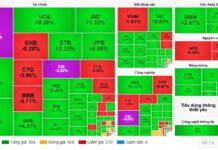
The liquidity performance of the market in 2025 is a clear illustration. In the first six months, the average trading value was only about 22,000 billion VND per session, but in the last six months, it increased to about 35,000 billion VND, bringing the annual average to about 30,000 billion VND. Improved liquidity shows that the market is not only growing in quantity but also changing in quality, reflecting a clear return of confidence from domestic investors. This is a significant driver for the market in 2026.
From an asset allocation perspective, I believe investors need to approach the market flexibly. Financial assets are becoming increasingly diverse, from stocks, bonds, and fund certificates to real estate, and depending on the timing, each investor will choose the appropriate channel. The important thing is to enhance knowledge, be selective, and allocate portfolios reasonably, as the market is increasingly differentiated across sectors.
Looking ahead to 2026, I believe some sectors with positive prospects include finance and banking, given their role as the lifeblood of the economy and improving risk management capabilities; energy and industrial production sectors, benefiting from GDP growth and public investment; and the retail and consumer sector, given Vietnam’s young population and strong economic growth.
Overall, the market will have alternating adjustment phases, and investors need to diversify their portfolios, maintaining a reasonable cash ratio to take advantage of accumulation opportunities when the market adjusts. This approach will help build assets more sustainably and stably in the coming period.
Host: Besides opportunities, the real estate market still faces challenges such as oversupply in the high-end segment, tight credit control by the State Bank, etc. How do you assess these difficulties for the real estate market in the coming year?
It can be said that in 2026, real estate businesses will face more difficulties and challenges than in the previous period.
Firstly, although Vietnam’s urbanization rate remains high, driving significant housing demand, the supply of real estate, despite increasing, has not fully met market demand. This creates a paradox: there is still room for development, but the question of how to develop effectively becomes increasingly difficult.
Construction data for the first 9 months of 2025 shows that inventory levels have reached approximately 26,000 units, with apartment segments accounting for more than half. This signals that market absorption capacity is becoming more selective, no longer as it was during the initial recovery phase.

Mr. Nguyễn Quốc Hiệp – Chairman of GP Invest
Additionally, most real estate businesses still heavily rely on bank credit. In a context where interest rates are trending upwards, with 3–4 rate hikes in the last two months of 2025 alone, the development leeway for the market is significantly narrowed, while increasing financial costs for businesses.
Meanwhile, the two main capital sources for real estate businesses, bank credit and capital mobilization, are both facing obstacles, especially after the 2022 shock, capital mobilization through bonds is very limited.
The challenges of 2026 become even more apparent when market purchasing power in the last two months of 2025 showed signs of decline compared to the first 9 months. This is the market’s response in a context where homebuyers have to borrow at higher interest rates, increasing ownership costs and making purchasing decisions more cautious.
From these factors, it can be seen that the leeway and challenges of the real estate market in 2026 are very large.
Businesses must carefully calculate to reduce financial pressure, with key factors including investment location selection, legal environment assessment, market absorption capacity, and suitable product structuring.
Therefore, before entering 2026, it can be affirmed that the market still holds significant opportunities, but they come with considerable challenges. If businesses do not have a reasonable pricing strategy, do not control costs and cash flow well, the risk level will be very high.
Host: Along with traditional channels like securities, real estate, and gold, the market has witnessed a strong surge in silver, a new investment channel in Vietnam. Mr. Dũng, why has the silver market boomed? What are the opportunities and risks when investing in silver?
Silver can be likened to gold’s “younger sibling,” and the younger sibling in a family is usually more agile and active. This could be a “spiritual” explanation for why silver fluctuates more strongly and quickly than gold. In 2025, silver prices increased by over 170%, or about 2.7 times, from around $29/ounce to nearly $80/ounce by the end of the year. Currently, silver prices are fluctuating around $84–85/ounce.
The strong rise in silver prices stems from several factors.
Firstly, global geopolitical tensions. 2025 witnessed a series of conflicts such as the Russia-Ukraine war, instability in the Middle East (Iran, Israel-Palestine), tensions in some Asian and South American regions, and even new hotspots. These factors have made gold and silver safe-haven assets, not only for individual investors but also for organizations and central banks.
Central banks alone purchased thousands of tons of gold and precious metals last year. China even announced a strategy to increase the proportion of gold and precious metal reserves from 5% to 10% during 2026–2030, showing significant demand for this asset class.
Secondly, loose monetary policies and interest rate cuts by the Fed are rational factors driving silver’s “heat.”
A distinctive feature of silver compared to gold is its demand for industrial production. In the current high-tech wave—from semiconductors, solar energy, electric vehicles to green industries—silver is an important raw material. Therefore, besides jewelry demand, industrial demand has also contributed to pushing prices up like “Thánh Gióng” recently.
However, overheating also means risk.
Firstly, when prices have risen too sharply, the possibility of profit-taking and adjustments is very high, especially when capital may shift to other more attractive investment channels.
Secondly, there are risks from unpredictable factors. For example, CME Group’s decision to raise margin requirements at the end of 2025 caused silver prices to drop by 10% in just one day.
Finally, while a certain amount of gold worth 160 million VND can fit into a small bar, with silver, investors must calculate in kilograms, involving very large volumes, leading to storage risks.
Therefore, when investing in silver, investors need to carefully consider the balance between opportunities and risks, allocating their portfolios reasonably. How to not miss out on opportunities from gold, silver, stock market cycles, while still ensuring safety for their investment portfolios.
Host: New asset trading platforms like the gold exchange and physical delivery on the commodity exchange (silver) are expected to launch in 2026. Can you update on the progress of implementing these exchanges and what are your expectations for the introduction of these new products? Will this be a crucial point for the market to become more accessible and widespread for investors?
Allow me to recount a brief story. Recently, I had the opportunity to visit Shanghai and exchange with leaders there. Through these meetings, I learned that the Vietnamese government has spent a considerable amount of time studying China’s national gold exchange model to reference for domestic policy development.
In current plans, it is highly likely that Vietnam will establish a national gold exchange with a clear roadmap. As early as 2025, the Politburo and the General Secretary issued very decisive directives related to the determination to form a national gold exchange in Vietnam.
Specifically, on December 11, 2025, the National Assembly issued a resolution requiring the government to soon propose solutions and specific roadmaps to realize this plan. Immediately afterward, the government directed the State Bank—the agency in charge of the gold exchange project. This demonstrates the strong determination of the entire political system, from the Politburo, National Assembly to the government.
Although there is no final decision yet, I believe the gold exchange will be established in the near future, with a three-phase roadmap. Phase 1, the exchange will primarily serve physical gold and gold material transactions, with the participation of major industry enterprises and eligible organizations. Phase 2, after balancing supply and demand, especially regarding gold imports and foreign exchange, the exchange will be expanded for individuals and other economic components to participate in transactions, operating similarly to the stock market. Phase 3, the market will develop derivative products such as gold certificates, gold funds, and other gold-related financial instruments.
I believe this is a reasonable, cautious, and coherent roadmap. The strategy has been very clearly defined: proceed step by step, avoiding repeating the risks and breakdowns that occurred with some spontaneous gold exchanges in the past.
With the establishment of the national gold exchange, the first important goal is to mobilize gold from the population. There are various estimates, but according to cautious assessments, the amount of gold held by the population could be up to about 500 tons. Converted at current prices, this figure is equivalent to about 2 million billion VND, or about $80 billion.
This is a “trillion-dollar” asset lying in safes, under beds, in warehouses, or even buried underground by the people, which will be brought into play to become one of the important capital sources for investment and development of our economy.
If effectively mobilized, this resource will become an important capital source for investment and economic development. When this resource is brought into the system, financial investment channels will develop more strongly. Similarly, the silver exchange—under the Ministry of Industry and Trade’s management through the commodity exchange—will also contribute to completing the financial-commodity market ecosystem in Vietnam.
It can be clearly seen that when the government sets a goal, the entire system from management agencies to enterprises will all aim towards that goal, turning it into an aspiration and finding every solution to realize it.
Many international organizations, when looking at Vietnam’s 8% or 10% growth targets, express skepticism. But if we do not dare to set ambitious goals, how can we mobilize all social resources to break through and elevate Vietnam further in the future.
Allow me to use a very familiar example. Yesterday, I watched the Vietnamese team’s match. In the past, many people assumed they would lose. But by 2025, the Vietnamese national team had won three consecutive championships in just one year. This shows that when “destiny is opened,” when belief and determination are strong enough, we can completely achieve what seemed impossible.
Host: At the beginning of 2026, VN-Index historically surpassed the 1,800-point mark for the first time, an extraordinary number that not many investors thought possible a year ago. What extraordinary numbers can investors expect in 2026 as long-term prospects become clearer?
We are witnessing a relatively solid macroeconomic foundation, significant growth potential in the economy, and increasingly clear growth capabilities of listed enterprises. This forms the basis for the stock market to develop in the medium and long term.
Currently, the market’s valuation is around 16 times earnings. Meanwhile, most listed companies are expected to achieve average profit growth rates of 15–20% annually. If considering a scenario where the market adjusts its valuation to around 13 times in the future, the market’s growth potential in the coming year at 15–20% is entirely visible. Therefore, VN-Index surpassing 1,800 points, or even reaching the 2,000-point region as many forecasts suggest, is a scenario with basis.
However, what I want to emphasize is not a specific number, but how investors approach the market. Opportunities always exist, even when the market adjusts downwards, because that is the time to accumulate long-term investment assets. The important thing is that each investor needs to prepare a reasonable and diversified asset portfolio.
Stocks are only one part of the overall financial assets. Besides, investors should maintain a certain proportion of fixed-income assets to create stable cash flows. When the stock market fluctuates, these income sources will play a balancing role in the portfolio. Simultaneously, maintaining an appropriate cash ratio is very necessary to be ready to deploy when the market enters attractive cycles.
Another notable trend is the development of the fund investment market in Vietnam. Currently, the fund market’s scale is only under 5% of GDP, much lower than many countries in the region. This is an investment channel suitable for investors who do not have much time or sufficient knowledge to make their own decisions, as the portfolio is managed by professionals and highly diversified.
In the period from 2026 to 2030, I believe Vietnam’s financial market will continue to introduce many new investment products. An example could be digital assets. Globally, the trend of asset tokenization is forming clearly, allowing large-value assets to be divided into smaller units, thereby expanding access for individual investors. When assets like gold are converted from physical form to certificates or digital forms, barriers related to scale and liquidity will be significantly reduced.
Essentially, the modern financial market is moving towards “popularization,” where the minimum investment scale is reduced and access opportunities are expanded. This places higher requirements on each investor in terms of financial knowledge enhancement.
The final message I want to send to investors is to continuously improve knowledge, take advantage of technology and new tools, including AI, to understand financial assets faster and deeper. When investors clearly understand what they are investing in, why they are investing, and what the risks are, they will be more proactive in their decisions, instead of being led by crowd psychology or unverified information. That is also the foundation for a sustainable and long-term investment strategy in Vietnam’s stock market.
Why Japan and South Korea Face Challenges While Vietnam Surges Ahead?

Driven by the ambition for double-digit growth, capital flows are shifting, and market confidence is surging. The vision unveiled at FChoice 2025 illustrates why Vietnam is defying the challenges faced by many other economies.
Should Homebuyers Act Now or Wait as Interest Rates Rise?

Mortgage rates are on the rise, leaving many prospective homebuyers wondering whether to take the plunge or hold off on their purchase.
Expert Forecast: 2026 Inflation Projected at 3.5%, Caution Advised Amid Persistent Pressures

Inflation in 2026 is projected to rise above the previous year’s levels, though not dramatically. However, monetary factors, growth dynamics, and exchange rate fluctuations demand a more cautious approach in policy coordination to balance growth support with macroeconomic stability.
International Media Assesses Vietnam’s Economic Growth Prospects

Vietnam is poised to embark on an ambitious economic and infrastructure program to sustain growth, attract further foreign direct investment (FDI), and proactively navigate global economic uncertainties.
HSBC Forecasts Vietnam’s GDP Growth at 6.7% in 2026, with Inflation at 3.5%
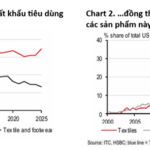
HSBC forecasts Vietnam’s GDP growth to reach 6.7% by 2026, with inflation remaining moderate at 3.5%.