On January 13th, Prime Minister Pham Minh Chinh, Head of the Central Steering Committee for Housing Policy and Real Estate Market, chaired the 5th meeting of the Steering Committee.
In recent times, amidst real estate market fluctuations, the Government and Prime Minister have actively directed the implementation of synchronized solutions to address challenges, promote investment, and gradually increase the supply of housing and real estate across segments. Social housing has been identified as a key focus.
As a result, the real estate market has stabilized, supply has shown positive changes, investor and public confidence has improved, and liquidity has shown signs of recovery. Numerous social housing projects have been licensed, commenced, and completed, contributing to meeting housing needs and ensuring social welfare.
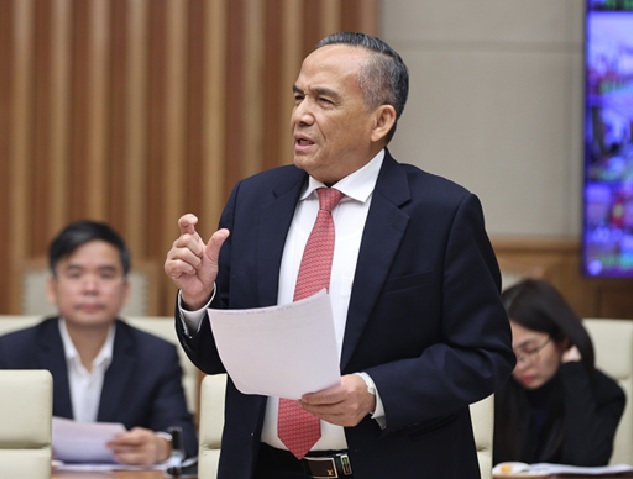
Le Hoang Chau, Chairman of Ho Chi Minh City Real Estate Association (HoREA) – Photo: VGP/NB
|
What do localities exceeding targets have to say?
As one of 19 localities meeting the 2025 social housing target, Ninh Binh Province reported completing 4,461 units in 2025. To achieve long-term goals, the province is implementing 38 projects totaling nearly 38,058 units. Seven projects are under active construction, and 22 others with approximately 24,973 units have received investment approval, ready for implementation.
However, Ninh Binh noted challenges in social housing project implementation, including limited incentives for developers and lengthy land acquisition and clearance procedures. The province proposed that authorities issue specific guidelines and special policies to resolve these issues, facilitating successful task completion.
Similarly, Thai Nguyen Province exceeded its social housing target, completing 4,223 units in 2025, including 3,069 for students and 1,084 general social housing units. Thai Nguyen prioritized these projects and streamlined administrative procedures, avoiding major obstacles.
However, the province highlighted that data on social housing beneficiaries is not yet integrated into the national database or VNeID, hindering management and policy abuse prevention.
Thai Nguyen urged the Government to direct relevant ministries (e.g., Public Security and Construction) to standardize and integrate this data into the national database, linked to citizens’ personal identification codes.
Proposals to increase affordable housing supply
To enhance access to social housing for low-income earners, Le Hoang Chau, Chairman of HoREA, suggested reducing the social housing loan interest rate from 5.9% to 4.8%, making it more affordable.
Chau also addressed the issue of social housing resale. While the Housing Law allows resale within five years, current regulations prevent those who have sold social housing (due to job relocation) from purchasing it in a new locality. He advocated for policy adjustments to support low-income earners in achieving stable housing.
HoREA also proposed expanding the supply of housing for those earning over VND 20 million/month, who are ineligible for social housing but cannot afford high-end commercial properties.
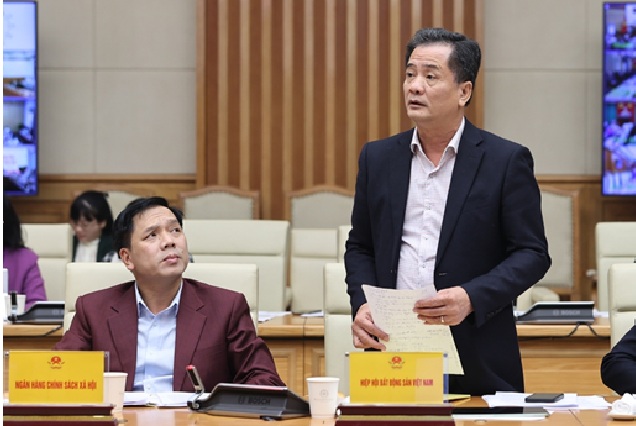 Nguyen Van Dinh, Vice Chairman of Vietnam Real Estate Association (VNREA) – Photo: VGP/NB
|
Nguyen Van Dinh, Vice Chairman of VNREA, emphasized the need to develop housing for middle-income earners alongside social housing. This would restructure supply to meet the majority’s needs.
Dinh also pointed out Vietnam’s lack of a professional rental market, with social housing policies focusing on ownership. This shortage increases ownership pressure, driving up prices and speculation.
“We urge the development of a rental housing market, starting with worker housing projects, to reduce ownership pressure and stabilize the market,” Dinh proposed.
– 20:40 13/01/2026
Prime Minister: Fast-Track Social Housing Projects Through “Green Lane” and “Priority Lane” Procedures

The Prime Minister has called for unified solutions to streamline implementation, ensuring clarity in roles, responsibilities, and authority. A key focus is accelerating administrative procedure reforms and eliminating unnecessary intermediaries. Additionally, social housing projects, particularly rental social housing, are to be prioritized through “green lanes” and “fast-track procedures” during the approval process.
Unlocking Double-Digit Economic Growth: Key Insights and Investment Opportunities for 2026
At the prestigious FChoice 2025 Awards Ceremony and the insightful seminar titled “Double-Digit Economic Growth Drivers and Investment Opportunities in 2026,” hosted by CafeF, esteemed experts and business leaders shared a wealth of compelling insights.
Vietnamese Firm Strikes Southeast Asia’s Largest Offshore “Treasure Trove”

This is considered the greatest “treasure” in Southeast Asia over the past two decades.
Unlocked Treasure: 500,000 kg of Gold Hidden Beneath Beds, in Storerooms, and Buried Underground by Vietnamese Citizens

Mr. Dinh Ngoc Dung, Chairman and CEO of Bao Tin Capital, shared his insights at the prestigious FChoice 2025 Awards Ceremony and the “Double-Digit Economic Growth Drivers and Investment Opportunities in 2026” Seminar.
Why Japan and South Korea Face Challenges While Vietnam Surges Ahead?

Driven by the ambition for double-digit growth, capital flows are shifting, and market confidence is surging. The vision unveiled at FChoice 2025 illustrates why Vietnam is defying the challenges faced by many other economies.