












The Central Committee’s 13th tenure report summarizes Vietnam’s 40-year renovation journey, reflecting on pre-1986 conditions when the nation, ravaged by war, faced prolonged economic and social crises. By the late 1970s and early 1980s, severe goods shortages and economic hardships plagued the population. In the decade following reunification, Vietnam’s per capita income ranged from $125 to $200 annually, ranking it among the world’s 20 poorest nations. Inflation peaked at 774% in late 1986.
The 6th National Party Congress identified critical errors in policy, strategy, and implementation as root causes. Consequently, Vietnam embarked on its renovation journey in 1986. Despite international embargoes, the economy gradually recovered within the first decade, overcoming stagnation and sustaining high growth rates.
From 1996 to 2005, stability was maintained, and national strength grew. Production capacities met essential demands, exports surged, and reserves were built, laying the groundwork for long-term growth.
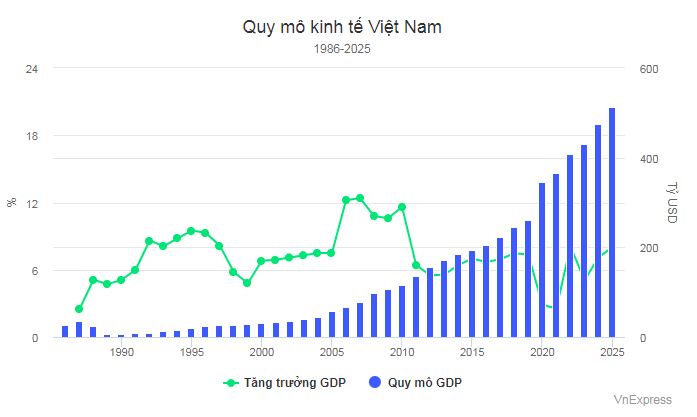
Between 2006 and 2015, Vietnam emerged as a lower-middle-income developing nation with stable socio-political conditions and improved welfare. Average GDP growth over the first 30 renovation years reached nearly 7% annually. From 1991 to 2016, exports grew 60-fold, and imports 80-fold, reflecting economic expansion and integration.
Since 2016, despite global volatility, average GDP growth has remained at 6.2% annually. Economic scale and per capita income have nearly doubled, reaching over $510 billion and approximately $5,000, respectively, significantly improving living standards.
Alongside economic growth, Vietnam has streamlined its political system, restructured governance, and redefined development spaces. Strategic policies have been implemented to drive progress. National sovereignty, security, and public order remain steadfast, with an independent, diversified foreign policy.
The report underscores the historic achievements of 40 years of renovation. Prof. Ta Ngoc Tan, Vice Chairman of the Central Theoretical Council, attributes these successes to the Party’s resolve, state efforts, and public trust.
Challenges persist, including the risk of falling into the middle-income trap, unsustainable development, low productivity, and competitiveness. The Fourth Industrial Revolution demands new approaches to production, trade, and social welfare.
Breakthrough Understanding of the Socialist-Oriented Market Economy
A key highlight of the 40-year review is the evolving theoretical understanding of the socialist-oriented market economy.
Since the 6th Party Congress, efforts have focused on economic mechanism reforms, restoring a multi-sector economy, and leveraging market dynamics. The 7th Congress reaffirmed this as a long-term strategy. By the 10th Congress, the market economy was recognized as a product of human civilization.
The 13th Congress defined the socialist-oriented market economy as Vietnam’s overarching model during its transition to socialism, aligned with the goal of a “prosperous people, strong nation, democracy, equality, and civilization.” This economy includes diverse ownership forms, with the state sector leading, cooperatives strengthening, private sectors driving growth, and foreign investment encouraged.
Resolution 68 (May 2025) emphasizes the private sector as a key economic driver, promoting industrialization and modernization through science, technology, and innovation.
The report traces the shift from viewing market economies as capitalist-exclusive to recognizing them as universal human achievements. The socialist-oriented market economy is now a pillar for rapid, sustainable development, marking a new historical model.
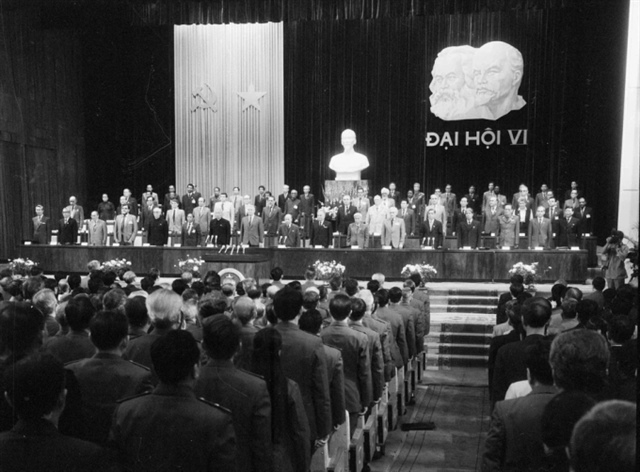
The 6th National Party Congress in 1986 marked the beginning of renovation. Photo: TTXVN |
From Underdevelopment to Emerging Economy
After 40 years, Vietnam has transformed from poverty to a high-middle-income developing nation, enhancing its global standing.
Capital markets, corporate bonds, securities, insurance, and real estate have expanded, diversifying investment and product options. Labor markets have grown in scale and quality, with science and technology deepening regional and global integration.
Vietnam trades with over 230 countries, has signed 17 free trade agreements with 60+ partners, and attracts FDI and ODA from global leaders.
Progress toward “prosperity, strength, democracy, equality, and civilization” is evident through wage increases, poverty reduction, and middle-class expansion. Human development (HDI) and happiness indices have improved.
However, overlapping regulations hinder business. State-led growth remains underutilized, private sectors lack sustainability, and foreign investment impact is limited. Growth models still rely insufficiently on science, technology, and innovation.
Beyond economics, advancements in culture, education, science, defense, and diplomacy are notable. Universal primary education was achieved by 2000, lower secondary by 2010, and preschool by 2017. Defense strategies emphasize early, proactive protection, and diplomatic relations span 194 UN members with multi-level partnerships.
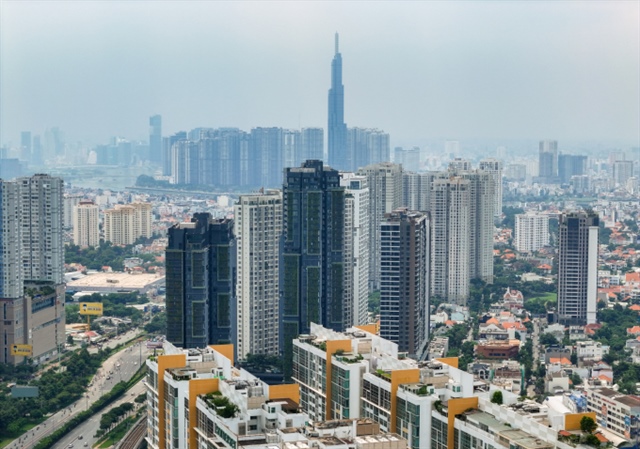
Ho Chi Minh City’s eastern real estate in October 2025. Photo: Quynh Tran |
Targeting Double-Digit Growth in 2026-2030
Future challenges include complex global dynamics, intensified great power competition, and the Fourth Industrial Revolution’s transformative impact on production.
By 2030, Vietnam aims to become a high-middle-income nation with a $900 billion GDP and $8,500 per capita income. By 2045, targets include a $2.5 trillion GDP and a top-10 Asian education system. Wealth inequality remains a concern.
Strategies focus on comprehensive renovation, economic restructuring, and innovation-driven growth. Double-digit growth is targeted for 2026-2030, with Vietnam becoming an industrialized, high-middle-income nation by 2030 and a high-income developed nation by 2045.
Legal reforms, macroeconomic stability, inflation control, and talent development are priorities. Digital transformation, green growth, and circular economies will drive progress.
The state sector will lead, while private sectors are empowered as key drivers. Foreign investment will prioritize high technology, with defense industries modernizing for dual-use capabilities.
The centennial goals are rooted in patriotism, self-reliance, unity, and prosperity. By 2030, universal healthcare is targeted. “The 40-year renovation review provides scientific and practical foundations for the 14th Party Congress documents,” stated Prof. Ta Ngoc Tan.
Vu Tuan
– 07:00 14/01/2026
Seven Mega Projects by Vingroup with a Combined Investment of Over 2 Quadrillion VND

From megacities and railways to power, steel, and beyond, Vingroup’s deployment portfolio spans multiple economic sectors. A common thread unites these ventures: capital investments measured in hundreds of trillions of VND, driving infrastructure development, job creation, and visitor influx. This momentum fuels regional growth and fuels Vingroup’s ambition to shape new iconic landmarks.
Vietnam’s GDP Poised to Enter Global Top 10, Predicts Kinh Bac Chairman Dang Thanh Tam

“United by our love for our nation and driven by extraordinary determination, we must collectively build and execute this plan to confidently step into the new era,” emphasized Mr. Đặng Thành Tâm.
Prime Minister: Ensuring Equal Access to Housing for Every Citizen

At the conclusion of the morning session on January 13th, Prime Minister Phạm Minh Chính emphasized that housing is a critical social welfare issue and a fundamental right of every citizen. He underscored the goal of ensuring social progress and equality, guaranteeing equal access to housing for all, leaving no one behind. This must be achieved in a manner aligned with the real income levels of citizens, the country’s development, and market dynamics. The focus is on increasing housing supply across all segments, particularly social housing and rental options, to reduce commercial housing prices. Additionally, mechanisms and policies will be developed to support housing for middle-income earners (those earning above 20 million VND per month).
VinFast Shatters Records: Delivers 175,000 Vehicles in Landmark Year

This marks an unprecedented record in Vietnam’s automotive market, surpassing even the previous benchmark set by a foreign car manufacturer by a twofold margin.
Ho Chi Minh City and Surrounding Provinces Witness Surge in Approved “Paper Home” Sales Projects in Late 2025
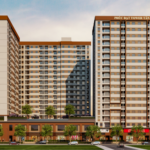
Local Department of Construction statistics reveal that 34 projects, comprising nearly 16,000 units, are eligible for future home sales and mobilization across 12 provinces and cities in the final month of 2025. Ho Chi Minh City leads with 9 eligible projects.