







Nghe An on the Brink of a New Growth Era
The year 2025 marks a pivotal moment for Nghe An as the North-South Expressway officially connects the entire route. Seamless connectivity with Hanoi, northern provinces, and the Central-Southern regions not only reduces travel time but also significantly boosts trade, logistics, and industrial investment. From a locality with potential yet cautious development, Nghe An is now integrating into the strategic trans-Vietnam transportation axis with an increasingly prominent role.
By 2026, Nghe An continues to welcome a wave of infrastructure investments across multiple levels. At the urban scale, Vinh City (within its former administrative boundaries) is set to develop additional central axes, including the 30m Road, Phase 1 of Le Mao Road, and the Vinh Riverside Road. These projects aim to restructure the urban space into a multifunctional model, prioritizing riverside landscapes and urban living quality.
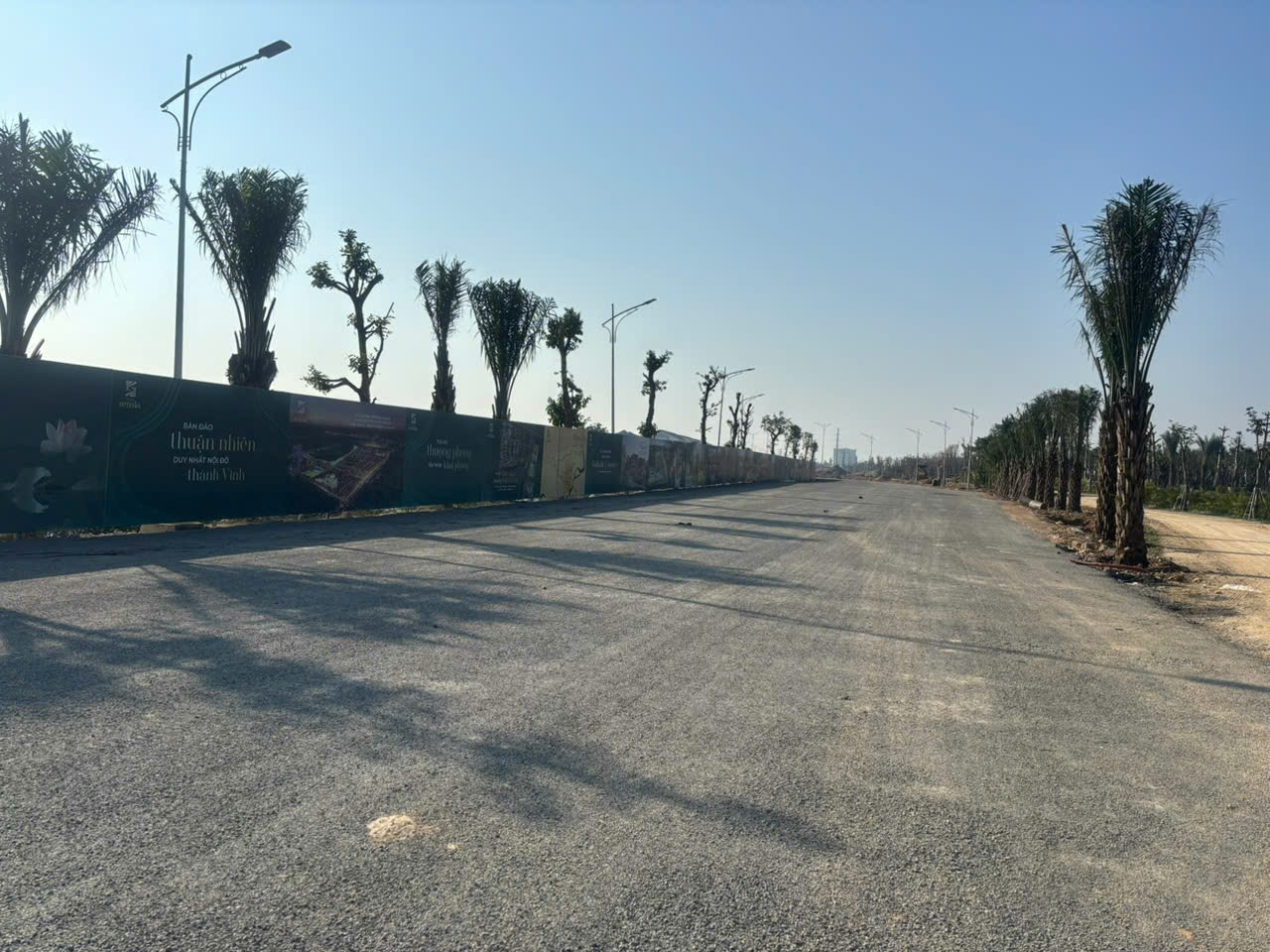
The 30m Road is nearing infrastructure completion.
On a national and inter-regional scale, the groundbreaking of the North-South High-Speed Railway positions Vinh as a crucial node on the country’s backbone transportation axis. Simultaneously, the Hanoi-Vientiane Expressway (Vinh-Thanh Thuy section) is under construction, opening a new East-West corridor and enhancing Nghe An’s role as a regional transit hub. The logistics system is also being upgraded with plans to renovate nine ports, increasing capacity to 22.25–26.75 million tons annually, laying a solid foundation for export-import, industrial, and logistics services.
In 2027, the infrastructure investment chain continues with Phase 2 of Le Mao Road. Once operational, this axis will enhance transportation capacity, unlocking robust growth potential in trade, services, and real estate value along the route, fostering sustainable long-term development.
The Sensia – Leading the New Growth Cycle
Amid this context, The Sensia fully meets two critical market criteria for the new phase: a meticulously crafted living standard and long-term value appreciation potential. Located in Truong Vinh Ward, a strategic hub of Vinh City, the project is situated in an area earmarked for new urban development.
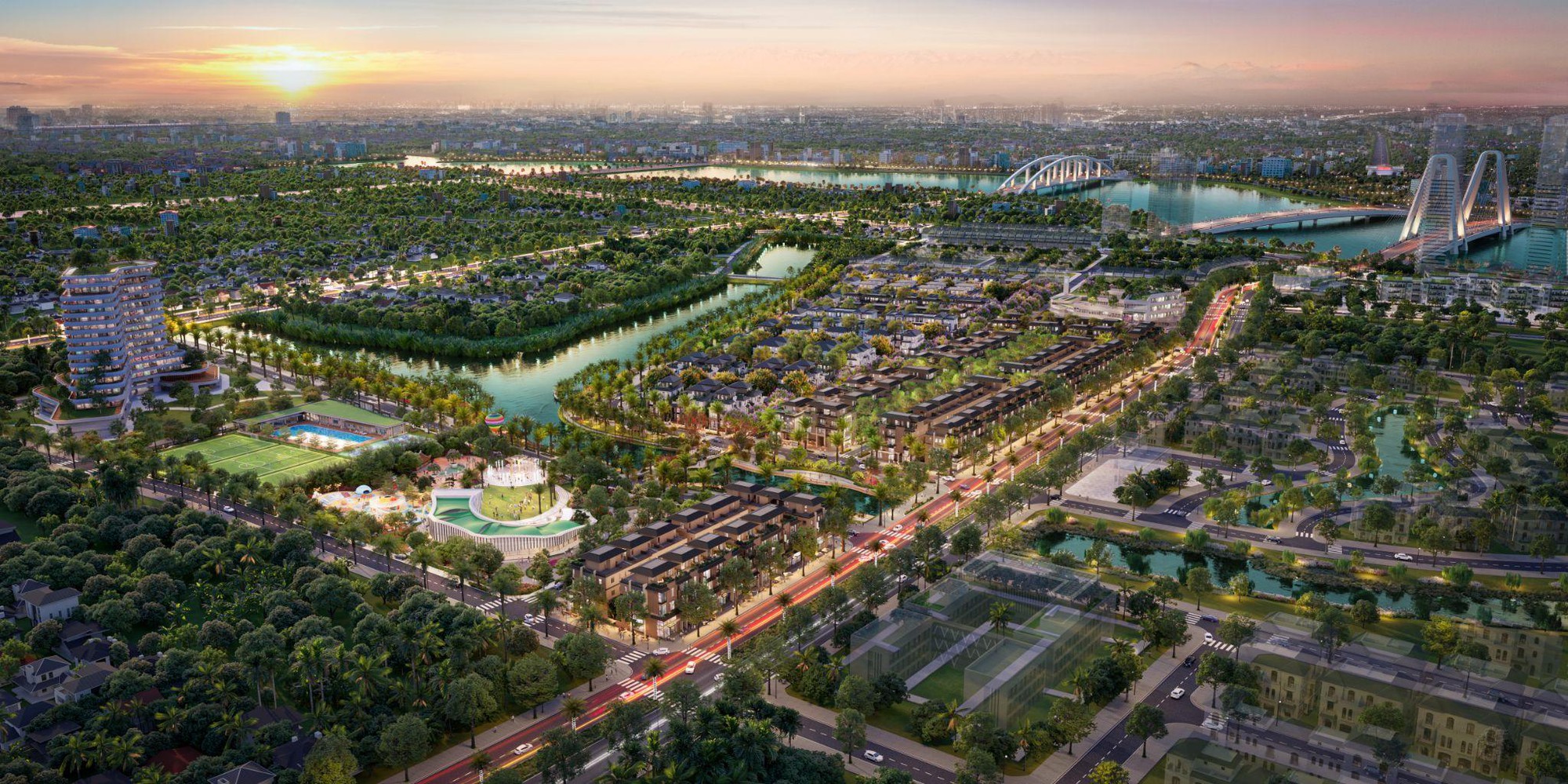
The Sensia is developed by its investor as a “unique” living space centered around human experience.
The Sensia’s standout advantage lies in its natural peninsula location, surrounded by the Vinh and Rao Mang Rivers, offering expansive views and an eco-rich urban environment. Spanning 20.05 hectares with a mere 26% construction density, the project offers 319 units, including shophouses, townhouses, and villas.
The Sensia sets itself apart by pioneering the Walkable Urbanism model, Vinh City’s first pedestrian-centric urban design. The project features 5km of riverside walkways connecting the entire area, 7m-wide pedestrian sidewalks, nearly 39% water landscape, and 6.3 hectares of multifunctional green space. This design ensures residents can access green areas and amenities within walking distance.
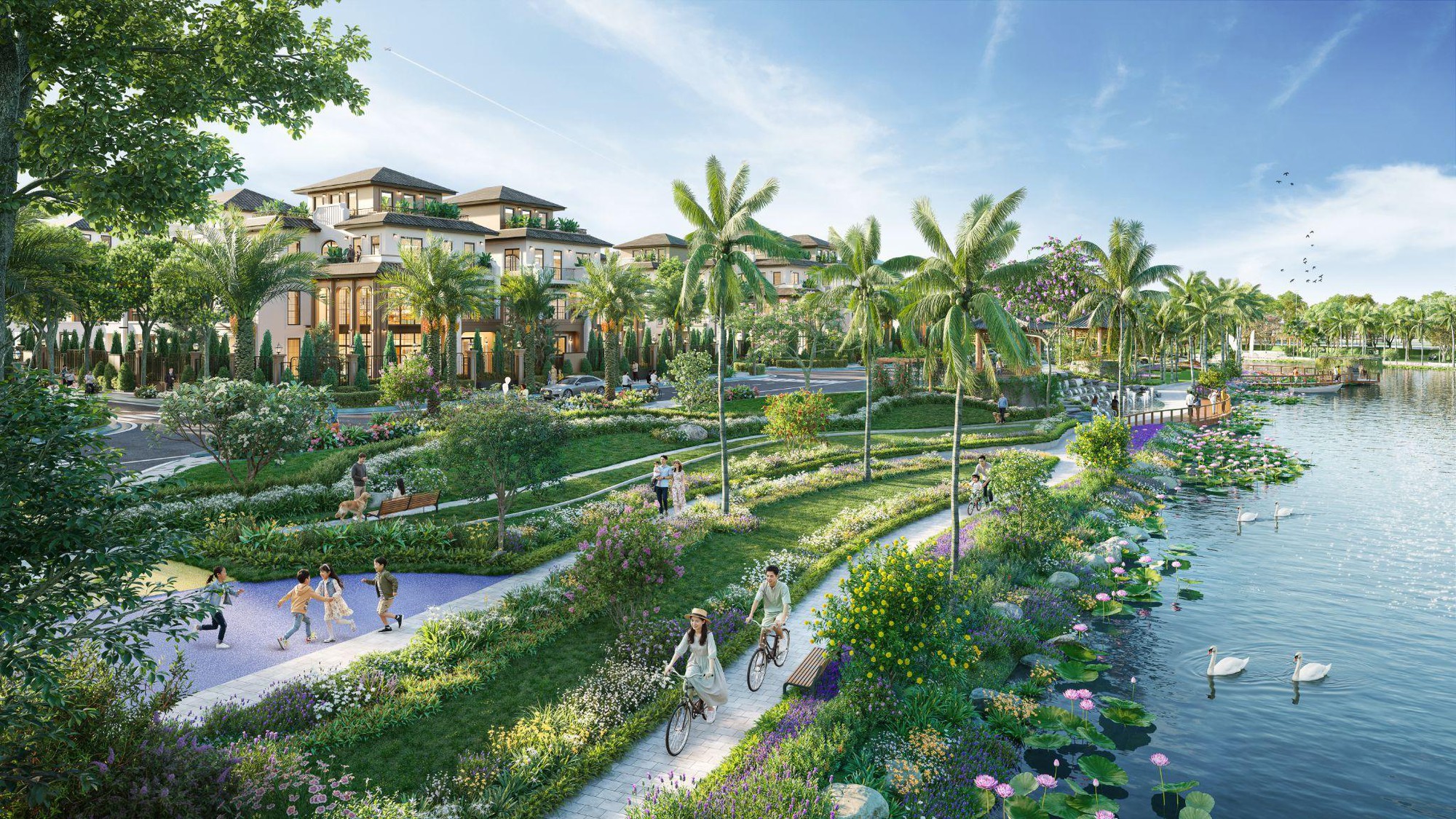
The Walkable Urbanism model at The Sensia prioritizes pedestrian spaces for sustainable living and strong community engagement.
Global urban development research and practices show that walkable cities effectively reduce vehicle emissions, enhance physical and mental health, and stimulate commercial activity through natural movement and high community interaction.
Additionally, The Sensia is managed to international standards by CBRE, featuring over 55 in-house amenities designed to meet all living, working, and entertainment needs within walking distance. Notably, the entire project offers long-term land ownership titles, a significant advantage in a market increasingly valuing legal safety and long-term asset security.
In Nghe An’s new real estate cycle, where infrastructure, capital, and genuine demand converge, projects with long-term vision and tangible living value are becoming market cornerstones. With its strategic location, thoughtful planning, and clear development philosophy, The Sensia is poised to lead this growth wave, shaping new standards for Nghe An’s urban core in the years ahead.
After Vingroup, Sun Group, T&T… Him Lam Consortium Set to Develop $470 Million Project in Tay Ninh

Truong Son Real Estate JSC and Him Lam JSC have recently released the Environmental Impact Assessment (EIA) report for the Duc Lap Residential Area project in Tay Ninh Province.
New Economic Growth Cycle Emerges as Capital Flows Shift Westward in the Capital
As Vietnam’s economy embarks on a new growth cycle, the real estate market is undergoing a transformative shift towards more selective and sustainable development. Capital is moving away from short-lived speculative trends, gravitating instead toward areas characterized by long-term planning, tangible infrastructure, and significant growth potential.
Ho Chi Minh City Apartment Prices Post-Merger Average 68 Million VND/m², Forecast to Rise Further by 2026-2028
Following the transformative expansion of Ho Chi Minh City in 2025, which included the integration of Binh Duong and Ba Ria – Vung Tau, Vietnam’s housing market is entering a period of significant reshaping. According to Vo Huynh Tuan Kiet, Director of Residential Services at CBRE Vietnam, 2026 will mark a pivotal year where trends such as urban sprawl, infrastructure-driven development, product quality enhancement, and market transparency become increasingly prominent.
Transforming Cai Lan Port into a Premier Tourism Hub: Quang Ninh’s Visionary Plan
According to information from the People’s Committee of Quang Ninh Province, the locality is planning to transform Cai Lan Port into a tourism port, while Con Ong and Hon Net Ports are being developed into multi-purpose ports.
Rose Residence Sets the Pace for Hai Phong Apartments with Consecutive Price Hikes

The central apartment segment in Hai Phong is entering a new price hike cycle, driven by surging real-estate demand and limited supply. Amid this landscape, Rose Residence stands out, demonstrating its allure through tangible value, as evidenced by two consecutive price increases in Q4/2025.