












They are young households, intellectuals, engineers, bachelor’s degree holders, and office workers in both public and private sectors, with a total monthly income of 20-30 million VND.
According to the latest directive from the Prime Minister, this group requires special attention. However, the harsh reality is that with the housing price-to-income ratio exceeding 20 times, the dream of owning a 60m² apartment is becoming more distant than ever. Without intervention, they are forced to choose between shouldering massive bank loans or accepting precarious rental living in the very cities where they contribute their labor to build.
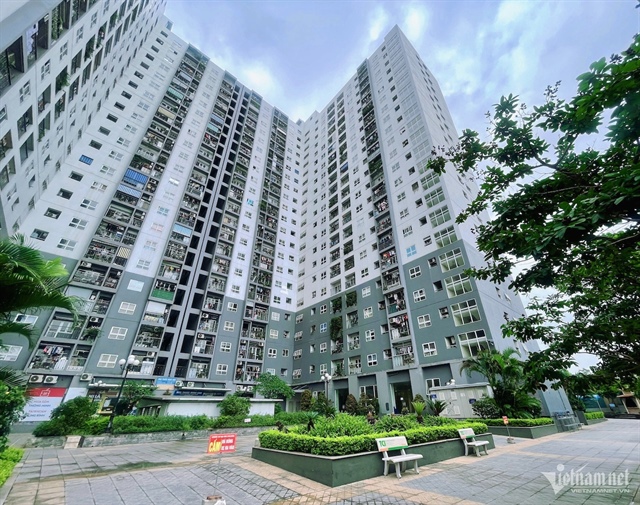 A social housing project in Hanoi. Photo: Hồng Khanh |
The root cause lies not only in the shortage of supply but in a dangerous shift in the nature of housing. From being an essential consumer good for “settling down,” housing is being transformed into a financial tool for “accumulation.”
When social capital, instead of flowing into production, is locked into land with endless price appreciation expectations, “speculation” becomes a hidden enemy stealing opportunities from those with genuine needs. Without state intervention, this gap will never be filled by private enterprises that always chase the highest profit margins.
Lessons from Neighbors: The “Steel” Approach
Globally, no country has successfully solved the housing problem for the middle class solely through moral business appeals. They use laws, taxes, and sharp financial tools—bitter remedies to treat speculation at its root.
Singapore is often cited as a legend in public housing, but few notice how it manages the middle-class segment through Executive Condominiums (ECs)—a hybrid model between public and private. The most thought-provoking aspect is not how they build homes but how they prevent people from profiting from this humane policy.
Here, the concept of “buy-to-sell” for short-term profit is eliminated by a minimum residency requirement. Owners must live in the property for 5 years (or even 10 years for prime locations) before selling. This acts as a filter, immediately excluding speculators, as no “shark” wants to tie up capital for a decade without liquidity.
Furthermore, to ensure fairness, Singapore imposes a resale levy. If you’ve enjoyed a housing subsidy once, to buy a second time, you must pay a fixed penalty of up to SGD 70,000 to return the previous subsidy. For prime-location units, the state even applies a “subsidy recovery” mechanism, reclaiming 6-9% of the resale price to prevent buyers from becoming overnight millionaires due to land rent differences.
While Singapore uses administrative regulations, South Korea and Taiwan (China) employ taxes as heavy deterrents.
Facing rampant speculation, South Korea introduced a “punitive” transfer tax of up to 70% on profits if a property is sold within the first year. The message is clear: homes are for living, not for stock-like speculation.
Taiwan (China) implemented a thorough tax reform in 2021 to close speculative loopholes, particularly the trick of transferring purchase rights (selling unripe rice) and company shares to avoid taxes. The rates are 45% of profit if sold within 2 years, 35% if sold within 2-5 years, and 20% if sold within 5-10 years.
The core of Taiwan’s “2.0” policy is including future housing transactions and shares of real estate companies (if over 50% of the company’s value is real estate) under real estate transfer income tax.
This halts speculators from buying wholesale “diplomatic” or “deposit” units and reselling deposit contracts for profit without paying real estate taxes as before. This policy significantly reduced project apartment “flipping,” forcing investors into medium- and long-term holdings.
China, meanwhile, controls supply discipline through a “whitelist” mechanism. Only legally clean projects with transparent funding receive credit, and this capital is strictly managed for construction, not debt repayment to parent companies. This is a harsh lesson for Vietnam, where many projects are stalled due to misuse of funds by developers.
In France, wasting land resources is considered an economic crime. The tax on vacant properties is a strong blow to the wealthy who hoard land. An unoccupied property (based on electricity and water data) is automatically taxed, with rates increasing annually, up to 34% of the rental value. This policy forces owners to circulate their assets, either by selling or renting, rather than leaving them idle for price increases.
Time for a “Bitter Remedy”
In the draft Political Report for the 14th Congress, the Party set the goal of “establishing a national housing fund.” This is the most important “passport” to boldly legalize the housing segment for this group, turning political direction into tangible homes.
Based on valuable international lessons, it’s time for Vietnam to courageously adopt strategic “bitter remedies.”
First, we need to legalize a new housing segment, between social housing and luxury housing, with a controlled price cap (e.g., 35 million VND/m² in major cities), which could be called “mass commercial housing.” To achieve this, the mindset around land auctions must radically change.
Instead of auctioning for the highest budget revenue (unintentionally driving up housing prices), the state should tender to select developers committing to the lowest selling price. This is a trade-off of short-term budget for long-term social welfare. These projects should be fast-tracked for approval and included in a credit “whitelist” to ensure affordable capital flows correctly.
Second, Vietnam could introduce a progressive transfer tax based on holding period. Including future housing transactions and shares of real estate companies (if over 50% of the company’s value is real estate) under real estate transfer income tax, with a 30-40% tax on “flipping” profits in the first year, would immediately cool speculative fervor.
Additionally, Vietnam could pilot a tax on vacant properties based on electricity and water consumption data in Hanoi and Ho Chi Minh City. This would not only increase budget revenue but, more importantly, force supply back into the market. Specifically, the state-subsidized housing segment should prohibit any transfer for the first 5 years. This is a necessary “technical barrier” to ensure policies reach those with genuine housing needs.
Third, a national housing savings fund (like Singapore’s CPF or Indonesia’s Tapera) should be established. With a fixed interest rate of around 6%/year over 20-30 years, monthly repayment burdens would significantly decrease, enabling young people to dream and realize their housing aspirations. Additionally, a “shared ownership” model—allowing buyers to purchase 50-70% of a unit’s value and pay the rest gradually—is a financial innovation worth considering to reduce initial capital pressure.
With these solutions, the policy “remedy” may be bitter for a few but will bring the sweet taste of fairness and opportunity to millions of young families.
Nguyễn Phước Thắng (Hoà Bình University)
– 05:30 15/01/2026
Chairman of Hoa Binh Construction Group Le Viet Hai: Real Estate Must Develop Steadily to Prevent Ecosystem Disruptions and Ensure Continuous Employment for Businesses
At the forum “Real Estate Market Outlook 2026 – Momentum for a New Growth Cycle,” organized by Construction Newspaper, many opinions suggested that the market is poised to enter a new growth cycle.
Why Ho Chi Minh City’s Hottest Social Housing Project Hasn’t Launched Yet
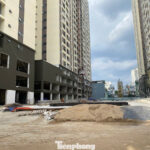
The CEO of Duc Manh Joint Stock Company has confirmed that the Ly Thuong Kiet social housing project is now 90-95% complete. The project is currently undergoing final inspections and finishing touches, in line with the schedule approved by the Ho Chi Minh City People’s Committee.
Prime Minister Directs Central Bank to Tightly Control Real Estate Credit, Preventing Speculative Capital from Distorting the Market

The Prime Minister has directed the State Bank of Vietnam to tightly regulate real estate credit, preventing speculative capital from distorting the market. The focus is on channeling funds into affordable housing projects, ensuring a balanced and sustainable property sector.
Exciting News for Homebuyers in Bac Ninh

In the coming period, Bac Ninh is set to welcome a wave of new urban developments and social housing projects, significantly expanding the housing supply across the region.
Prime Minister: Slash Commercial Housing and Apartment Prices to Reasonable Levels

Prime Minister Pham Minh Chinh has mandated a comprehensive review and elimination of all unnecessary, cumbersome procedures that cause harassment, inconvenience, and increase compliance costs. Additionally, he has specifically called for a reduction in commercial housing prices, particularly for condominiums, to a reasonable level that aligns with the country’s overall development.