










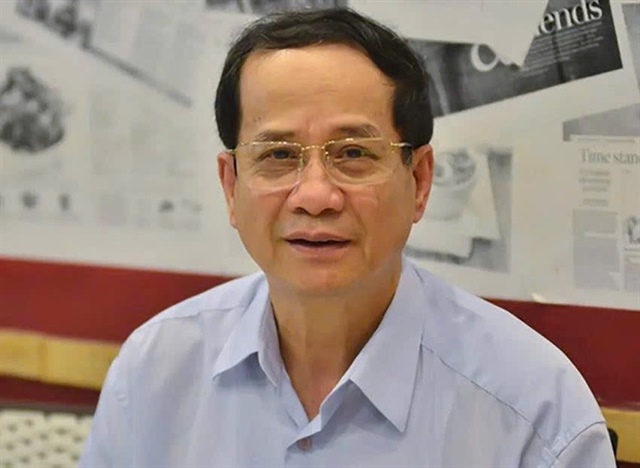
Assoc. Prof. Dr. Ngo Tri Long, former Director of the Market and Price Research Institute (Ministry of Finance) |
Assoc. Prof. Dr. Ngo Tri Long, former Director of the Market and Price Research Institute (Ministry of Finance), asserts that the 14th National Party Congress takes place amidst profound global turbulence, marked by intense strategic competition, geopolitical conflicts, supply chain disruptions, and intertwined risks of inflation and growth stagnation. Domestically, after nearly 40 years of Renovation (Doi Moi), Vietnam has amassed significant economic scale, infrastructure, production capacity, and integration. However, the nation stands at a critical juncture: either break through to join the ranks of high-income developed nations within decades or succumb to the inertia of mediocre growth, sluggish productivity improvements, and diminishing competitiveness.
From the perspective of an economist deeply engaged with policy realities, Assoc. Prof. Dr. Ngo Tri Long hopes the 14th Congress will embody long-term vision and tangible breakthroughs, particularly in institutional reform and national governance capacity.
According to Dr. Long, in development economics, robust institutions serve as the “leverage of all leverages,” fostering trust, reducing transaction costs, encouraging investment, driving innovation, and optimizing resource allocation. Thus, the imperative is not merely to refine institutions but to significantly enhance governance quality, fostering a system that is both swift and precise. This entails timely decision-making coupled with clear accountability, transparent processes, and outcome-based evaluations.
Institutional breakthroughs must be accompanied by policy consistency and predictability, mitigating risks for businesses and investors. Clear decentralization and empowerment should be paired with power control mechanisms, oversight, and accountability. Simultaneously, resolute efforts to slash compliance costs through procedural simplification and expanded digital public services are essential. Only when the system operates seamlessly can societal resources be fully unleashed and optimized.
Alongside institutional reforms, Assoc. Prof. Dr. Ngo Tri Long anticipates the 14th Congress will clearly establish a new growth model centered on productivity, with science, technology, innovation, and digital transformation as core drivers, and high-quality human resources as the decisive factor.
Growth reliant on capital and low-skilled labor will soon hit its ceiling. To prosper, Vietnam must elevate productivity and its position within the value chain. This necessitates mechanisms to incentivize research and development, encourage businesses to invest in innovation, develop data ecosystems and digitalization, and strategically select sectors for leapfrogging. Rapid development must also align with green growth, energy transition, and sustainability, avoiding environmental and public health trade-offs.
Another vital endogenous driver is the empowerment of the business community. Assoc. Prof. Dr. Ngo Tri Long hopes the 14th Congress will reaffirm the private sector’s role as a key growth, innovation, and employment driver by fostering a fair, transparent business environment, safeguarding property rights, and improving resource access.
State-owned enterprises should focus on critical sectors and macroeconomic balances but operate under market discipline, modern governance, transparency, and accountability for state capital preservation and development.
“Ultimately, development must translate into improved quality of life for citizens, encompassing employment, income, public services, healthcare, education, social welfare, and opportunities for future generations. This requires coupling growth with enhanced public spending efficiency, improved human resource quality, and bolstered socio-economic resilience against domestic and external shocks,” shares Assoc. Prof. Dr. Ngo Tri Long.
“I believe Vietnam possesses the critical conditions for a breakthrough, but the window of opportunity won’t remain open indefinitely. The 14th Party Congress must prioritize strategic imperatives, concentrate resources on high-impact breakthroughs, and, most crucially, establish robust implementation mechanisms to transform political resolve into tangible socio-economic outcomes. Only then will Vietnam’s aspiration for prosperity in the new era become not just a goal but a sustainable development trajectory,” Assoc. Prof. Dr. Ngo Tri Long concludes.
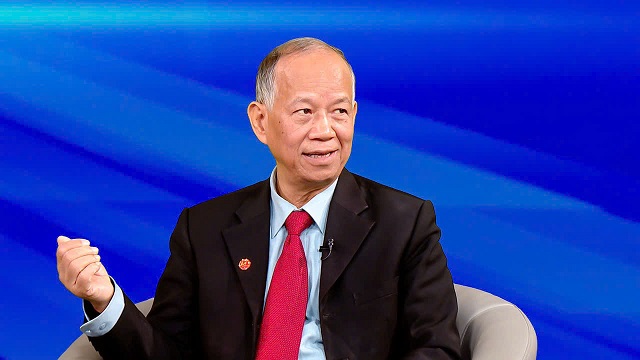
Dr. Nguyen Minh Phong, former Head of Economic Research, Hanoi Institute for Socio-Economic Development Studies
|
The 14th National Party Congress Marks a New Milestone of Courage and Political Resolve
According to Dr. Nguyen Minh Phong, former Head of Economic Research at the Hanoi Institute for Socio-Economic Development Studies, the 14th Party Congress not only upholds tradition but also introduces updated perspectives, new objectives, and bold, innovative solutions. These reflect revolutionary thinking and action, creating fresh momentum and expectations for breakthroughs aligned with reality and national development needs.
Dr. Nguyen Minh Phong highlights that citizens and businesses most appreciate the Congress documents’ shift from “economic components” to “economic sectors” when referring to the private sector. This formally recognizes the full functional roles of all economic sectors, particularly emphasizing the private sector as the “most important driver of the economy.” Meanwhile, the state sector maintains its leading role in ensuring macroeconomic stability, strategic direction, and economic guidance. Cooperative, collective, foreign-invested, and other economic forms also play significant roles.
Dr. Phong expresses hope that post-Congress, Vietnam will refine its institutions and political system architecture toward a leaner, stronger, more efficient framework, expanding development space. This includes correctly balancing state-market-society relations, enabling the market to decisively allocate resources. Priorities should include developing new production forces linked to digital and green transitions, centering on socio-economic development and environmental protection. This involves enhancing productivity, quality, efficiency, value addition, and competitiveness, with science, technology, innovation, and digitalization as primary drivers, generating new production capacities, methods, and sectors.
Additionally, harmonizing domestic production autonomy with global value chain integration is essential. Strengthening regional linkages, restructuring development space to align with new administrative systems and the Fourth Industrial Revolution is also crucial.
Particularly important is establishing and disseminating national core values as guiding principles to consolidate national unity, alongside fully recognizing and refining mechanisms to protect national interests, control group interests, and respect legitimate citizen and business interests. This includes attracting talent, substantively renewing personnel work, and rigorously combating corruption, negativity, and waste.
“Citizens firmly believe the 14th Party Congress is a new milestone demonstrating courage and high political resolve, crystallizing the Party and people’s collective wisdom. It aims to transcend subjective limitations in perception and institutions, laying the foundation for collective strength and comprehensive power to achieve the goal of making Vietnam a modern industrialized developing country with high-middle income by 2030, and a developed high-income nation by 2045,” Dr. Nguyen Minh Phong emphasizes.
Anh Thơ
– 06:00 15/01/2026
Unveiling the Season 1 Champion of “A.I Battle” – Winner of a $1 Million Prize from Techcombank

At the grand finale, Techcombank awarded a prestigious international AI study abroad scholarship valued at up to $1 million to the winning team, Converged, for securing the First Prize.
Rural Vietnam: The Long-Term Runway for Modern Retail Growth

According to the Retail Industry Report by SHS Research, Vietnam’s food retail market is currently valued at approximately $70 billion. However, the penetration rate of modern retail channels stands at only about 14%—significantly lower than Thailand (approximately 48%) and Indonesia (around 23%). This gap highlights the substantial growth potential for modern retail in Vietnam, particularly as domestic consumption rebounds and consumer behavior increasingly prioritizes product quality and convenience.
Unprecedented Speed in Investment Decisions Across Ministries, Sectors, and Provinces, Highlights Mr. Đặng Thành Tâm

Mr. Dang Thanh Tam asserts that KBC consistently maintains meticulous preparation to align seamlessly with national policies. He underscores KBC’s pioneering role as one of the earliest leaders in green growth initiatives.
Global Giant Shifts Manufacturing Hub from China to Vietnam, Hailed as a Major Victory by International Media

Vietnam is poised to take full responsibility for development from the ground up, moving beyond mere assembly. China is increasingly concerned about being “hollowed out.”
Mitsubishi Surpasses Toyota as Vietnam’s Top Gasoline/Diesel Car Brand, Setting New Records with Xforce and Destinator Boom
Mitsubishi capped off 2025 in Vietnam with a series of new sales records. This achievement was driven not only by the strong performance of the Xpander and Xforce but also by the impressive debut of the newcomer, the Destinator.