














Today marks the groundbreaking of a pivotal transportation project in Ho Chi Minh City, celebrating the 14th National Congress of the Communist Party of Vietnam. This metro line is the first in the country to utilize public investment funds, adhering to the special mechanisms outlined in National Assembly Resolution 188.
The Ben Thanh – Tham Luong Metro spans approximately 11.3 km, starting at Ben Thanh Station (former District 1) and ending at Tham Luong Depot (former District 12). The majority of the route, over 9 km, runs underground, with the remainder consisting of elevated sections and depot access. The line features 10 underground stations (including Ben Thanh), one elevated station, and a depot.
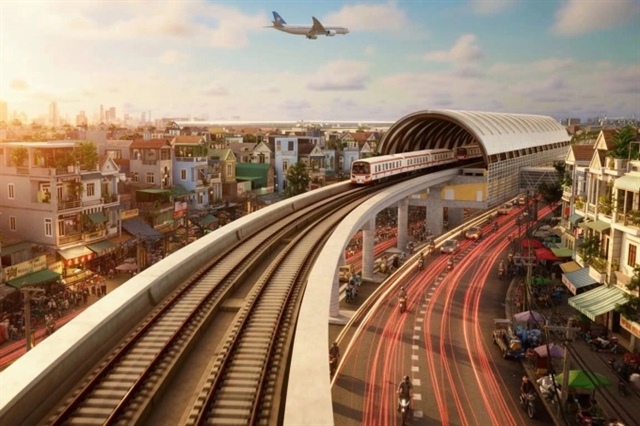 Rendering of Tan Binh Station, the sole elevated station on the Ben Thanh – Tham Luong Metro Line. Image: MAUR |
The project traverses 14 wards: Ben Thanh, Ban Co, Xuan Hoa, Hoa Hung, Vuon Lai, Nhieu Loc, Tan Hoa, Tan Son Nhat, Bay Hien, Tan Binh, Tan Son, Tay Thanh, Tan Son Nhi, and Dong Hung Thuan. The route primarily follows existing transportation corridors along Pham Hong Thai, Cach Mang Thang Tam, and Truong Chinh streets.
Approved in 2010 with an initial investment of $1.3 billion (over VND 26 trillion) from ODA loans, the Ben Thanh – Tham Luong Metro was slated for completion by 2016. It aimed to establish a high-capacity transport axis connecting the city center to the northwestern gateway. However, the project faced numerous challenges, leading to significant delays.
In 2019, the investment was revised to $2.1 billion (over VND 47.8 trillion), with a new target completion date of 2026. This goal was also unmet due to funding issues, procedural hurdles, and land clearance challenges. Subsequently, the funding source shifted from ODA to the Ho Chi Minh City budget.
According to Phan Cong Bang, Director of the Ho Chi Minh City Urban Railway Management Board (MAUR), this funding transition not only streamlines processes but also empowers the investor to select contractors, technologies, and implementation methods aligned with the long-term development strategy of the entire system.

Rendering of the Ben Thanh underground station complex, the intersection of Metro Line 1 and Metro Line 2. Image: MAUR |
The project has been upgraded to the GoA4 automation level, the highest currently available, enabling fully automated, driverless operation. In emergencies or special circumstances, operators at the Operations Control Center (OCC) can intervene remotely to ensure absolute safety for passengers and maintain stable line operations. This technology is designed to seamlessly integrate with the Ben Thanh – Suoi Tien Metro and other urban rail lines.
Ho Chi Minh City aims to complete the Ben Thanh – Tham Luong Metro by 2030. Initially, the line will operate three-car trains with a maximum speed of 80-110 km/h, capable of serving over 14,400 passengers per hour per direction during peak times. The line will connect with the Ben Thanh – Suoi Tien Metro at Ben Thanh Station and future projects, including Metro Line 4 and the high-speed rail link to Can Gio.
Vice Chairman of the Ho Chi Minh City People’s Committee, Bui Xuan Cuong, emphasized that the Ben Thanh – Tham Luong Metro will pioneer the new phase, setting the standard for the city’s entire urban railway system. It is the first project to implement advanced mechanisms and lead the development of the Transit-Oriented Development (TOD) model.
He noted that this metro line is more than a transportation project; it will reshape urban development in the city. Stations will serve as hubs for modern, green, and service-oriented residential and commercial areas, aligned with public transport-focused planning.
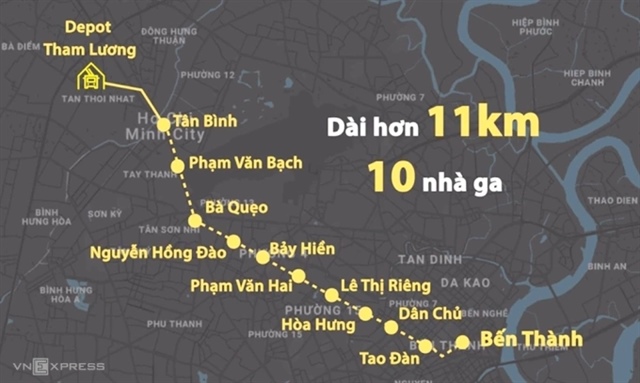
Route map of the Ben Thanh – Tham Luong Metro. Graphic: Thanh Huyen |
City leaders highlighted the significance of commencing the Ben Thanh – Tham Luong Metro, given the favorable conditions. Land clearance is complete, and sufficient funding has been allocated. The investor and contractors are urged to adhere to the schedule and quality standards to ensure the project’s completion by 2030.
The Ben Thanh – Tham Luong Metro is part of Ho Chi Minh City’s Metro Line 2. Another section, connecting Ben Thanh to Thu Thiem, is prioritized for investment to link with the Thu Thiem – Long Thanh railway, forming a high-capacity passenger transport corridor to Long Thanh Airport.
Alongside the Ben Thanh – Tham Luong Metro, Ho Chi Minh City aims to complete several other projects by 2030, extending the urban rail network to 187 km. Priority projects include: Metro Line 2 (Ben Thanh – Thu Thiem), Metro Line 1 extension (Binh Duong New City – Suoi Tien), Metro Line 6 (Tan Son Nhat – Phu Huu), and the Thu Thiem – Long Thanh and Ben Thanh – Can Gio railways.
From 2030 to 2035, the city will continue investing in 8 additional metro lines totaling 275 km, bringing the network’s length to 462 km. Over the following decade, the metro system will expand further with 5 more lines, adding 239 km and reaching approximately 700 km, extensively covering the city and connecting regions.
Giang Anh
– 09:28 15/01/2026
Ho Chi Minh City Simultaneously Launches Construction of Phu My 2 Bridge and Can Gio Bridge

On January 15th, the Ho Chi Minh City People’s Committee held a groundbreaking ceremony for key infrastructure and transportation projects, marking the occasion of the 14th National Congress of the Communist Party of Vietnam. The event celebrated the commencement of two significant initiatives: the construction of the Phu My 2 Bridge and the investment in the Can Gio Bridge project.
Sun Group Selected as Investor for Rạch Chiếc National Sports Complex Project in Ho Chi Minh City
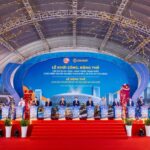
On January 15, 2025, the Ho Chi Minh City People’s Committee and Sun Group jointly held the groundbreaking ceremony for the landmark infrastructure project—the Rạch Chiếc National Sports Complex. With a total investment exceeding 145 trillion VND, the project’s centerpiece is a state-of-the-art stadium accommodating up to 70,000 spectators, featuring a retractable roof and one of the most advanced climate control systems in the world.
Revival of Ho Chi Minh City’s 187-Hectare Mega Complex After 32 Years: A $6.3 Billion Investment Unveiled
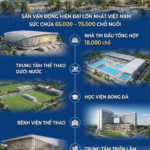
On January 15th, this landmark project officially broke ground.
Massive Infrastructure Boost: 4 Projects Totaling Nearly $10 Billion Set to Break Ground Tomorrow in Ho Chi Minh City

On January 15th, Ho Chi Minh City celebrated the commencement of four major infrastructure and transportation projects, with a combined investment of nearly 240 trillion VND, marking a significant milestone in the city’s development and coinciding with the Party Congress.
New Developments in Vingroup’s Proposed $4.3 Billion Maritime Route Connecting Can Gio and Vung Tau
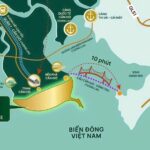
The Ho Chi Minh City People’s Committee has established an Appraisal Council for the pre-feasibility report of the Can Gio – Ba Ria – Vung Tau sea-crossing road project, to be developed under a Public-Private Partnership (PPP) model.