










On January 15th, Ho Chi Minh City launched four major infrastructure and transportation projects to commemorate the 14th National Congress of the Communist Party of Vietnam. These projects include the Rach Chiec National Sports Complex, Metro Line No. 2 (Ben Thanh – Tham Luong), Can Gio Bridge, and Phu My 2 Bridge.
Among these, the Rach Chiec National Sports Complex (An Khanh Ward) stands out with the largest investment, exceeding 145 trillion VND, and requires over 186 hectares of land.
The complex is divided into multiple functional zones, with the core being the cultural and sports area. Key features include a stadium with a capacity of 65,000 to 75,000 seats, an arena with approximately 18,000 seats, and facilities such as an aquatic sports center, tennis courts, multi-purpose sports halls, and versatile sports areas. The stadium and arena are the central structures, boasting the largest scale within the project.
Notably, with a maximum capacity of 75,000 seats, Rach Chiec Stadium surpasses many existing stadiums in Vietnam, including My Dinh Stadium (40,000 seats), Lach Tray Stadium (30,000 seats), and Viet Tri Stadium (20,000 seats).
In comparison, it is second only to the proposed Trom Dong Stadium in the Olympic Sports City, which is expected to accommodate 135,000 spectators.
In addition to the central sports area, the project includes urban public service zones, such as accommodations for athletes and coaches, a central plaza, a sports hospital, and a conference and exhibition center. It also allocates land for green spaces, water features, public areas, internal technical infrastructure, and transportation systems, along with specific functional areas like the Bung Sau Xa Historical Site.
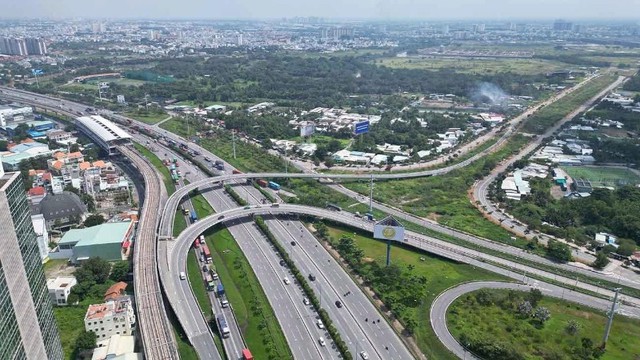
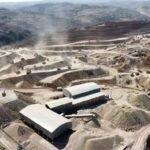
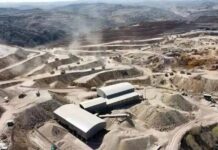
Construction site of the Rach Chiec Sports Complex (Photo: Vo Le/Nhan Dan Newspaper).
The total project duration is estimated at 8 years from the contract signing date. The investment preparation phase will last 1 year, focusing on feasibility studies, project approval, and contract signing. The implementation phase will span approximately 7 years, starting after land clearance and handover.
The Ho Chi Minh City People’s Committee noted that the timeline may be adjusted based on land handover progress. If earlier stages are expedited, subsequent phases could begin sooner to accelerate the overall project.
The preliminary total investment is over 145 trillion VND, covering construction costs, interest, and investor profits. The Ho Chi Minh City People’s Committee is the implementing authority, while Sun Group’s Vung Tau Sun Company proposed the project.
The project operates under a Public-Private Partnership (PPP) model, specifically a Build-Transfer (BT) contract. The investor will self-finance 100% of the construction and hand over the complex to the government for management and operation. Ho Chi Minh City will compensate the investor through land allocation rather than budget payments.
Sun Group has proposed using four land plots totaling over 360 hectares for compensation. These include a 23-hectare commercial-service area within the Rach Chiec Complex, 195 hectares in Phuoc Kien Urban Area, 120 hectares in Truong Tho Urban Area, and 30.2 hectares in An Khanh Ward. The combined value of these lands is over 145.482 trillion VND, equivalent to approximately 99.89% of the projected investment.
YouTube Channel Owner Đinh Lan to Face Trial Soon
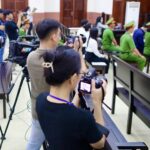
Once a key figure in the Nguyễn Phương Hằng case, Đinh Thị Lan now faces her own day in court as a defendant on identical charges.
DXS Unveils Plan to Fully Divest from Affiliated Company, Dat Xanh Mien Nam

The Board of Directors of Dat Xanh Real Estate Service Corporation (HOSE: DXS) approved on January 13, 2026, the transfer of its entire stake in the affiliated company, Dat Xanh Southern Investment and Service Corporation (DXMN).
Ho Chi Minh City’s Landed Property Prices Plummet by Nearly Half as Developers Ramp Up Discounts
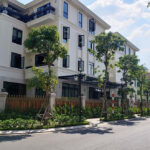
JLL reports that the primary market price for landed homes stands at $8,033 per square meter (over 211 million VND per square meter), reflecting a sharp decline of 48.5% quarter-on-quarter and 52.6% year-on-year. This significant drop is primarily attributed to the introduction of competitively priced units from the Vinhomes Green Paradise project in Can Gio.
Experts Predict Surprising “Growth Peak” in Real Estate for the New Cycle
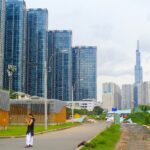
According to Giang Huynh, Director of Research & Consultancy at Savills Ho Chi Minh City, Vietnam’s real estate market is undergoing a restructuring adjustment phase, paving the way for a new cycle of growth.
Why Ho Chi Minh City’s Hottest Social Housing Project Hasn’t Launched Yet
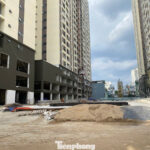
The CEO of Duc Manh Joint Stock Company has confirmed that the Ly Thuong Kiet social housing project is now 90-95% complete. The project is currently undergoing final inspections and finishing touches, in line with the schedule approved by the Ho Chi Minh City People’s Committee.