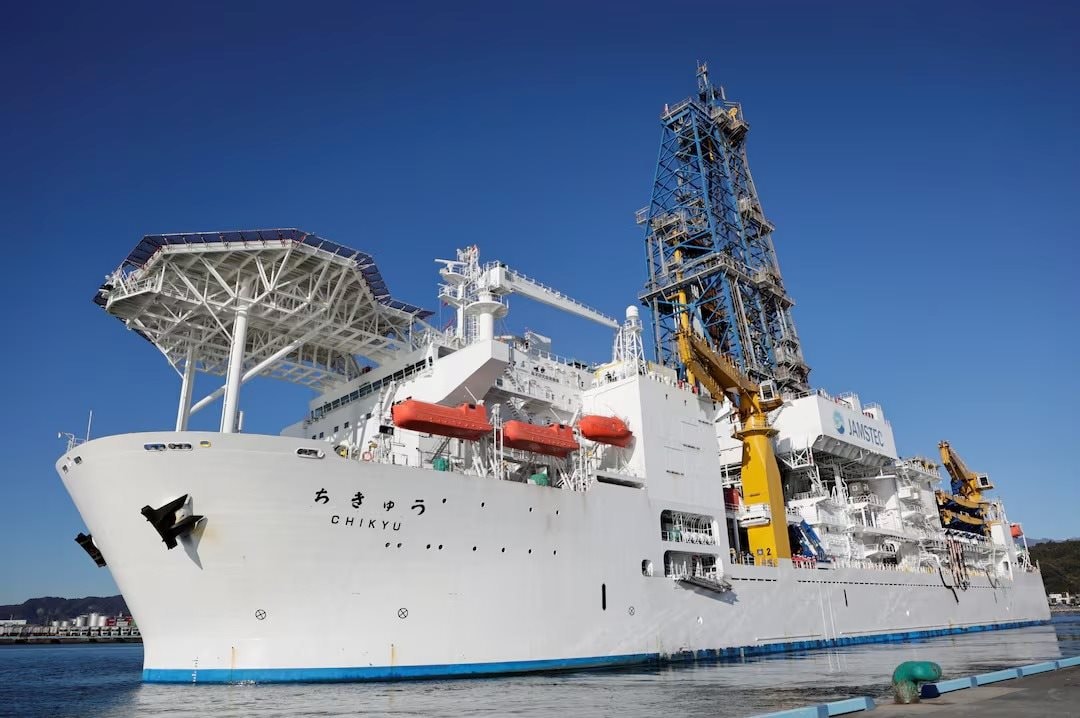
Japan’s state-of-the-art drilling vessel, Chikyu, embarks on a groundbreaking mission from Shimizu Port.
According to Reuters, Japan’s cutting-edge deep-sea drilling vessel, Chikyu, has set sail from Shimizu Port on a pioneering mission to the remote waters surrounding Minamitori Island (also known as Minami-Torishima). This ambitious expedition aims to extract rare earth-rich mud from depths of up to 6 kilometers (6,000 meters) below the ocean floor.
The primary objective extends beyond conventional geological research, focusing on retrieving mud samples containing rare earth elements. A specialized pipeline will be deployed to collect approximately 35 tons of mud, with estimates suggesting each ton contains around 2 kilograms of rare earth minerals. If successful, this would mark the first-ever extraction of rare earths from such extreme ocean depths.
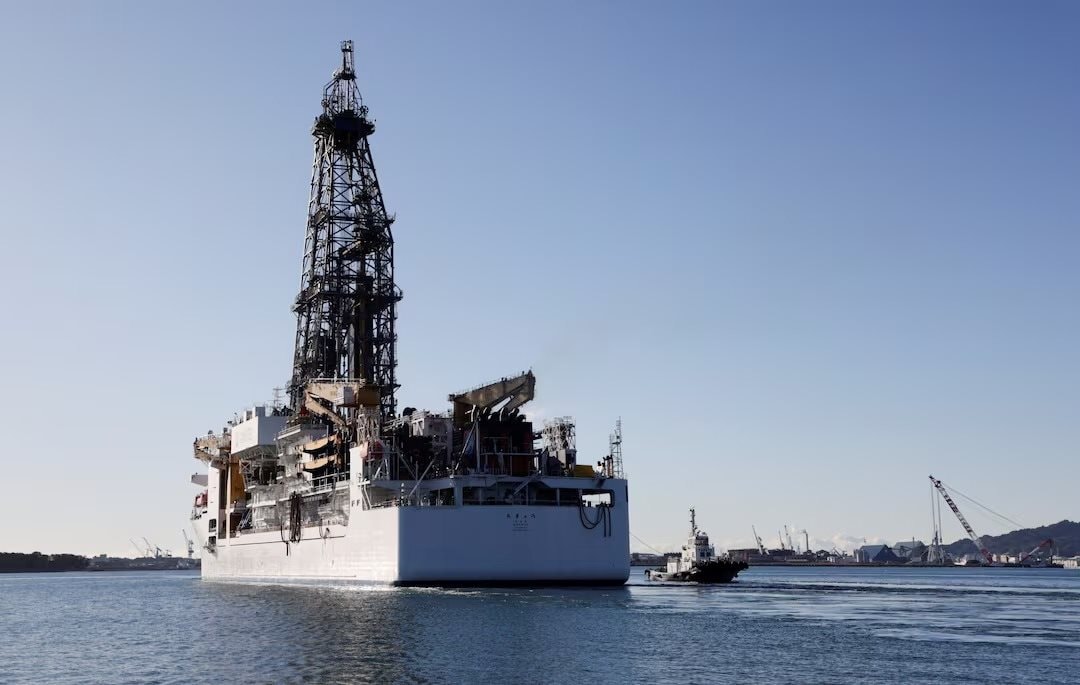
Chikyu vessel spearheading rare earth extraction efforts in deep-sea environments.
Historically, Japan’s reliance on Chinese rare earth imports peaked at a staggering 90%. Despite reducing this dependency to 60-70% through strategic investments like the Lynas project in Australia and advanced recycling technologies, Japan remains vulnerable to supply chain disruptions.
To mitigate this risk, the Japanese government has prioritized developing domestic rare earth sources within its Exclusive Economic Zone (EEZ). The Minamitori Island project represents a pivotal first step toward achieving supply chain resilience and economic security.
Data from Nikkei and economic experts reveal that the seabed around Minamitori Island holds an estimated 16 million tons of rare earth deposits, ranking it the world’s third-largest reserve. This area is particularly rich in critical minerals such as dysprosium, essential for electric vehicle motor magnets, and gadolinium, crucial for nuclear reactor control rods.
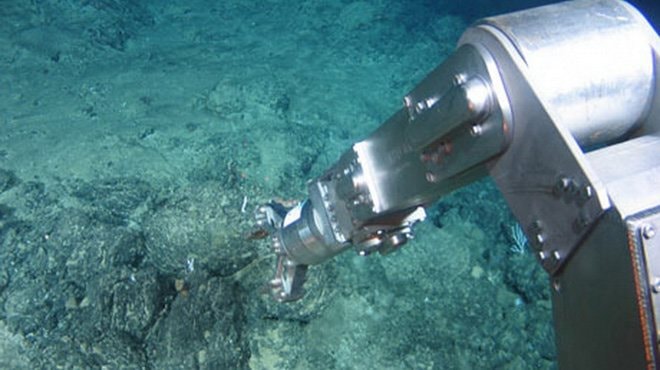
Visual representation of rare earth extraction challenges at extreme ocean depths.
Japan plans to integrate rare earths from Minamitori Island into private sector applications by fiscal year 2028. However, the mission faces significant challenges due to the harsh geological conditions at depths between 4,000 and 6,000 meters, where research remains limited.
This month-long trial expedition serves as a critical test for Japan’s engineering teams, focusing on evaluating the durability, pressure resistance, and operational efficiency of specialized extraction equipment and pipelines.
The outcomes of Chikyu’s mission could revolutionize Japan’s supply chain for electric vehicles and smartphones while providing invaluable insights for the future of global deep-sea mining operations.
Japan’s Unprecedented Treasure Hunt: 16 Million Tons of Global Wealth to Last a Century
Unveiled by CNN as a “miraculous discovery from Japan,” this innovation captivates with its unparalleled brilliance.
A Heavenly Gift of 3.5 Million Tons: Vietnam’s Treasure Trove Surpasses America’s
With a “trump card” up its sleeve, South Korea’s Posco International is in a strong position to make an enticing offer to Vietnam.