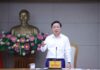
At the webinar “Vietnam’s 2026 Economic Forecast: Opportunities, Risks, and Business Adaptation” on January 14th, Mr. Nguyen Xuan Thanh, Senior Lecturer at the Fulbright School of Public Policy and Management, noted that despite an impressive GDP growth of 8.02% in 2025, the economy is operating under a K-shaped model with significant polarization. Amid weak domestic purchasing power and existing exchange rate risks, the driving force for 2026 will heavily depend on the disbursement of mega-projects and shifts in export markets.

Mr. Nguyen Xuan Thanh – Senior Lecturer, Fulbright School of Public Policy and Management. Screenshot.
|
Macroeconomic Landscape and the K-Shaped Growth Model
Mr. Nguyen Xuan Thanh stated that the official GDP growth for 2025 was 8.02%, driven by three key growth engines.
Exports saw remarkable growth of 17%. Despite concerns about retaliatory tariffs from the United States, one-third of the export value comes from electronics (0% tax), resulting in an effective average tariff of only 12.6%—significantly lower than China or India.
Public investment disbursement increased by 38% compared to the previous year. More importantly, the portion of public investment creating fixed assets (infrastructure) rose by 26.6% (compared to 5% the previous year).
Tourism rebounded strongly, with international visitors surpassing pre-COVID-19 levels, driving growth in services, hospitality, and transportation.
However, the economy is operating under a K-shaped model. While sectors focused on exports, public investment, and tourism are thriving, the downward branch is domestic consumer goods production. Weak domestic purchasing power, coupled with competition from Chinese imports, has challenged local retail and manufacturing businesses.
In terms of finance and monetary policy, average inflation was controlled at 3.3%, primarily due to a 10% drop in oil prices. However, the exchange rate is a significant concern, with the VND depreciating sharply against the USD, and foreign exchange reserves currently below $80 billion.
Growth Drivers for 2026
Looking ahead to 2026, Mr. Nguyen Xuan Thanh outlined key growth drivers.
First, public investment is planned to increase by 10.3%, equivalent to nearly 8% of GDP. Mega-projects such as the Metro, Long Thanh Airport, and ring roads will be aggressively accelerated, particularly in the Southern region.
Second, export growth is targeted at 8%. Amid potential slowdowns in exports to the United States, Vietnam is leveraging the RCEP agreement and border reopening policies to boost exports to China (expected to offset the decline from the U.S. market).
Mr. Thanh added that two factors could improve consumer confidence. Stable employment in industrial zones and tourism, along with robust social welfare policies (tuition waivers, increased health insurance), if implemented decisively, will encourage higher consumer spending. However, consumer confidence remains fragile due to the aftermath of the corporate bond market, which has reduced the accumulated wealth of the middle class.
– 16:02 14/01/2026
Soaring Scores, Hesitant Cash Flow: Insights from Tran Duc Anh (KBSV)
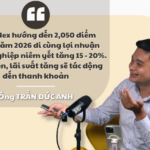
The stock market in 2026 is poised to revolve around the narrative of extending the bullish cycle, with public investment taking center stage. Foreign capital inflows are expected to rebound, and the IPO wave may continue to surge. However, rising interest rates could temper liquidity, leading to a less vibrant trading environment.
Vietnam-India Trade Hits Historic High of Nearly $16.46 Billion

Vietnam-India trade turnover hit a record high of nearly $16.46 billion in 2025, marking a 10.5% increase. Vietnam enjoyed a trade surplus of $4.23 billion, unlocking new growth opportunities.
Vietnam-India Trade Hits Historic High of Nearly $16.46 Billion

Amidst the turbulent global economic landscape, India emerges as a steadfast and reliable alternative partner, offering Vietnamese businesses a strategic avenue for market diversification.
Urgent Submission to Ho Chi Minh City People’s Council: Investment Plan for Thu Thiem 4 Bridge and Multiple Key Projects
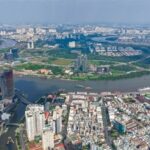
The Vice Chairman of the Ho Chi Minh City People’s Committee has directed the Department of Finance to urgently review, consolidate, and draft a proposal for submission to the City People’s Council. This proposal seeks approval for the investment policy of the Thu Thiem 4 Bridge project, with the aim of presenting it at the nearest council session.
Unifying the Initiative: Designating Dien Bien Province as the Lead Investor for the Son La – Dien Bien – Tay Trang Border Gate Highway Segment

On the afternoon of January 12th, Deputy Prime Minister Tran Hong Ha chaired a meeting to review the investment report for the first phase of the Son La – Dien Bien – Tay Trang Border Gate highway project.