















Ms. Nguyen Tra My (Cua Nam Ward, Hanoi) shared: In 2021, she sold her house in the Old Quarter to buy a new one in Long Bien District, hoping for a spacious and green living environment. The house is located in a new neighborhood with wide sidewalks, offering a peaceful atmosphere. Initially, she was delighted with the change from the cramped Old Quarter.
However, a few months later, her dream turned sour. A neighboring house was rented by a pho restaurant. Every day, from 2-3 a.m., the overwhelming smells of broth and cooking invaded her home. Despite keeping the windows shut, the odors persisted, even on weekends. “The intense smells often wake me up early. On weekends, the noise from customers prevents me from napping. I’ve spoken to the neighbors, but they insist it’s their right to rent out their property. It’s frustrating to spend billions on a home only to endure this,” Ms. My lamented.
“After several unsuccessful discussions, we’ve stopped communicating. I’m at a loss. With no proper urban planning, we’re powerless against this situation,” she added. Despite her frustration, Ms. My has no plans to move, believing that without unified planning, similar issues could arise elsewhere.
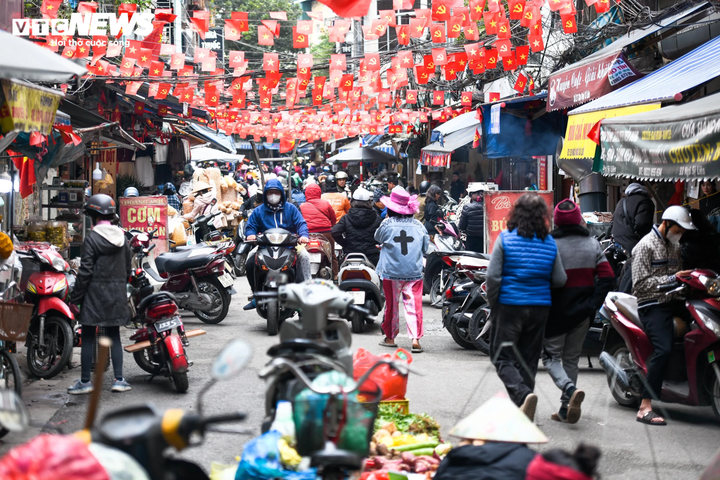
Informal markets clutter the streets. (Photo: Vien Minh)
Mr. Nguyen Ngoc An (60, Hoang Mai Ward) faces a similar plight. Two years ago, a neighboring house was converted into a barbecue restaurant operating from 10 a.m. to 11 p.m. “The smoke is unbearable, even with closed doors. Complaining hasn’t helped. It’s frustrating that they profit while we suffer. I worry about the health impact, especially for seniors like me,” he said.
The smoke affects his family’s clothing, causing discomfort at work. The restaurant often occupies the sidewalk, spreading smoke into nearby homes. “On busy days, my grandchildren and I cough and tear up from the smoke,” Mr. An shared. Concerned about health risks, his family plans to move to an apartment but has struggled to sell their house due to the smoke.
Informal markets also plague residents, causing hygiene and noise issues. Mr. Nguyen Van Tinh (Ninh Binh) bought a house in Vinh Hung Ward, only to discover a morning market blocks his garage. “The agent showed the house in the afternoon, hiding the market. Now, I must move my car out by 5 a.m.,” he said.
Why do informal markets persist in residential areas?
Experts blame the lack of urban planning. Vo Nguyen Phong, Director of Hanoi’s Department of Industry and Trade, notes that existing markets fail to meet local demand. Rapid urbanization and population growth drive the need for convenient shopping, leading to informal markets occupying streets and sidewalks.
Socializing market investment is challenging, and high rental costs deter vendors. Consumers’ preference for convenience also hinders efforts to clear these markets. Nguyen Quang Huy, CEO of Finance and Banking at Nguyen Trai University, highlights the need for balanced solutions that address both vendor livelihoods and community needs.
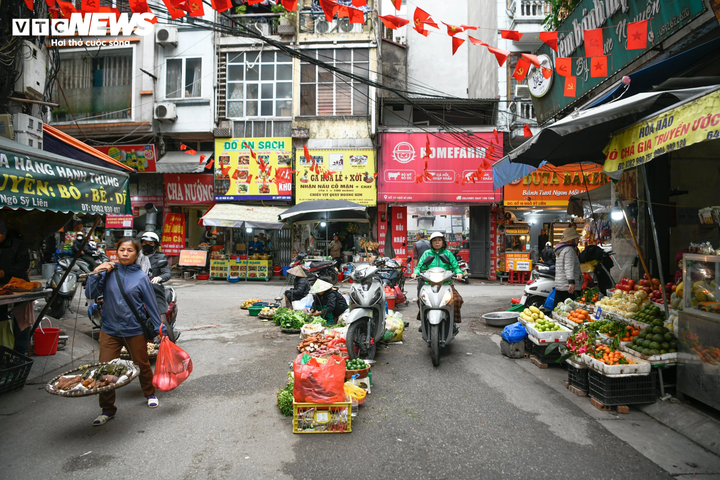
Removing informal markets improves urban spaces. (Photo: Vien Minh)
Clearing informal markets for a civilized urban space
Mr. Huy supports Hanoi’s plan to clear 231 informal markets by 2027, aiming for a cleaner, safer city. The plan includes relocating vendors to formal markets and upgrading infrastructure. This approach ensures vendor livelihoods while improving public spaces.
Dao Ngoc Nghiem, Vice Chairman of the Vietnam Urban Development Planning Association, emphasizes the need for optimized public markets. Giang Anh Tuan, Director of Tuan Anh Real Estate, notes that informal markets devalue nearby properties and advocates for designated market zones to enhance urban aesthetics and livability.
Unveiling the Secret: The Trio of Islands Shaping Nha Trang’s All-in-One Urban Paradise
Nestled in the heart of the urban landscape, Charmora City stands as an exclusive “island” oasis, offering unparalleled privacy and security. Each of its three distinct islands—North, Central, and South—is meticulously designed with a unique purpose, seamlessly integrating the golden trifecta of Live, Work, and Play. This pioneering concept in Nha Trang caters to every need of residents and visitors alike, redefining modern living.
Elevating Living Standards in Gia Lai: A Human-Centric Urban Development Approach

In Gia Lai, the concept of a home has evolved beyond mere shelter. Residents now seek vibrant, green living spaces that seamlessly blend modern amenities with a thriving, civilized community.
Unveiling the Shocking Truth: Consecutive Exposures of Contaminated Food

A string of food safety scandals has been exposed, from contaminated pork-based spring rolls and pâté to chemically treated bean sprouts and counterfeit oil, sparking widespread consumer concern.
Accelerating Progress: Nha Trang – Da Lat Expressway Set to Break Ground on May 19, 2026

The Minister of Construction has urged the provinces of Khanh Hoa and Lam Dong to swiftly finalize the project management for the Nha Trang – Da Lat expressway and complete the necessary procedures to ensure a groundbreaking ceremony by May 19, 2026.
“Vietnam’s Third Mega-City Prepares to Reclaim Over 1,500 Hectares for 118 Major Projects”

In 2026, Hai Phong will reclaim land to implement 118 projects, including 32 urban and residential developments. Among these are several large-scale initiatives spanning multiple wards and communes.