

















The State Bank of Vietnam (SBV) has recently issued guidelines for commercial banks regarding credit growth control for 2026, targeting a system-wide increase of approximately 15%.
New Credit Allocation Mechanism
Accordingly, the credit growth target for each commercial bank is calculated using the formula: bank’s rating score (as per Circular 52/2018/TT-NHNN, amended, with a score range of 1-5) multiplied by the common coefficient for 2026, which is 2.6% (lower than the 3.5% coefficient for 2024 and 2025).

Commercial banks will prioritize partnering with real estate developers who possess strong financial capabilities, high reputation, and projects with clear legal status. Photo: LAM GIANG
Consequently, if the rating score remains unchanged, the credit growth limit at the beginning of the year for banks will decrease by nearly 1 percentage point compared to the previous year. For instance, a bank with a rating score of 5 will have a credit growth limit of approximately 13% compared to the outstanding debt at the end of 2025.
Similar to previous years, the SBV allocates the entire credit growth target at the beginning of 2026. A new requirement is that commercial banks must control credit growth in the first three months of 2026 to not exceed 25% of the annual target, to avoid early overheating.
Notably, the SBV also mandates that the growth rate of real estate loans must not surpass the bank’s overall credit growth rate compared to the end of 2025. This means if a bank has an overall credit growth limit of 13%, its real estate loan balance can only increase by a maximum of 13% compared to the end of 2025.
For example, if a bank’s real estate loan balance in 2025 was 100 billion VND, the maximum for 2026 would be 113 billion VND, an increase of 13 billion VND. Banks violating this rule may face reductions in their overall credit targets. This requirement aims to reduce risks for the banking system, especially given the significant growth in real estate loans (33% in 2023, 34% in 2024, and 31% as of September 2025), leading to maturity mismatches, liquidity issues, and increased bad debt risks.
In reality, according to reports from Nguoi Lao Dong newspaper, capital flow into real estate showed signs of overheating in the last few months of 2025. By the end of 2025, credit growth in the banking system reached approximately 19.1%, the highest in recent years. Real estate loans accounted for a significant portion, around 20%-30% of total outstanding loans in some commercial banks.
According to Dr. Can Van Luc, Chief Economist at BIDV, real estate credit in 2025 is estimated to grow by 22%, significantly higher than the average credit growth rate of the entire system. Specifically, loans for real estate business investment increased by about 24%, while loans for home purchases and repairs rose by 14%-15%.
“The proportion of real estate credit balances accounts for approximately 24% of the total outstanding debt in the economy, which is relatively high compared to the general level. Notably, loans for real estate business investment are growing rapidly. Additionally, many real estate companies are investing too broadly, with some companies simultaneously managing 10-15 projects. Where is the funding coming from? If the market encounters issues, given the higher interest rates, tighter credit control, and less accessible capital, these companies will face challenges,” Dr. Can Van Luc observed.
Prioritizing Capital for Quality Projects
At a discussion on Vietnam’s and the world’s economic outlook for 2026, organized by Standard Chartered Vietnam in Ho Chi Minh City on January 13, Ms. Nguyen Thuy Hanh, General Director of the bank, stated that to control bad debt risks, the SBV aims for banks to grow steadily throughout the year, rather than concentrating 15% growth in the first quarter, for example. This is a new and very positive point.
Regarding real estate credit, Standard Chartered Vietnam has always paid more attention to the market’s potential risks, not just this year. However, in reality, credit growth in the real estate sector in 2025 was much higher than in previous years. How can the economy and credit continue to grow while managing risks, especially those from real estate?
“Credit should be directed towards real estate projects that are crucial to the economy, ensuring quality and meeting the real needs of the population. The focus should be on real estate projects in industrial zones, residential areas, and especially social housing. These are all areas of significant importance. When banks prioritize capital for projects that benefit the population and the economy, credit risks will be controlled at a reasonable level,” Ms. Nguyen Thuy Hanh commented.
A leader of a major commercial bank in Ho Chi Minh City reported that in 2025, the bank’s credit growth reached about 18%, in line with the general level. Moving forward, the bank will focus on risk management, prioritizing partnerships with real estate developers who have strong financial capabilities, high reputations, and clear legal project status.
Many commercial banks will also restructure their real estate loan ratios, avoiding excessive capital concentration in a few high-risk projects. However, these banks emphasize that they will not restrict lending to quality projects with real demand, especially social housing, housing for young people, or projects supporting production and business.
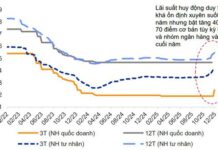
Interest rates are considered one of the barriers to the real estate market. A leader of a securities company’s transaction office in Ho Chi Minh City noted that long-term deposit interest rates are currently around 7%/year, pushing home loan interest rates to quite high levels, with the lowest being 9%-10%/year in the short term. When rates become floating, they will increase further, so borrowers need to be cautious and consider carefully when taking out real estate loans.
According to Mr. Nguyen The Minh, Director of Analysis at Yuanta Vietnam Securities Company, the 2026 credit policy is not a tightening adjustment for the real estate market as initially feared. Capping the real estate growth rate is a necessary technical step to bring the market back to balance after a year of explosive growth.
In fact, the absolute capital flow into real estate in 2026 remains high, estimated by Yuanta Vietnam at around 749 trillion VND, ensuring sufficient liquidity for basic activities. “The market needs to shift its focus from credit limits to interest rates. Home loan interest rates of 8%-9.5%/year and higher will slow transaction speeds and filter out investors using high leverage,” Mr. The Minh assessed.
No Monetary Policy Easing Yet
The Chairman of the Board of Directors of a securities company in Ho Chi Minh City remarked that the SBV’s credit growth orientation demonstrates consistency in not further easing monetary policy to avoid hot credit growth, which could pressure liquidity and interest rates, while also stabilizing the macroeconomy.
Tight control of real estate credit is necessary to redirect capital into priority areas such as production, industry, infrastructure, and technology—key drivers of sustainable economic growth.
Flexible Adjustments Ahead
According to Mr. Nguyen Duc Lenh, Deputy Director of SBV Region II, in 2026, the SBV will proactively review and adjust (increase or decrease) the credit growth limits for each commercial bank as needed, without requiring banks to submit requests.
“Depending on market developments, economic growth, macroeconomic conditions, and inflation analyses, the SBV will manage credit policies appropriately to ensure banking safety. In this context, the overall credit target for the economy will be managed flexibly to meet capital demands,” Mr. Lenh emphasized.
Price Stability: The Critical Factor Supporting the 10% GDP Target

In 2026, inflation is forecasted to stabilize around 3.5%, according to experts, driven by effective monetary and fiscal policies, alongside efficient price management. Key sectors such as food, energy, and construction materials are expected to remain steady, while exchange rates, interest rates, and logistics costs will be carefully regulated to maintain economic balance.
Silver Surges Ahead of Gold: Bao Tin Capital CEO Calls It the “Hyperactive Sibling” of Precious Metals

Silver is emerging as a standout investment channel, with prices soaring up to 175% in 2025, according to Dinh Ngoc Dung, Chairman and CEO of Bao Tin Capital. However, this meteoric rise also brings significant risks for investors.
Expert Forecast: 2026 Inflation Projected at 3.5%, Yet Caution Advised Amid Persistent Pressures
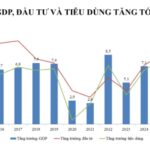
Inflation in 2026 is projected to rise above the previous year’s levels, though not dramatically. However, monetary factors, growth dynamics, and exchange rate pressures are demanding a more cautious approach in policy coordination to balance growth support with macroeconomic stability.
Bank Stocks: The Catalyst for Market Fluidity Around the 1,900-Point Mark
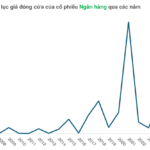
In just the first two weeks of trading in 2026, bank stocks have already taken center stage, consistently setting new record highs and capturing the market’s attention.
Bank Projects Over 7 Trillion VND in Profits for 2026, Credit Growth Surges 17%
In the first nine months of 2025, the bank’s pre-tax profit soared to VND 6,739 billion, a remarkable 1.5 times increase compared to the same period in 2024, surpassing its annual target by 104%.