




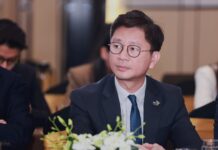
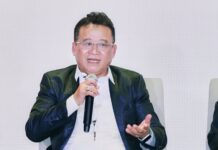




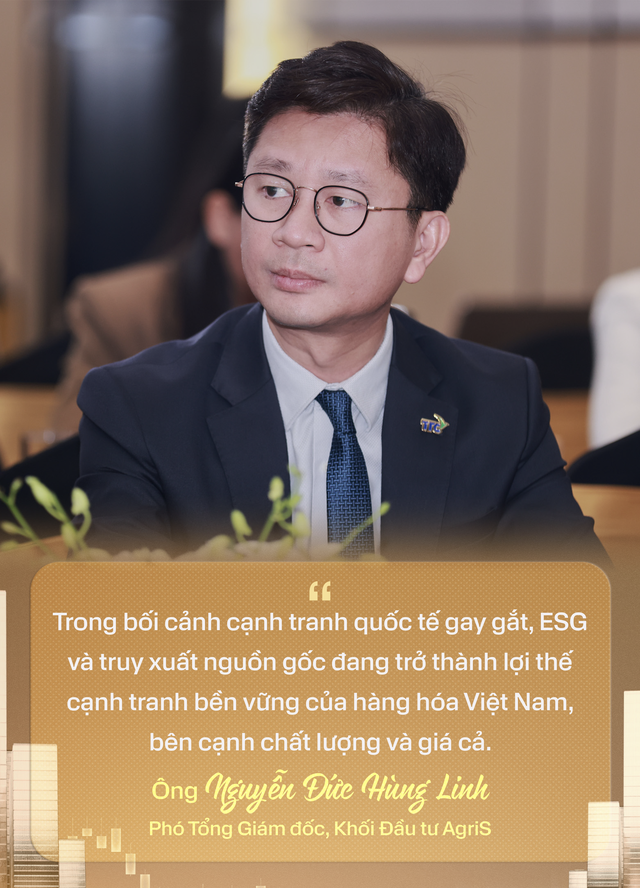
Mr. Nguyen Duc Hung Linh – Deputy General Director of AgriS Investment Division
At the seminar titled “Double-Digit Economic Growth Drivers” within the framework of FChoice 2025, Mr. Nguyen Duc Hung Linh – Deputy General Director of AgriS Investment Division provided candid insights into the harsh realities of the export market.
Mr. Linh emphasized:
“The most significant change from the international market impacting Vietnamese goods is the stringent green standards (ESG) and traceability requirements. These are critical factors, not only for agriculture but for all industries aiming to maintain and enhance global competitiveness.”
ESG Shows Signs of Slowing but Remains an Irreversible Trend
Delving deeper into the green transition roadmap, Mr. Linh noted that while ESG momentum in some markets like the U.S. has slowed due to policy shifts, globally—especially in Europe—nations remain firmly committed to these standards.
“This is a long-term, irreversible trend,”
he stressed.
To comply with ESG, businesses face a “long-haul” journey, requiring substantial investment in technology, systems, consulting, training, and strong leadership commitment. According to Mr. Linh, it takes at least 3–5 years for companies to approach and meet basic standards, as production processes cannot be overhauled overnight.
A critical point in Mr. Linh’s remarks was the stringent pressure for rapid information response. Currently,
“importers, especially in Europe, may demand full documentation within very short notice, sometimes as little as four hours.”
Mr. Linh bluntly stated:
“Failure to provide immediate data indicates inefficiency or unpreparedness in the company’s systems.”
This reality compels businesses to fully digitize and adopt modern management systems like SAP for greater efficiency.
In the future, competitive pressures may reduce traceability times to one hour, or businesses may need to provide customers with direct access to data platforms, bypassing intermediaries.
Solving the Puzzle of Large Scale but Low Profitability
According to the 2024-2025 Annual Report, AgriS’s net revenue exceeded VND 28,000 billion, with sugar contributing significantly. However, like other agricultural products such as rice or coffee, sugar faces intense global competition. With a relatively balanced global supply-demand dynamic, agricultural profit margins remain around 10%.
To address large-scale operations with low profitability, Mr. Nguyen Duc Hung Linh identified two key strategies.
The first is shifting to premium, high-value products. A prime example is organic sugar. AgriS currently cultivates approximately 10,000 hectares of organic raw materials. Organic sugar sells for 2–3 times the price of conventional sugar.
However, achieving organic certification requires rigorous investment, from completely isolating fields to adhering to stricter production processes than traditional methods. In return, all organic sugar produced is exported to Europe, where demand consistently outstrips supply.
Another example is the coconut industry, where global demand is surging. At one point, AgriS received export orders for up to 300 million liters, while production capacity was only 120–150 million liters.
“Therefore, we prioritize export markets. When identifying investment and business opportunities, companies must maximize resource allocation to capitalize on them,” Mr. Linh emphasized.
The second strategy is expanding production overseas. With domestic agricultural land becoming scarce, venturing abroad is inevitable. AgriS already operates farms in Laos, Cambodia, Australia, and Vietnam, with plans to expand into Indonesia. Indonesia has pledged approximately 200,000 hectares for cooperative production, aligning with its national food security strategy.
“In my view, exporting isn’t just about producing in Vietnam and selling abroad. It’s about establishing factories and raw material zones directly in foreign markets, similar to how Taiwanese and Korean companies invested in Vietnam,” Mr. Linh shared.
With a population of around 281 million and underdeveloped agricultural processing capabilities, Indonesia presents a vast market for Vietnamese businesses, especially those meeting international quality, ESG, and traceability standards.
Even host countries are eager for Vietnamese companies to produce locally for export.
Beyond traditional agriculture, Mr. Linh believes companies should evolve beyond commodity production. AgriS’s strategy is to transition into providing agricultural services and solutions, guided by the philosophy of “smart – sustainability – solution.”
Leveraging years of production data and experience, AgriS develops cultivation advisory software for farmers, offering Farm Design, Farm Care, and Farm Service solutions. These solutions help farmers increase sugarcane yields, for instance, from 50 tons to 70–80 tons, based on proven models.
Vietnam has tens of millions of farmers but lacks a dedicated agricultural production platform. This gap is what AgriS aims to fill. By delivering real value to farmers—from productivity and finance to management—AgriS paves the way for long-term sustainable growth.
Vietnam’s GDP Poised to Enter Global Top 10, Predicts Kinh Bac Chairman Dang Thanh Tam
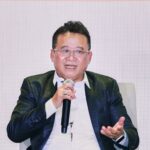
“United by our love for our nation and driven by extraordinary determination, we must collectively build and execute this plan to confidently step into the new era,” emphasized Mr. Đặng Thành Tâm.
Unlocking Double-Digit Economic Growth: Key Insights and Investment Opportunities for 2026
At the prestigious FChoice 2025 Awards Ceremony and the insightful seminar titled “Double-Digit Economic Growth Drivers and Investment Opportunities in 2026,” hosted by CafeF, esteemed experts and business leaders shared a wealth of compelling insights.
OCB Pioneers Green Financing with Innovative Green Deposit and Pink Deposit Products

ESG is no longer a distant concept but has become an essential “passport” for Vietnamese businesses venturing into the global market, solidifying their position on the world trade map. Recognizing this demand, Orient Commercial Joint Stock Bank (HOSE: OCB) has not only expanded its green lending portfolio but also introduced “Green Deposit” and “Pink Deposit.” These innovative products set OCB apart in today’s green capital mobilization market.
2025: A New Milestone in Talentnet’s Sustainable Development Journey

In 2025, Talentnet embarks on a transformative ESG journey, marked by heightened professionalism and transparency. This pivotal year sees the rigorous standardization of sustainability practices across services, coupled with intensified initiatives benefiting people, communities, and the environment.
Unlocking Green Capital: When ESG Transcends the “Profile Paint Job”
In recent years, ESG—the framework for evaluating environmental, social, and governance practices—has gained significant traction within the business community. This momentum was further amplified following Vietnam’s Net Zero commitment by 2050 at COP26, propelling ESG into a mainstream trend. However, in many instances, ESG is still treated as a superficial label to enhance corporate profiles rather than a genuine, strategic approach to sustainable development.