One Advantage Over Shenzhen and Shanghai
As competitors like Indonesia and the Philippines fiercely vie for new projects, Vietnam is striving to ascend to higher-value manufacturing segments and expand export markets to sustain growth momentum. This effort is vividly exemplified in Bac Ninh.
Bac Ninh entered its first boom phase around 2008 when Samsung established its first phone manufacturing plant here, transforming Vietnam into the conglomerate’s largest overseas production hub.
Selecting the optimal location for a factory is not just an initial consideration; it’s a strategic decision that impacts operational efficiency, logistics costs, access to raw materials, market reach, and workforce availability.
In this context, Bac Ninh has emerged as a strategic industrial hub in the North, attracting strong interest from both domestic and foreign investors.

Workers at Foxconn’s Bac Ninh factory. Photo: Reuters
The province benefits from a prime geographical location: approximately 30 km from Hanoi’s city center, 100 km from Hai Phong Port, less than an hour from Noi Bai International Airport, and situated along the corridor connecting to the upcoming Gia Binh International Airport.
Compared to global industrial hubs, this northern center offers similar strategic advantages with significantly lower operating costs.
For instance, Shenzhen, China, is renowned for its advanced infrastructure and integrated supply chains but comes with high operational costs. Jebel Ali, Dubai, provides direct connectivity to both port and airport. Monterrey, Mexico, is strategically located near the North American market, while Katowice, Poland, is well-integrated into Europe’s supply network.
According to the General Statistics Office, Bac Ninh led Vietnam in FDI attraction in 2024, with nearly $5.12 billion, primarily in high-tech and electronics manufacturing. By 2030, Bac Ninh aims to have 85,000 registered businesses, including two global value chain leaders and 15 private conglomerates in Vietnam’s Top 500 largest enterprises.
With its strategic location, robust infrastructure, abundant workforce, and cost-effectiveness, Bac Ninh has become an attractive destination for companies seeking expansion or new investment opportunities.
A Billion-Dollar Manufacturing Hub
The province has long been recognized as Vietnam’s “Billion-Dollar Manufacturing Hub” and a preferred destination for global tech giants. Samsung, present since 2008, has concentrated nearly 50% of its Vietnam investment in Bac Ninh, including a $1.8 billion display and component factory, contributing to the conglomerate’s total investment of $23.2 billion nationwide by mid-2025.
Foxconn, which entered the market in 2007, has invested approximately $3.2 billion, primarily in Bac Ninh, manufacturing laptops, printed circuits, and telecom equipment for major brands like Apple. Goertek, operating since 2013, has invested over $1.3 billion, equivalent to 20% of its global investment, making Bac Ninh its strategic production center in Southeast Asia.
The presence of these global giants has fostered a robust supporting ecosystem, attracting hundreds of satellite companies and generating significant demand for factories, warehouses, and available logistics services.
“With modern infrastructure, efficient connectivity, and a high-quality workforce, Bac Ninh provides an ideal platform for production expansion and supply chain optimization,” said Dang Trong Duc, CEO of KTG Industrial.
In 2025, KTG Industrial marked a milestone with a 14-hectare project at VSIP Bac Ninh II, just a 10-minute drive from Bac Ninh’s city center and directly connected to National Highway 18.
Vietnam’s First Frozen Agricultural Exporter Sets HOSE Listing Date, Reference Price at VND 40,900 per Share
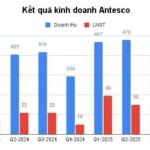
Over 24 million ANT shares will commence trading on the Ho Chi Minh City Stock Exchange (HOSE) starting January 20, 2026.
Domestic Car Manufacturer Reports 15 Consecutive Years of Losses, Accumulated Deficit Exceeds $360 Million, Negative Equity
Revised Introduction:
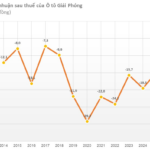
Gia Lai Garment Joint Stock Company (GGG) reported a post-tax loss of nearly VND 4 billion in Q4 and a cumulative post-tax loss of approximately VND 15 billion for 2025. This marks the 15th consecutive year GGG has recorded financial losses.
Vietnamese Billionaires Rush to Raise Nearly $1.5 Billion Through Bonds, Enticed by Up to 12% Interest Rates
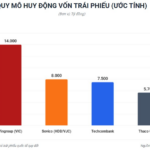
The corporate bond market concluded 2025 with a staggering scale of nearly 590 trillion VND. Notably, in just the past month, the market witnessed a remarkable “final sprint” from billionaire ecosystems such as Vingroup, Sovico, Thaco, and Techcombank, collectively raising an estimated total of over 35 trillion VND.
EuroCham Chairman: “With the Right Moves, Vietnam Will Enter a Golden Era of Growth and Transformation in the Next 5 to 7 Years”

The EuroCham Business Climate Index (BCI) for Q4/2025 has surged to 80 points, its highest level since 2018, affirming a structural shift in European investment flows despite global geopolitical uncertainties.
International Football Betting: Ministry of Finance Proposes Maximum of 3 Operators with Minimum Capital of VND 2 Trillion
In a world where global gambling and gaming revenues soar to a staggering $70 billion, Vietnam’s market remains shrouded in mystery. While exact figures are elusive, experts estimate the industry’s contribution to the national economy at a significant 3-5% of GDP, underscoring its untapped potential and growing influence.