





Financial Market Magazine’s reporter had an insightful discussion with Prof. Tran Tho Dat, Chairman of the Scientific and Training Council at the National Economics University, to delve deeper into this topic.
Reporter: Resolution 79-NQ/TW on the development of the state economy has just been issued by the Politburo. As an economic expert, how do you perceive the significance of this Resolution for the current state of the state economy?
Prof. Tran Tho Dat: Resolution 79-NQ/TW emerges as Vietnam enters a new phase of development, requiring both rapid and sustainable growth, alongside ensuring strategic autonomy in a highly volatile global landscape. The Resolution’s key emphasis is on a robust restructuring, prioritizing quality over quantity. In essence, Resolution 79-NQ/TW establishes a new institutional platform for the state economy, particularly state-owned enterprises (SOEs), to transition from a role of “maintaining stability” to one of “creating and leading development,” in collaboration with the private sector, to achieve the goals of rapid, sustainable, and self-reliant growth for Vietnam’s economy.
Reporter: Resolution 79-NQ/TW introduces a broader understanding of the state economy. Could you elaborate on this point?
Prof. Tran Tho Dat: Previously, when discussing the state economy, we often equated it with state-owned enterprises (SOEs). Resolution 79-NQ/TW expands and clarifies this scope. The state economy encompasses not only SOEs but also includes strategic resources controlled and managed by the state, such as land, natural resources, infrastructure, budgets, national reserves, non-budget financial funds, state-owned credit institutions, and the public service unit system. This approach is crucial as it shifts the focus from “managing enterprises” to “effectively managing, allocating, and utilizing the nation’s overall resources.” SOEs are the core force, but they do not represent the entirety of the state economy. This perspective provides a more comprehensive view and avoids placing all expectations or criticisms solely on the SOE sector.
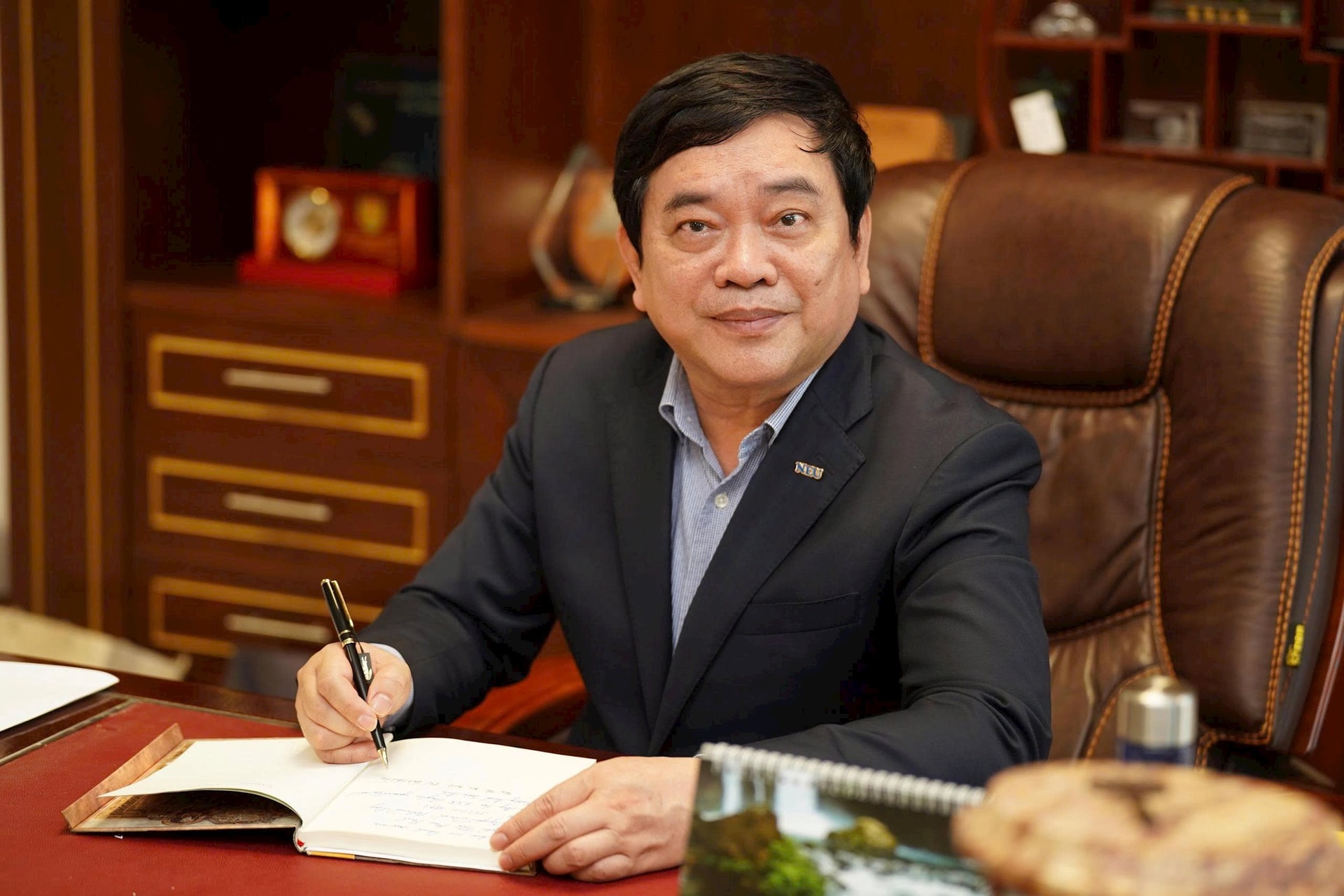
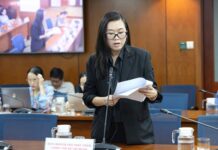
Prof. Tran Tho Dat, Chairman of the Scientific and Training Council, National Economics University
Reporter: Resolution 79-NQ/TW emphasizes the “leading and guiding” role of the state economy. How should this role be correctly and fully understood?
Prof. Tran Tho Dat: The leading role does not imply dominance, substitution, or competition with the private sector. Primarily, it involves maintaining macroeconomic stability, ensuring energy security, financial security, food security, and the major balances of the economy. More importantly, the guiding role is demonstrated by taking the lead in critical, strategic, and long-term sectors where the private sector lacks resources, willingness, or ability to invest. SOEs investing in infrastructure, core technologies, or foundational industries not only create direct value but also activate, spread, and drive the private sector’s development through supply chains, procurement, bidding, and public-private partnerships.
Reporter: The Resolution sets an ambitious goal, such as having 1 to 3 SOEs in the top 500 largest companies globally. Given the current state of SOEs, do you think this goal is achievable?
Prof. Tran Tho Dat: This is a high goal but not unattainable. The key is to understand that this goal is not about pursuing rankings but about creating pressure for reform and focusing resources to develop truly strong SOEs with regional and global competitiveness. We already have large state-owned groups in sectors like energy, telecommunications, and finance-banking. The issue lies not in absolute scale but in governance quality, capital efficiency, innovation capacity, and international integration. If Resolution 79-NQ/TW is institutionalized and implemented seriously, especially with OECD governance standards, this goal is entirely feasible.
Reporter: A long-standing issue for SOEs is the confusion between political tasks and business objectives. How does Resolution 79-NQ/TW address this issue?
Prof. Tran Tho Dat: This is one of the clear new points in Resolution 79-NQ/TW. The Resolution emphasizes the need to clearly separate political and public service tasks from production and business activities, with full and transparent accounting according to market principles. When the state assigns SOEs political tasks, it must ensure corresponding resources, not expecting enterprises to self-fund losses. Conversely, in business activities, SOEs must adhere to market discipline, evaluated by efficiency, productivity, and return on capital. This is the basis for ending the unclear situation of “both doing business and bearing policies,” which distorts the assessment of SOE effectiveness.
Reporter: The Resolution allows SOEs to hire directors and CEOs. How do you evaluate this mechanism?
Prof. Tran Tho Dat: This is a breakthrough in governance thinking. While private enterprises have been very flexible in hiring senior personnel through market mechanisms, SOEs have long been constrained by administrative procedures and appointment processes. However, hiring talented individuals is only a necessary condition; the sufficient condition is granting them real authority with clear accountability. If directors are hired without giving them decision-making power over strategy, personnel, and investment, it’s hard to expect effectiveness. Resolution 79-NQ/TW has opened the door; the remaining issue is specific institutionalization and cautious, controlled implementation.
Reporter: The Resolution also emphasizes the application of OECD governance standards. What does this mean for Vietnamese SOEs?
Prof. Tran Tho Dat: OECD standards are not just technical principles but a modern governance philosophy that prioritizes transparency, accountability, risk management, and protecting the interests of state capital owners. Having 100% of state-owned groups and corporations apply OECD standards will significantly shift from “administrative management” to governance focused on goals, efficiency, and output results. This is the foundation for enhancing societal, market, and international partner trust in Vietnamese SOEs.
Reporter: There are concerns that Resolution 79-NQ/TW might “overshadow” the private sector. What is your view on this?
Prof. Tran Tho Dat: I believe this concern stems from an incomplete understanding. Resolution 79-NQ/TW clearly states that the state economy is equal before the law with other economic sectors, cooperating and competing fairly. In reality, if SOEs effectively play their foundational role, such as investing in infrastructure, developing core technologies, and stabilizing markets, the space for the private sector will expand rather than shrink. The state and private economies are not opposed but complementary and mutually supportive in a balanced and sustainable development structure.
Reporter: In your opinion, what is the critical condition for Resolution 79-NQ/TW to truly come to life?
Prof. Tran Tho Dat: The critical condition lies in institutionalization and implementation. Without quickly concretizing the Resolution into laws, decrees, and clear enforcement mechanisms, it may remain a policy statement. Additionally, there must be a shift in management thinking, moving from “fear of making mistakes” to “risk management,” with mechanisms to protect officials who dare to think and act for the common good. Finally, SOE effectiveness should be measured by specific, transparent indicators, linking individual accountability to performance results.
Reporter: Thank you very much, Professor!
VN-Index Projected to Surpass 2,100 Points in Optimistic Scenario, Brokerages Highlight Attractive Investment Opportunities
In the short term, the positive growth outlook for Q4 corporate earnings, coupled with recovering liquidity, alongside foreign investors resuming net buying in recent weeks, are key factors supporting the market.
Anticipating the 14th National Party Congress: Selecting the Right ‘Breakthrough of Breakthroughs’ to Elevate the Nation’s Stature
The 14th National Party Congress convenes amidst profound global shifts, as Vietnam stands poised on the brink of a transformative era of robust development. Scholars and intellectuals alike anticipate the Congress to chart the right strategic priorities, fostering genuine breakthroughs in institutional frameworks, growth models, enterprise development, and high-quality human resources. Such advancements are expected to propel the nation onto a trajectory of rapid, sustainable progress.
Massive Capital Inflow Returns: Brokerages Highlight Stocks Poised for January Breakout
The formation of a higher low price structure indicates that institutional money has begun re-entering the market, providing crucial support and reigniting investor interest.
Vietnam’s Rise: Perspectives from International Media and Observers
Numerous articles and reports from international media outlets and forums suggest that Vietnam is entering a new era, characterized by visionary and structural reforms that lay the foundation for sustainable growth.
No Reappraisal Required for 1/500 Scale Adjustment Projects with Completed Financial Obligations
TS Phạm Viết Thuận asserts that this proposal aims to eliminate unnecessary procedures in the domains of land management, construction, and finance.