On the morning of January 15th, the Ho Chi Minh City People’s Committee, in collaboration with relevant agencies, announced the Northern Ho Chi Minh City Science and Technology Urban Area Project. The ceremony took place at the former Binh Duong Administrative Center, now repurposed as the Ho Chi Minh City Science and Technology Building (Binh Duong Ward, Ho Chi Minh City).
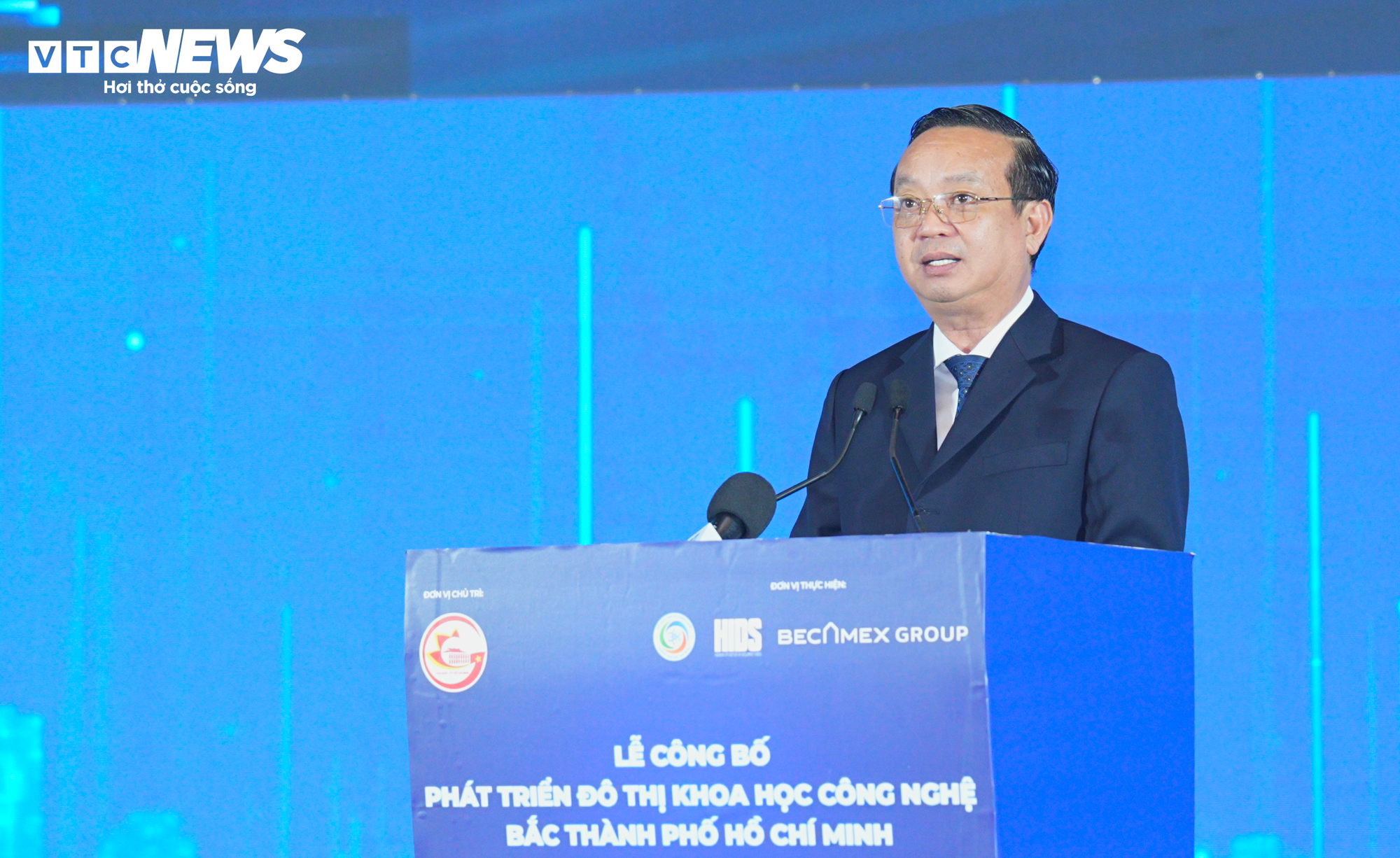
Vice Chairman of the Ho Chi Minh City People’s Committee, Bui Minh Thanh, delivering a speech at the ceremony.
In his address, Vice Chairman Bui Minh Thanh highlighted that for many years, the city center has served as the administrative, financial, and service hub. However, high population density, overburdened infrastructure, and limited land availability have rendered it unsuitable for large-scale science and technology developments.
The project developers argue that continuing to concentrate research and innovation activities in the city center would exacerbate infrastructure strain, with limited spillover benefits. This necessitates the search for a new space that is expansive, flexible, and capable of long-term growth.
Unlike other areas, the northern region of Ho Chi Minh City is not a developmental “blank slate.” Over the years, it has established a robust foundation in industry, logistics, and technology, hosting industrial zones, digital technology parks, innovation centers, and large-scale infrastructure projects.
“The establishment of a Science and Technology Urban Area in this region will not only create a new growth pole but also provide strategic leeway to redistribute urban, industrial, and logistics functions away from the central core.”
“This is crucial for Ho Chi Minh City’s evolution into a multi-polar megacity model, alleviating pressure on the existing urban core while enhancing the efficiency of space and infrastructure utilization,” stated Vice Chairman Bui Minh Thanh.
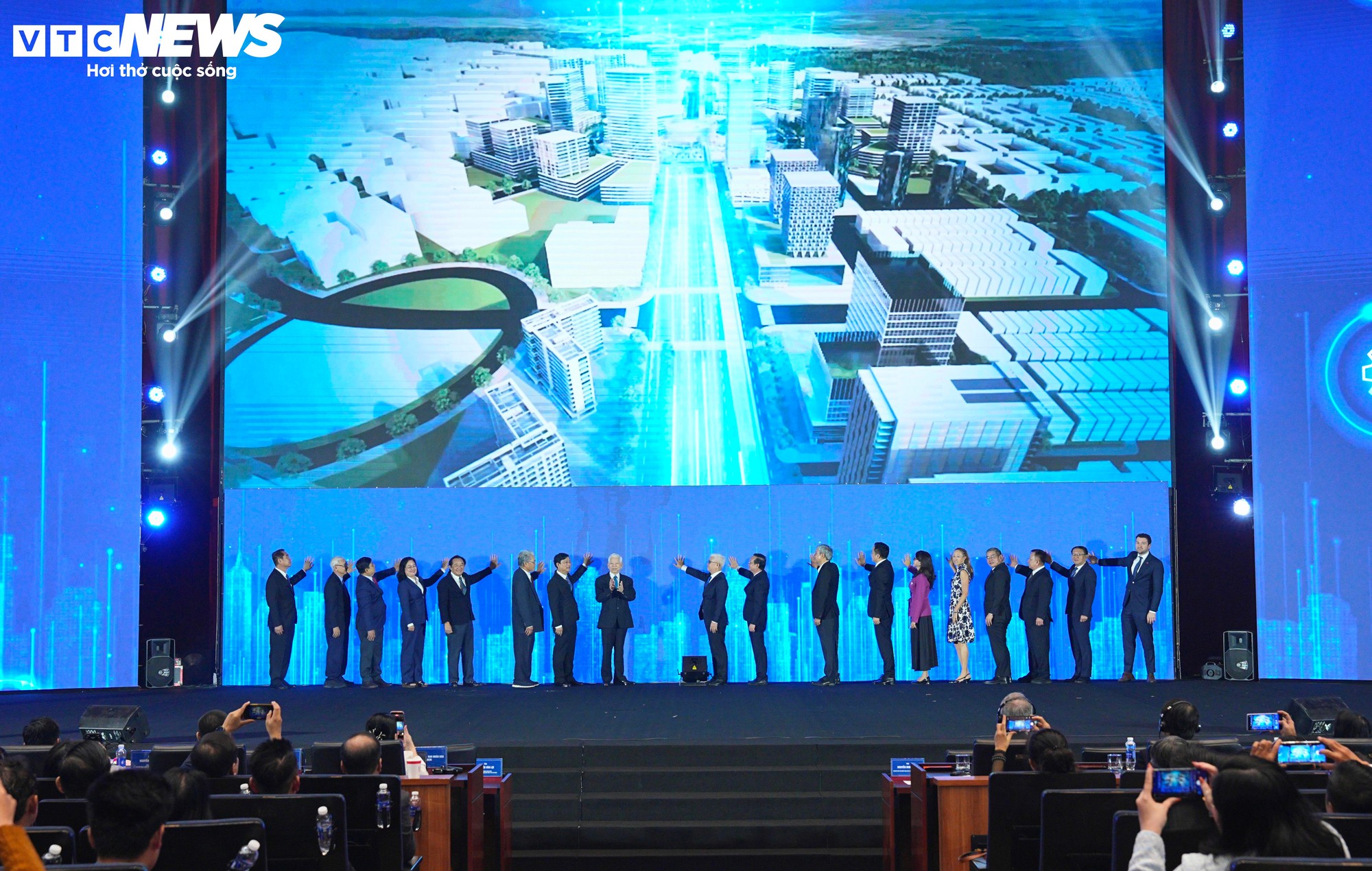
Leaders and delegates inaugurating the Northern Ho Chi Minh City Science and Technology Urban Area Project.
Within this developmental framework, the city center will be repositioned as an international financial hub, attracting, coordinating, and efficiently allocating resources for the entire region.
Specifically, the city center will serve as a convergence point for capital flows supporting research and development, innovation, and technology commercialization, adhering to international standards. This will foster seamless integration between finance, science and technology, and high-tech manufacturing.
The Northern Science and Technology Urban Area will play a complementary strategic role alongside Ho Chi Minh City’s financial center. While the city center focuses on finance and high-end services, the northern urban area will serve as the nucleus for research, innovation, and high-tech manufacturing.
“These two pillars will mutually reinforce each other, creating a balanced developmental structure that enhances Ho Chi Minh City’s long-term competitiveness,” emphasized Vice Chairman Bui Minh Thanh.
Another critical factor cited by project developers is the northern region’s connectivity potential. Bordering dynamic industrial localities, this area is well-positioned to establish inter-regional value chains, particularly in high technology and smart manufacturing.
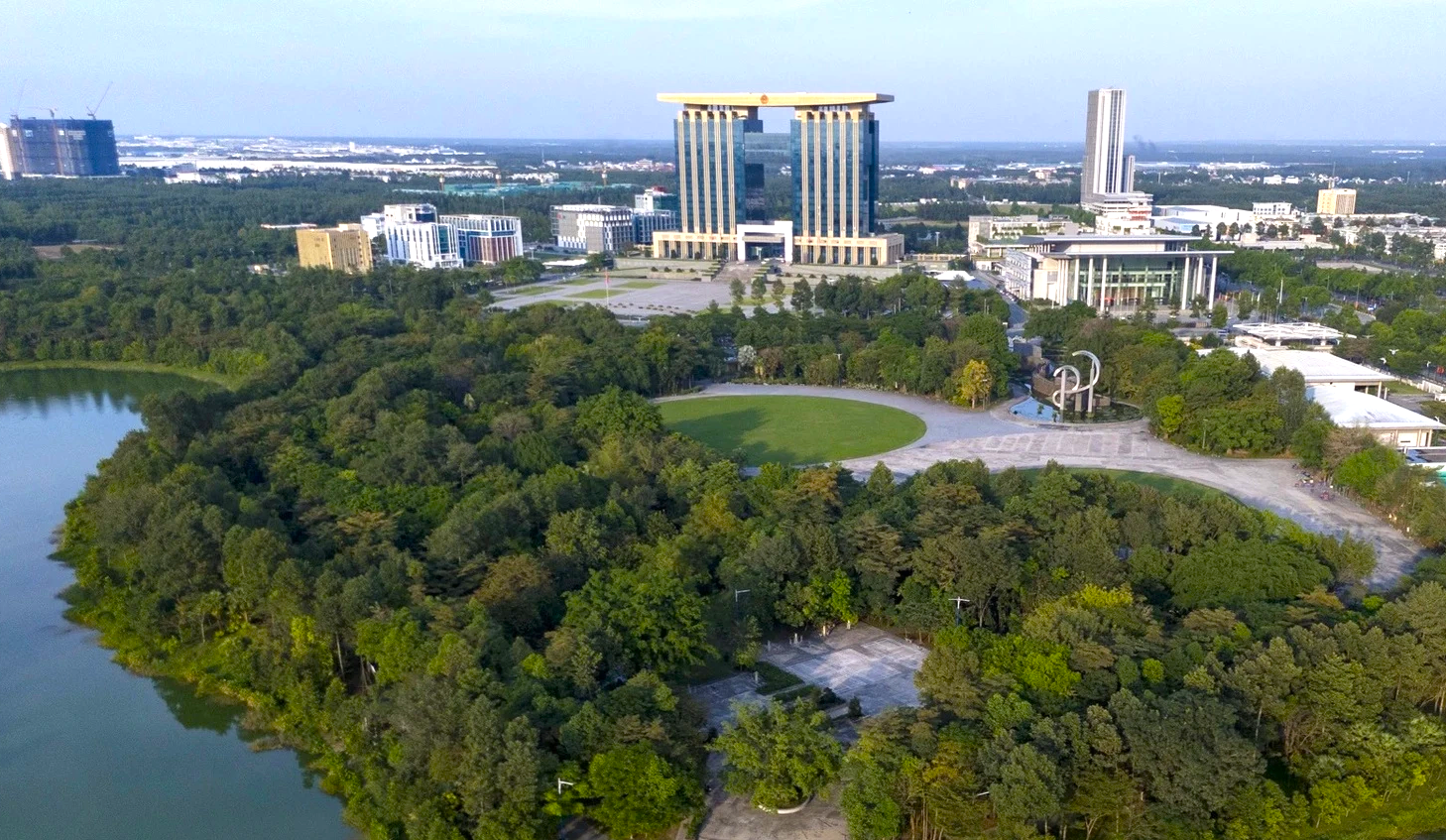
Binh Duong Ward is positioned as Ho Chi Minh City’s “technology brain.”
The Northern Science and Technology Urban Area is envisioned not as an isolated research enclave but as an open space connecting businesses, research institutions, and markets.
This approach ensures that science and technology remain closely aligned with practical production and living needs, rather than being confined to “research silos.”
Developing a science and technology hub in the north will also alleviate pressure on the central and eastern regions, fostering a more balanced urban structure. By rationally distributing research, innovation, and high-quality human resources, the city can mitigate population and infrastructure congestion in specific areas.
The emergence of the Northern Science and Technology Urban Area will stimulate demand for housing, services, education, and social infrastructure, thereby promoting more synchronized and sustainable urban development.
THACO Secures Landmark $2.3B Metro Line Contract in Ho Chi Minh City, Outbidding Industry Giants Like Dai Dung, Hoa Phat, and Deo Ca
The Ho Chi Minh City Urban Railway Management Board has selected THACO as the main contractor for the EPC package on the Bến Thành – Tham Lương section of metro line number 2.
Ho Chi Minh City Establishes Appraisal Council for Can Gio Sea-Crossing Road Project
The Ho Chi Minh City People’s Committee has established an Appraisal Council for the feasibility report of the Can Gio – Ba Ria – Vung Tau (former) sea-crossing road project, proposed under a Public-Private Partnership (PPP) model.
Unveiling the Design of Ho Chi Minh City’s Newly Groundbroken $2.4 Billion Metro Station

On January 15th, the Ho Chi Minh City People’s Committee officially broke ground on Metro Line 2 (Ben Thanh – Tham Luong). Spanning over 11.3 kilometers, the line traverses 14 wards, featuring 10 underground stations, one elevated station, and a depot.
The 2026 Real Estate Market and Short-Term Speculative Waves

The real estate market outlook for 2026 is poised to enter a new growth cycle, albeit one characterized by selective expansion. This shift will disrupt short-term speculative surges, curbing rapid price escalations in favor of a more sustainable, long-term development trajectory.
Ben Thanh – Tham Luong Metro Line Breaks Ground After 16 Years of Planning

The 11-kilometer metro line, with an investment of over 55 trillion VND, broke ground on January 15th, marking the beginning of an accelerated phase aimed at achieving Ho Chi Minh City’s goal of 187 kilometers of urban rail transit within the next five years.