ESG: The Passport to Global Markets
As Vietnamese businesses increasingly expand into the global market, alongside traditional requirements such as quality, pricing, and delivery timelines, criteria related to green standards, sustainability, traceability, transparency, and accountability across the entire value chain are becoming mandatory for companies aiming to establish a foothold in the international arena.
These demands not only create pressure in terms of costs, production capacity, management, and market responsiveness but also require businesses to adjust their strategies, operational models, and market approaches to align with international standards and deeper partner and import market expectations.
Speaking at the seminar “Double-Digit Economic Growth Drivers and Investment Opportunities in 2026” organized by CafeF, Mr. Nguyễn Đức Hùng Linh, Deputy General Director of Thanh Thanh Cong – Bien Hoa JSC (AgriS, Stock Code: SBT), shared that the most significant impact from the international market on Vietnamese goods today is green standards (ESG) and traceability requirements.
These are considered two critical factors, not only for the agricultural sector but also for all industries aiming to maintain and enhance their global competitiveness.

Mr. Nguyễn Đức Hùng Linh, Deputy General Director of AgriS, at the seminar. Photo: CafeF
Mr. Linh analyzed that while the ESG trend in some markets like the U.S. shows signs of slowing due to policy changes, globally, particularly in Europe and many other regions, the commitment to implementing these standards remains strong. “This is a long-term trend unlikely to reverse in the short term,” Mr. Linh emphasized.
According to Mr. Linh, to meet ESG standards, businesses face a lengthy transformation journey, requiring substantial capital for technology, systems, consulting, and training, along with consistent commitment from leadership to staff. In reality, businesses need at least 3-5 years to approach and meet basic standards, as production processes cannot be fully transformed overnight.
Additionally, the AgriS leader believes that applying digital technology across the entire production chain is a mandatory requirement. Importers, especially in Europe, may demand businesses provide complete product files and data within very short timeframes. Failure to comply indicates an unprepared operational system. Therefore, businesses must make strategic decisions such as data centralization, detailing, and digitization, including transitioning to more modern and suitable management platforms.
Alongside ESG, traceability is increasingly becoming a mandatory requirement. According to Mr. Linh, for demanding markets, this requirement extends beyond food safety to social and environmental factors such as no deforestation, local labor usage, and ensuring worker rights.
Traceability itself is closely tied to the ability to provide data quickly. The current required timeframe is 4 hours, but future competitive pressures may reduce this to just 1 hour. Businesses may even need to provide data platforms for customers to access and extract information directly without intermediaries.
From Technical Requirements to Competitive Advantage
From a competitive standpoint, Vietnamese businesses not only face domestic market share “races” but also directly compete with global giants like Thailand or Brazil, nations with highly developed supply chains. In this competition, alongside traditional quality and pricing challenges, ESG and traceability are key advantages for Vietnamese goods to compete sustainably.
In the context of the sugar industry, Mr. Nguyễn Đức Hùng Linh noted that the sector’s total revenue currently stands at around 28,000 billion VND, with over 11,000 billion VND from sugar and approximately 80% of output destined for export. However, similar to other agricultural products like rice or coffee, sugar prices face intense global market competition, with agricultural profit margins typically hovering around 10%.
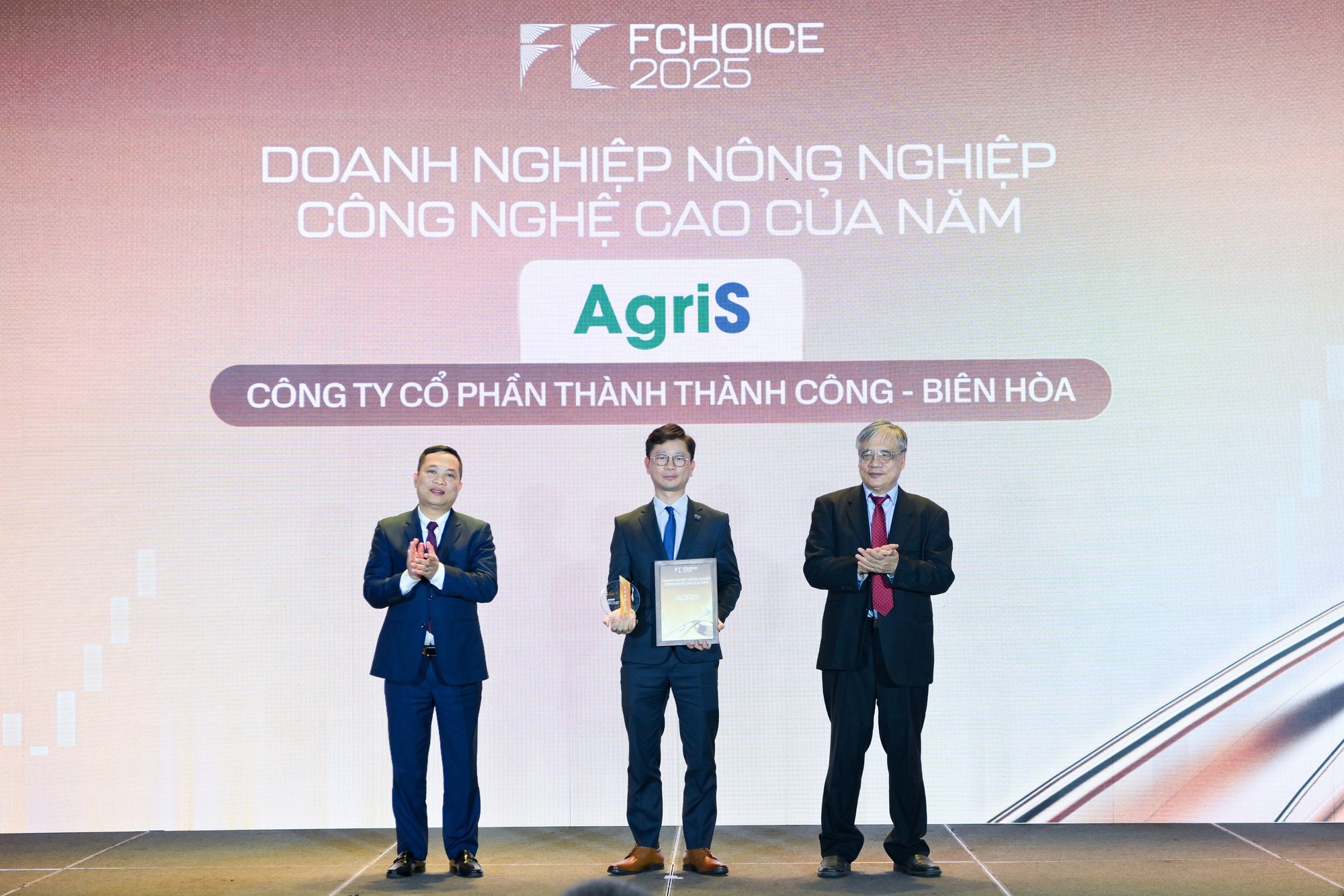
AgriS honored as High-Tech Agricultural Enterprise of the Year at FChoice 2025. Photo: CafeF
To address the challenge of large scale but low profit margins, the AgriS leader suggests businesses shift towards high value-added products (e.g., organic sugar) and focus on sectors with strong international market growth demand.
Secondly, expanding production space overseas is essential. Mr. Linh observes that with domestic agricultural land increasingly limited, investing in farms in other markets is inevitable. The Deputy General Director of AgriS added that the company has established farms in Cambodia and Australia, with plans to expand into Indonesia. Indonesia has committed to allocating approximately 200,000 hectares of land for cooperative production, aligning with its national food security strategy.
Looking long-term, Mr. Nguyễn Đức Hùng Linh believes agricultural businesses should not remain mere goods suppliers but gradually transition to providing services and solutions. “Beyond supplying goods, our strategy is to gradually shift towards offering agricultural services and solutions, based on the philosophy of ‘Smart – Sustainability – Solution’,” shared the Deputy General Director of AgriS.
He added that another critical area is green finance. AgriS has launched supply chain financing products, digitized into software platforms for farmers and partners to access directly. All these services are integrated into an open ecosystem, serving not only internal needs but also aiming to expand into the broader market.
“Vietnam has tens of millions of farmers but still lacks a dedicated platform application specifically serving agricultural production. This is the gap we aim to fill,” Mr. Linh expressed.
The Deputy General Director of AgriS believes that delivering real value to farmers—from productivity and finance to management—is the path to creating sustainable growth for Vietnamese agriculture in the long term.
Unstoppable Agricultural Trend Revealed by AgriS CEO: The Solution to Low-Profit, High-Volume Farming Challenges
In the face of direct competition with agricultural powerhouses like Thailand and Brazil, Vietnam’s traditional advantage of “low cost” is no longer its sharpest weapon. According to AgriS leadership, the ability to meet green standards (ESG) and the speed of traceability are emerging as the new “technical barriers” that will determine a company’s survival in the global arena.
Vietnam’s GDP Poised to Enter Global Top 10, Predicts Kinh Bac Chairman Dang Thanh Tam
“United by our love for our nation and driven by extraordinary determination, we must collectively build and execute this plan to confidently step into the new era,” emphasized Mr. Đặng Thành Tâm.
Unlocking Double-Digit Economic Growth: Key Insights and Investment Opportunities for 2026
At the prestigious FChoice 2025 Awards Ceremony and the insightful seminar titled “Double-Digit Economic Growth Drivers and Investment Opportunities in 2026,” hosted by CafeF, esteemed experts and business leaders shared a wealth of compelling insights.
OCB Pioneers Green Financing with Innovative Green Deposit and Pink Deposit Products

ESG is no longer a distant concept but has become an essential “passport” for Vietnamese businesses venturing into the global market, solidifying their position on the world trade map. Recognizing this demand, Orient Commercial Joint Stock Bank (HOSE: OCB) has not only expanded its green lending portfolio but also introduced “Green Deposit” and “Pink Deposit.” These innovative products set OCB apart in today’s green capital mobilization market.
2025: A New Milestone in Talentnet’s Sustainable Development Journey

In 2025, Talentnet embarks on a transformative ESG journey, marked by heightened professionalism and transparency. This pivotal year sees the rigorous standardization of sustainability practices across services, coupled with intensified initiatives benefiting people, communities, and the environment.