The core issue is not just “what to do,” but “how to do it” to ensure Resolution 79 is effectively implemented, driving substantial changes and breakthrough developments for the nation. |
After nearly four decades of Renovation, Vietnam has achieved significant milestones in growth, integration, and improving the livelihoods of its people. However, the limitations of a development model heavily reliant on resource expansion have become evident, particularly in the inefficient use of state-managed resources, which falls short of their potential and advantages.
In this context, Resolution 79 not only sets new goals for the state economy but also introduces a critical requirement: enhancing the governance capacity of the state economy to ensure national resources become a driving force for development, with a leading role.
The core issue is not just “what to do,” but “how to do it” to ensure Resolution 79 is effectively implemented, driving substantial changes and breakthrough developments for the nation.
Key Innovations in Resolution 79 and Governance Requirements
Resolution 79 introduces several innovative approaches to state economic development. Firstly, the state economy is viewed more broadly, encompassing all resources managed by the state and its representative ownership, rather than being limited to state-owned enterprises.
This approach reflects a growing understanding that the strength of the state economy lies not in the number or size of enterprises, but in the quality of management, utilization, and preservation of national capital and resources.
Additionally, the leading role of the state economy is closely tied to efficiency. This role is no longer simplistically understood as overarching or replacing other economic sectors, but is linked to stabilizing the macroeconomy, leading development, and creating a foundation for the entire economy to operate smoothly. This implies that the leading role can only be affirmed through effective governance and management, not through administrative mandates or formal advantages.
Notably, Resolution 79 places resource loss and waste prevention at its core. This is not merely a financial discipline issue but a governance quality concern. Resource waste, whether in investment, asset management, or operational efficiency, directly undermines the economy’s development capacity.
These innovations highlight a clear point: the greatest challenge lies not in the goals but in the governance capacity of the state economy.
Enhancing State Economic Governance Capacity: A Decisive Requirement
In the new development phase, the state economy cannot fulfill its role simply by expanding its scale. The key is to upgrade governance capacity, from mindset and institutions to implementation methods.
Shifting from Emphasizing “Role” to Building “Leadership Capacity.” In the past, when the economy was in transition, emphasizing the role of the state economy was crucial for stabilization and system shaping. However, in the current context, this role can only be affirmed through tangible leadership capacity: leading in institutions, development structures, governance standards, and market confidence-building.
This requires the state economy to operate on modern governance principles, with efficiency, transparency, and accountability as indispensable pillars. The leading role, therefore, is not a declarative statement but must be proven through results and value creation for the economy.
Goal- and Outcome-Based Governance Over Process-Based Management. A significant shift implied by Resolution 79 is the move from process-based management to goal- and outcome-based governance. In many cases, full compliance with processes does not guarantee efficient resource use. Conversely, resources allocated according to regulations often fail to create commensurate value, even leading to waste.
Goal-based governance requires that every resource allocation decision answer key questions: What are the specific development goals? What outcomes are expected? And how will effectiveness be evaluated? When goals are clearly defined, measurement, monitoring, and adjustment become feasible. This is the foundation for the state economy to operate efficiently with limited resources but increasing development demands.
Transparency and Accountability as Development Prerequisites. Transparency and accountability are not just discipline requirements but conditions for improving governance quality. Transparency reduces information asymmetry, enhances decision quality, and strengthens societal trust. Accountability links decision-making to socio-economic consequences, fostering prudence, creativity, and responsibility in management.
In an increasingly integrated and competitive environment, a state economy operating without transparency and clear accountability will struggle to build trust among investors and other domestic economic sectors.
Implementing Resolution 79: Specific Governance and Management Requirements
For Resolution 79 to truly take effect and drive breakthrough development, the key issue is not just thorough policy adherence but also the ability to transform the Resolution’s directives into specific governance and management capabilities. In other words, the quality of Resolution 79’s implementation directly depends on enhancing state economic governance capacity across the entire chain, from goal-setting and resource allocation to execution, monitoring, and outcome evaluation.
First, clarify the objectives of each state economic tool and resource. Resolution 79 emphasizes the leading role of the state economy in conjunction with efficiency, stability, and development leadership. This requires that each state economic tool and resource be aligned with specific, clear, and evaluable development goals. Public investment should not merely focus on capital disbursement but aim to build critical infrastructure, lead development spaces, and activate social resources. State-owned enterprises must have clearly defined roles in essential, strategic, or high-impact sectors, avoiding unnecessary competition with the private sector. Public assets should be managed and exploited to create long-term societal value, rather than merely preserving form.
Experience shows that when resource use objectives are unclear, effectiveness evaluation becomes formalistic, leading to waste and loss risks. Conversely, clear objectives not only provide a basis for rational resource allocation but also strengthen accountability and governance quality in line with Resolution 79’s spirit.
Second, innovate state resource allocation and use based on goals and outcomes. Resolution 79 emphasizes improving resource use efficiency as a consistent principle, requiring a gradual shift from allocation based on precedent, habit, or request mechanisms to allocation based on development goals and output results. This is not just a policy change but a governance method innovation, aligning with market economy and modern governance requirements.
Outcome-based resource allocation will incentivize more economical and efficient resource use, while helping the state focus resources on high-impact areas, contributing significantly to socio-economic stability and development.
Third, clearly separate state management functions from state ownership representation for economic resources. Resolution 79 explicitly requires this separation as a condition for enhancing efficiency and professionalism in state economic governance. Failure to distinguish these functions can lead to administrative interference in economic activities, blurring responsibilities, reducing resource efficiency, and increasing conflict of interest risks.
Clear function separation not only improves state resource efficiency but also serves as a critical foundation for enhancing transparency, standardizing responsibilities, and building a governance environment aligned with the modern standards Resolution 79 aims for.
Fourth, strengthen discipline in state economic management with a focus on prevention and development support. Resolution 79 places resource loss and waste prevention at its core, but discipline should not be understood as merely addressing violations after they occur. An effective discipline mechanism must aim to prevent risks from the policy design and implementation stages, while creating a safe environment to encourage innovation, creativity, and a spirit of daring to think, act, and take responsibility for the common good.
Finally, build a culture of responsible governance and public resource use. Enhancing governance capacity is not just about institutions or processes but also about culture. A governance culture that values every unit of capital and every public asset as a precious national resource, as the sweat and effort of the people, is the most sustainable foundation for realizing Resolution 79’s spirit in socio-economic life.
Resolution 79 and the Opportunity to Upgrade National Governance Capacity
Resolution 79-NQ/TW not only sets new requirements for state economic development but, more importantly, opens a strategic opportunity to upgrade national governance capacity. When governance capacity is enhanced, the state economy will no longer be measured by formal roles or resource scale but by its ability to lead, create, and build trust for the entire economy.
Implementing Resolution 79 is therefore not just about executing a state economic development policy but a process of renewing state governance capacity, from operational mindset and resource allocation methods to accountability and public service behavior standards. This is the key to ensuring every public resource use decision creates higher added value and every development policy has a stronger ripple effect.
Enhancing state economic governance capacity is thus not only about realizing Resolution 79 but also a critical condition for the nation to achieve breakthrough developments in the new phase, where governance quality determines development speed, growth depth, and sustainability.
Dr. Nguyễn Sĩ Dũng
– 11:00 16/01/2026
International Financial Center Enters Infrastructure Development and Investor Attraction Phase, Announces Finance Minister
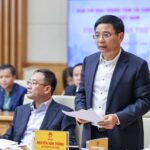
Finance Minister Nguyen Van Thang announced that key institutional and judicial framework tasks have been completed on schedule, laying the groundwork for the International Financial Center to commence full operations by 2026.
Prime Minister Announces Launch of International Financial Center in Ho Chi Minh City by February 9th
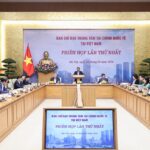
On the afternoon of January 16th, concluding the first meeting of the Steering Committee for the International Financial Center in Vietnam, Prime Minister Pham Minh Chinh, Head of the Steering Committee, emphasized that the International Financial Center in Ho Chi Minh City must be launched no later than February 9, 2026.
Ho Chi Minh City Expands Housing Options for Foreigners to 93 Projects
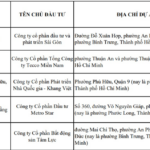
Ho Chi Minh City has recently added five new residential construction projects to its list of properties eligible for foreign ownership (fourth phase), bringing the total number of accessible projects for foreigners in the city to 93.
Intresco Eyes Acquisition of Phước Hội Sea Pearl Apartment Developer

Intresco aims to acquire 10 million shares of Nha Nam A, positioning itself as the parent company of the developer behind the Phuoc Hoi Sea Pearl Apartment project.
APEC Group Fined for Breaches in Information Disclosure and Bond Distribution

Apec Group has been fined a total of 150 million VND for delays in disclosing multiple bond-related documents and exceeding deadlines in the distribution of individual bonds.