As Vietnam gears up for the 2026 investment phase, a surge in large-scale infrastructure projects—ranging from highways and ring roads to urban redevelopment—has sparked an unprecedented demand for construction materials like crushed stone, sand, and fill materials. However, just as these projects are poised to take off, the market faces a prolonged shortage of essential materials, posing a significant bottleneck for public investment progress.
Critical projects are experiencing delays due to material scarcity, forcing construction to proceed at a snail’s pace. Costs are escalating as contractors are compelled to purchase materials at premium prices, and at times, even financial resources cannot secure the necessary supplies.
A prime example is the APEC-related projects in Phu Quoc Special Economic Zone and An Giang Province. Despite the accelerated efforts to prepare for the 2027 Asia-Pacific Economic Cooperation Forum (APEC 2027), a pivotal event for Vietnam’s political and diplomatic standing, the shortage of construction materials threatens to derail project timelines.
Specifically, in 2026, the seven key projects—including the airport, APEC Boulevard, APEC Convention Center, DT 975 Road, resettlement project, APEC Embankment, and the LRT Light Rail Transit—require over 2.6 million cubic meters of crushed stone. However, only 169,379 cubic meters have been delivered, a mere 6.3% of the total demand, leaving a shortfall of 2.5 million cubic meters and jeopardizing project completion.
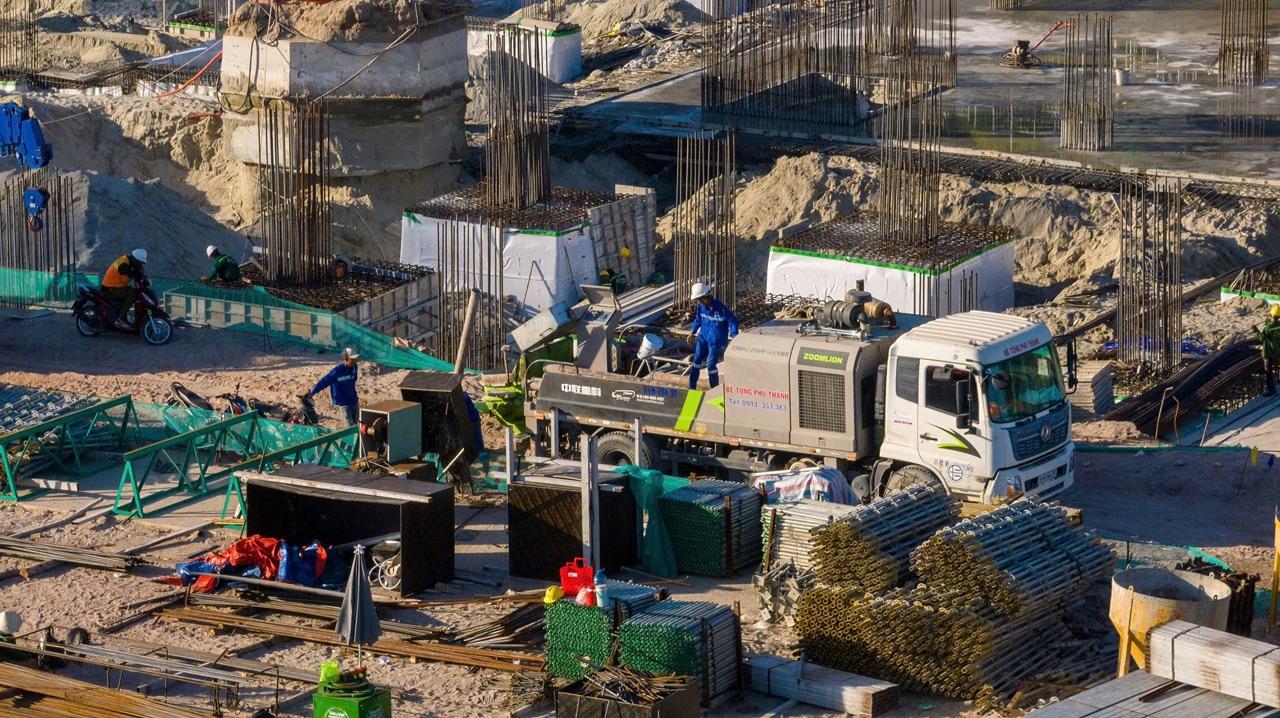
Contractors working on APEC projects highlight the supply challenges, exacerbated by adverse weather conditions and limited port infrastructure, which are heightening the risk of construction site stagnation.
Addressing the material supply crisis, Nguyen Tien Hai, Secretary of the An Giang Provincial Party Committee, urged the provincial People’s Committee to collaborate closely with contractors. He emphasized the need to expedite the exploitation of licensed quarries, ensuring sufficient capacity for extraction and transportation. Leveraging favorable weather conditions to accelerate construction is crucial to meet material demands and prevent project delays.
According to the An Giang Department of Agriculture and Rural Development, APEC projects and key provincial initiatives are categorized under Priority Group 2. The province has devised plans to explore deeper deposits and upgrade reserves, but supply is not expected until June 2026. New licensing and capacity expansion proposals are still under review.
Contractors on APEC projects stress that supply constraints, coupled with weather impacts and port infrastructure limitations, are pushing construction sites toward potential gridlock. Without swift resolutions, material shortages will not only delay APEC projects but also tarnish Vietnam’s international reputation. Coordinated efforts among stakeholders—from government bodies to businesses—are essential to transform these challenges into opportunities for sustainable development on the Pearl Island.
Experts attribute the root cause of the material shortage not to resource scarcity or enterprise capacity, but to protracted legal bottlenecks in mineral resource management. The annual extraction limits imposed by outdated regulations are misaligned with the urgent demands of contemporary public investment. For instance, the Hon Soc and Tra Duoc Lon mines, currently supplying APEC projects, are each permitted to extract approximately 1 million cubic meters over 1.5 to 2 years.
While the government’s Resolution 66.4 aims to alleviate these issues by allowing special mechanisms for priority projects until 2027, its implementation conflicts with other regulations, notably Decree 193’s requirement for new mine designs. This overlap prevents many mines, despite adequate reserves, technology, and environmental compliance, from scaling up production in time.

The construction material shortage has transcended the mining sector, evolving into a systemic issue that directly impacts public investment efficiency and growth prospects.
Compounding the issue are the inadequacies in the Law on Geology and Minerals, which only “prioritizes” rather than mandates that existing operators can expand exploration without bidding. This ambiguity has led to divergent interpretations among localities.
Phan Tan Dat, Chairman of the Ho Chi Minh City Mineral Industry Association, criticizes the current mineral exploitation bidding mechanism, which separates land use rights from mining rights. This disconnect often leaves winning bidders without land access, while landowners, who do not participate in bidding, refuse compensation negotiations. Such projects remain stalled for 5–6 years, leaving resources untapped while the market desperately needs materials.
The construction material shortage has thus transcended the mining sector, evolving into a systemic issue that directly impacts public investment efficiency and growth prospects. When materials are scarce, projects stall, costs soar, and the effectiveness of public investment capital erodes, with broader economic repercussions.
As Vietnam aims for high growth from 2026, Nguyen Quoc Hiep, Chairman of the Contractors Association, likens the material shortage to building a powerful growth engine without fuel. Resolving this crisis demands a paradigm shift in management—from rigid control to flexible governance—aligned with the urgent needs of investment. A cohesive, comprehensive strategy from central to local levels is imperative, rather than relying on isolated efforts.
Experts agree that only by addressing institutional, procedural, supply, and pricing inefficiencies can key projects be completed on schedule and to standard, contributing to economic growth and national sustainable development.
Construction Material Shortage Halts Progress on APEC Project in Phu Quoc
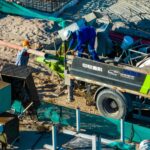
As Phú Quốc gears up its critical infrastructure for APEC 2027, a significant bottleneck in construction materials supply threatens to derail progress. Surging demand, coupled with constrained quarry capacities and sluggish regulatory adjustments, is exerting immense pressure on key project timelines. Urgent, decisive, and coordinated solutions are imperative to alleviate this challenge and ensure the seamless execution of these vital initiatives.
Vietnam Surpasses Target, Completing Over 3,000km of Expressways
At the Government’s regular press conference in December, held on the afternoon of January 8th, Mr. Nguyen Tri Duc, Chief of Office and Spokesperson for the Ministry of Construction, addressed questions regarding the causes and lessons learned in the development of transportation infrastructure, particularly the goal of 3,000 kilometers of highways. He attributed the achievements to the convergence of political determination, special mechanisms, and a flexible, resolute implementation approach.
Official Opening of the Entire Phoenix Pass Tunnel
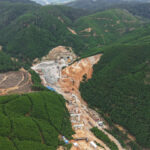
The entire tunnel through the Phượng Hoàng Pass (bordering Khánh Hòa and Đắk Lắk provinces) on the Buôn Ma Thuột – Khánh Hòa Expressway has officially opened to traffic after more than 20 months of construction.
$67 Billion High-Speed Rail Megaproject Proposed by VinSpeed and THACO Enters “Critical Phase”
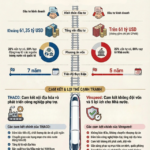
In January 2026, the Prime Minister mandated the Ministry of Construction to collaborate with relevant ministries and sectors to finalize the impact assessment of various investment methods. They are also tasked with proposing specific mechanisms and policies for each method, to be submitted to the Government for the North-South high-speed railway project.
Vietnam’s Century-Defining Landmark and Its Groundbreaking “Made by Vietnam” Technologies

This is not merely a source of pride, but a robust foundation for generating significant socio-economic value for the nation.