Ho Chi Minh City’s Department of Construction Director, Tran Quang Lam, announced that based on the 2020-2030 Transport Infrastructure Development Plan and related initiatives, the department is prioritizing key transportation and technical infrastructure projects following administrative boundary adjustments.
From 2026 to 2027, the city will focus on 77 major projects with a total investment of approximately VND 1,780 trillion. By 2027, Ho Chi Minh City aims to increase road density to 3.06 km/km², expand transportation land ratios, and progressively complete the urban rail network.
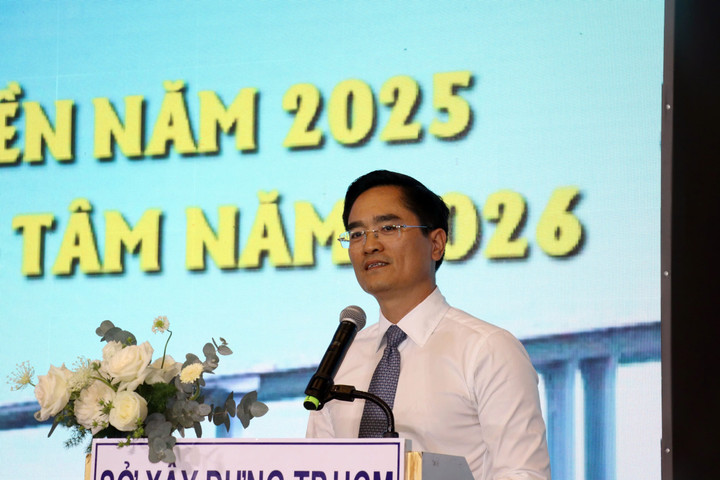
Director Tran Quang Lam stated that in 2026, Ho Chi Minh City aims to commence approximately 15 key projects and complete 12 major works.
Specifically, in 2026, the city targets starting 15 critical projects, including Ring Road 4, the Ho Chi Minh City – Moc Bai Expressway, Metro Line 2, Can Gio Bridge, Thu Thiem 4 Bridge, the Rach Chiec Sports Complex, BOT initiatives, and key intersections. Additionally, preparations are underway for urban rail, seaport, aviation, and regional connectivity projects.
On January 15, four projects with a combined investment of nearly VND 240 trillion were launched: Metro Line 2 (Ben Thanh – Tham Luong), Can Gio Bridge, Phu My Bridge, and the Rach Chiec Sports Complex.
Concurrently, the city will complete and operationalize 12 major projects, such as Ring Road 3, An Phu Intersection, My Thuy Intersection, and the Tham Luong – Ben Cat – Rach Nuoc Len canal upgrade.
For technical infrastructure, priorities include safe water supply programs, flood control, wastewater treatment, urban lighting, and green spaces. Efforts are also focused on expanding water networks, reducing losses, and enhancing urban service quality.
Alongside infrastructure investment, Ho Chi Minh City is optimizing traffic management, expanding smart traffic control systems, and increasing technology applications. Public transport is being strengthened, personal vehicle use is being restricted, and urban planning is being adjusted for balanced development, reducing central area pressure.

The An Phu Intersection is a key project being accelerated for completion before the upcoming Lunar New Year.
In housing and urban development, the city is accelerating social housing, renovating old apartments, and urban renewal linked to canal-side relocation, ensuring social welfare.
Currently, Ho Chi Minh City is advancing 56 social housing projects totaling approximately 39,900 units, ensuring completion during 2026–2027.
Nine projects, with around 8,400 units, have received construction permits and are underway. Forty-seven projects, totaling about 31,500 units, have investment approval, ensuring the 2026 target of 28,500 units and future goals.
The city is also finalizing a 2,000-hectare social housing land fund plan by 2040.
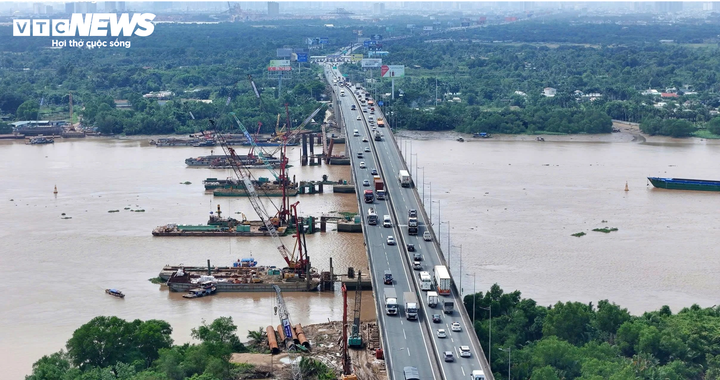
Regional connectivity infrastructure is also being accelerated by Ho Chi Minh City.
In 2025, the city initiated 63 key transportation projects, including the Ho Chi Minh City – Moc Bai Expressway, the Ben Thanh – Can Gio railway, Ring Road 2 sections, Nguyen Khoai Bridge, and inter-regional connectors.
Four major technical infrastructure projects were also started, focusing on environmental improvements for canals like Xuyen Tam, Tham Luong – Ben Cat – Rach Nuoc Len, and Van Thanh.
Sixty-eight projects were completed and operationalized, notably Metro Line 1 (Ben Thanh – Suoi Tien), Ring Road 3 sections, National Highway 50, and clearance upgrades for Binh Trieu 1, Binh Phuoc 1 bridges, and the Nguyen Van Linh – Nguyen Huu Tho underpass. These enhancements improve traffic flow, reduce congestion, and boost socio-economic development.