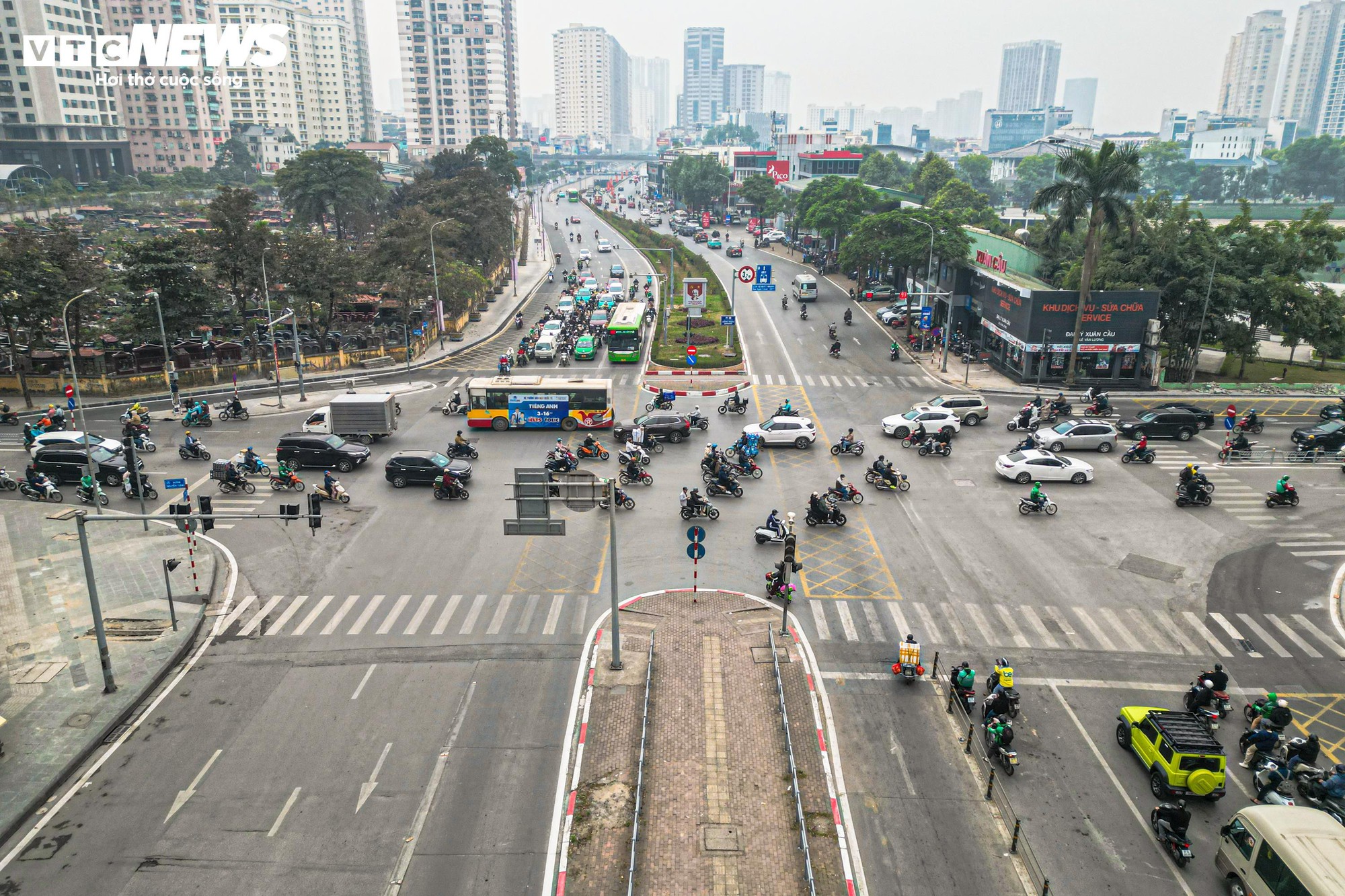
The Le Van Luong – Hoang Minh Giam – Nguyen Tuan intersection (Thanh Xuan District) is a critical junction connecting multiple major roads, linking the western area with Hanoi’s city center. This area consistently experiences high traffic volumes, particularly during peak hours.
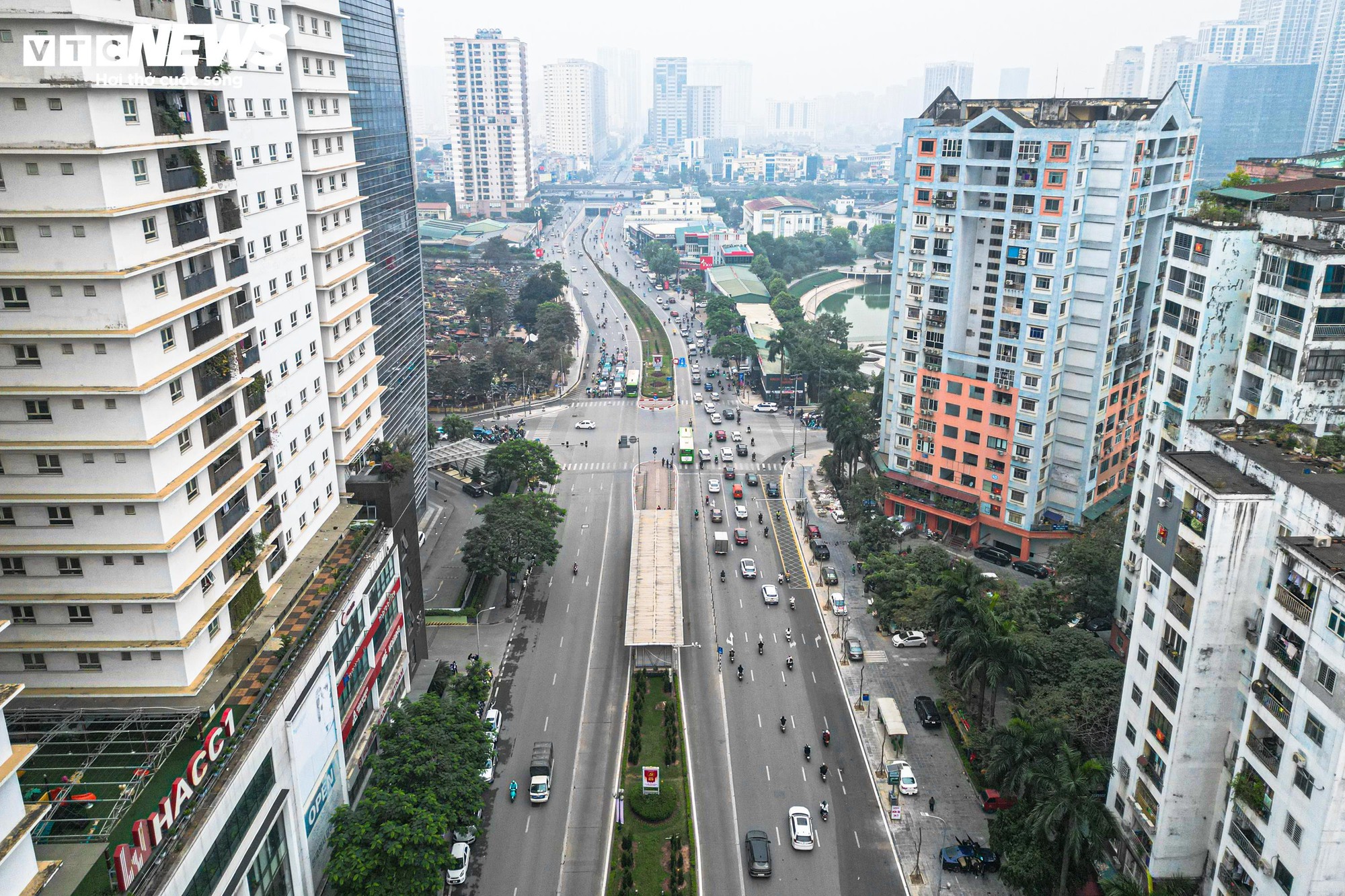
Le Van Luong Street, a key route into the city center, faces significant congestion due to its high vehicle density and narrowed road width, which includes a dedicated lane for the BRT rapid bus system.
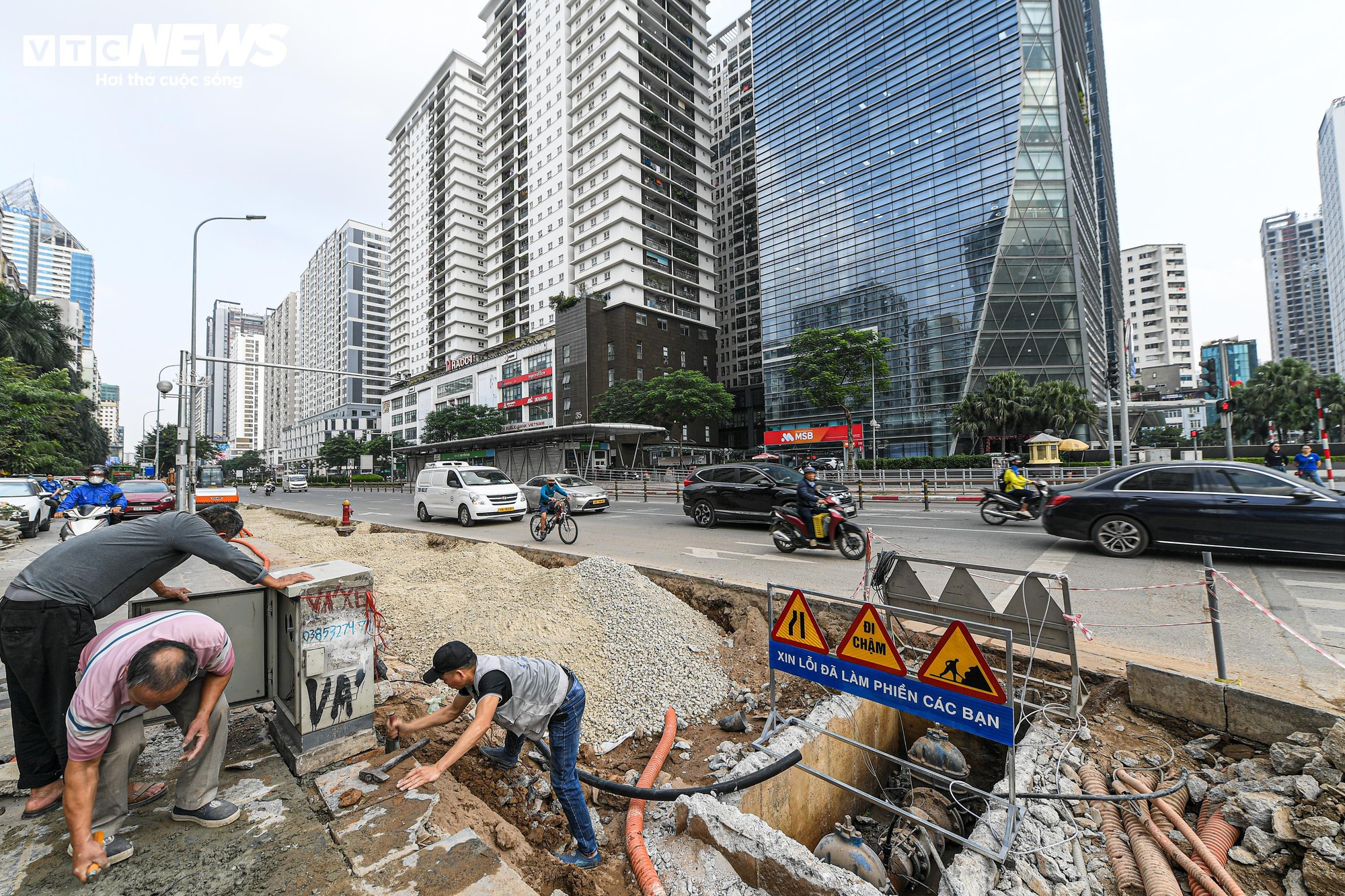
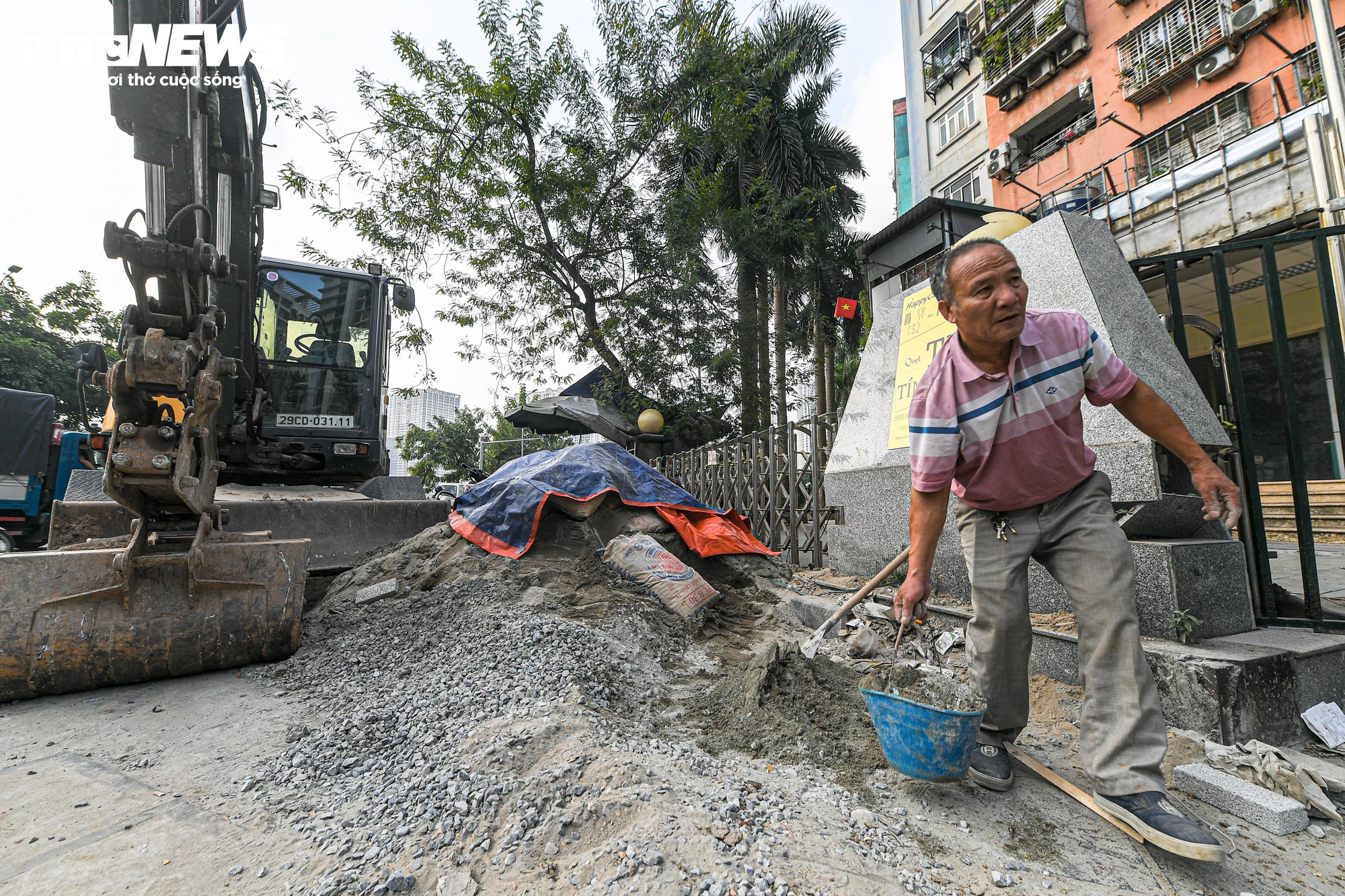
To alleviate traffic congestion, since mid-December 2025, authorities have initiated the renovation of the Le Van Luong – Hoang Minh Giam – Nguyen Tuan intersection. The solution involves widening the road by reducing the width of sidewalks along Le Van Luong, Nguyen Tuan, and Hoang Minh Giam streets, thereby enhancing traffic flow. (Images captured on December 22, 2025).
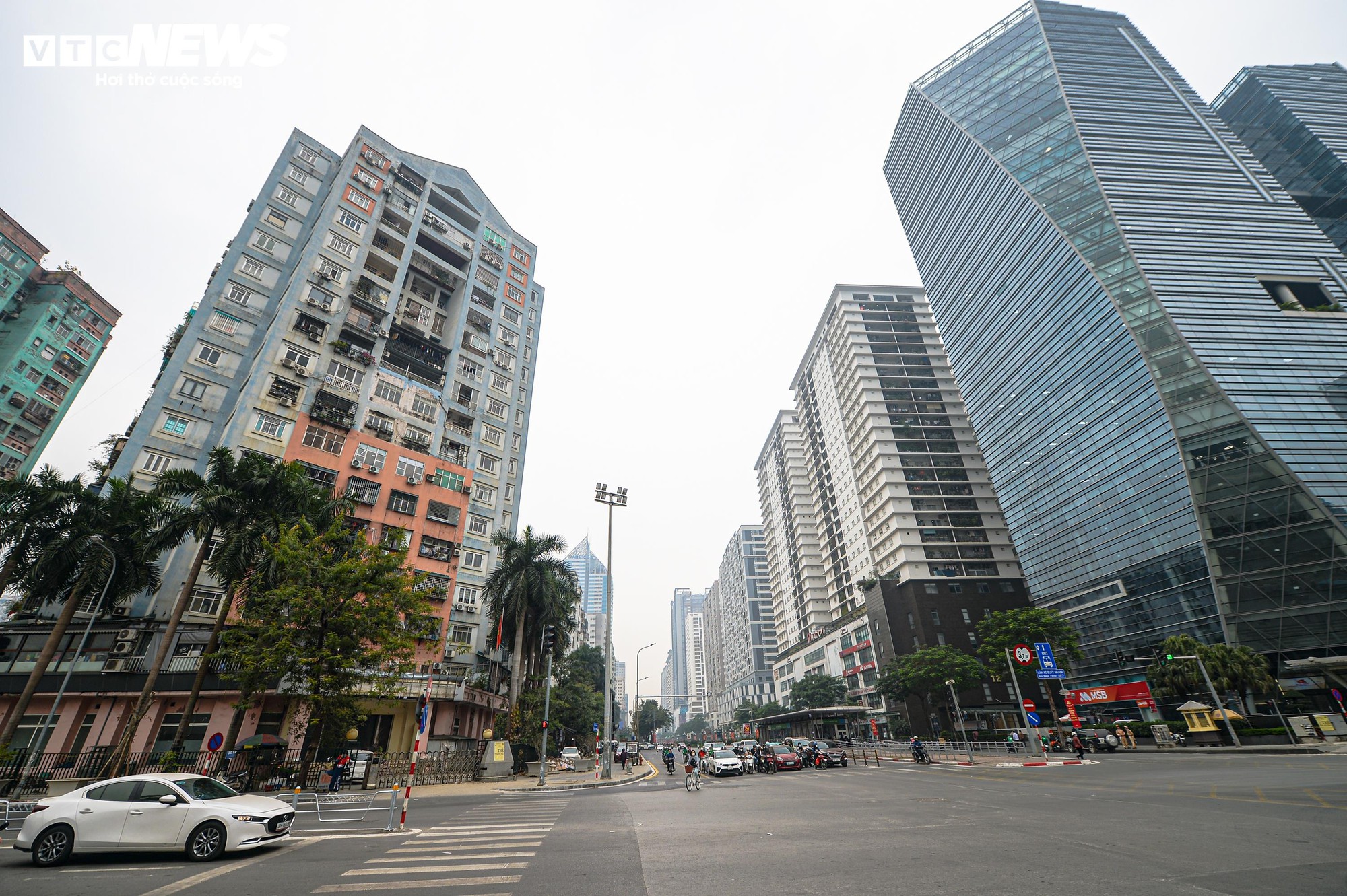
After nearly a month of construction, as reported by VTC News on January 15, 2026, the road section on Le Van Luong Street, from the Le Van Luong – Khuất Duy Tiến underpass towards the city center, has been reconfigured.
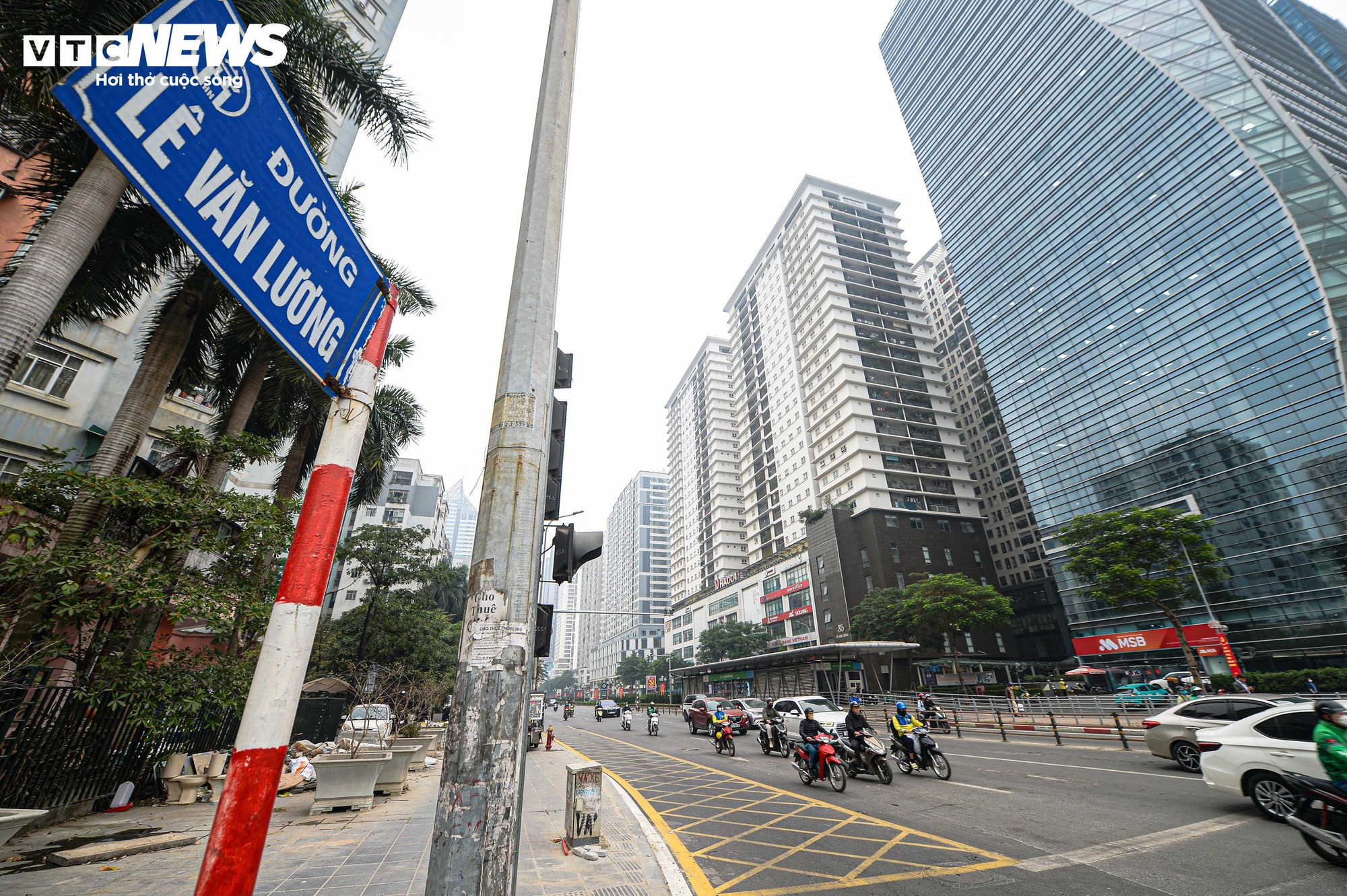
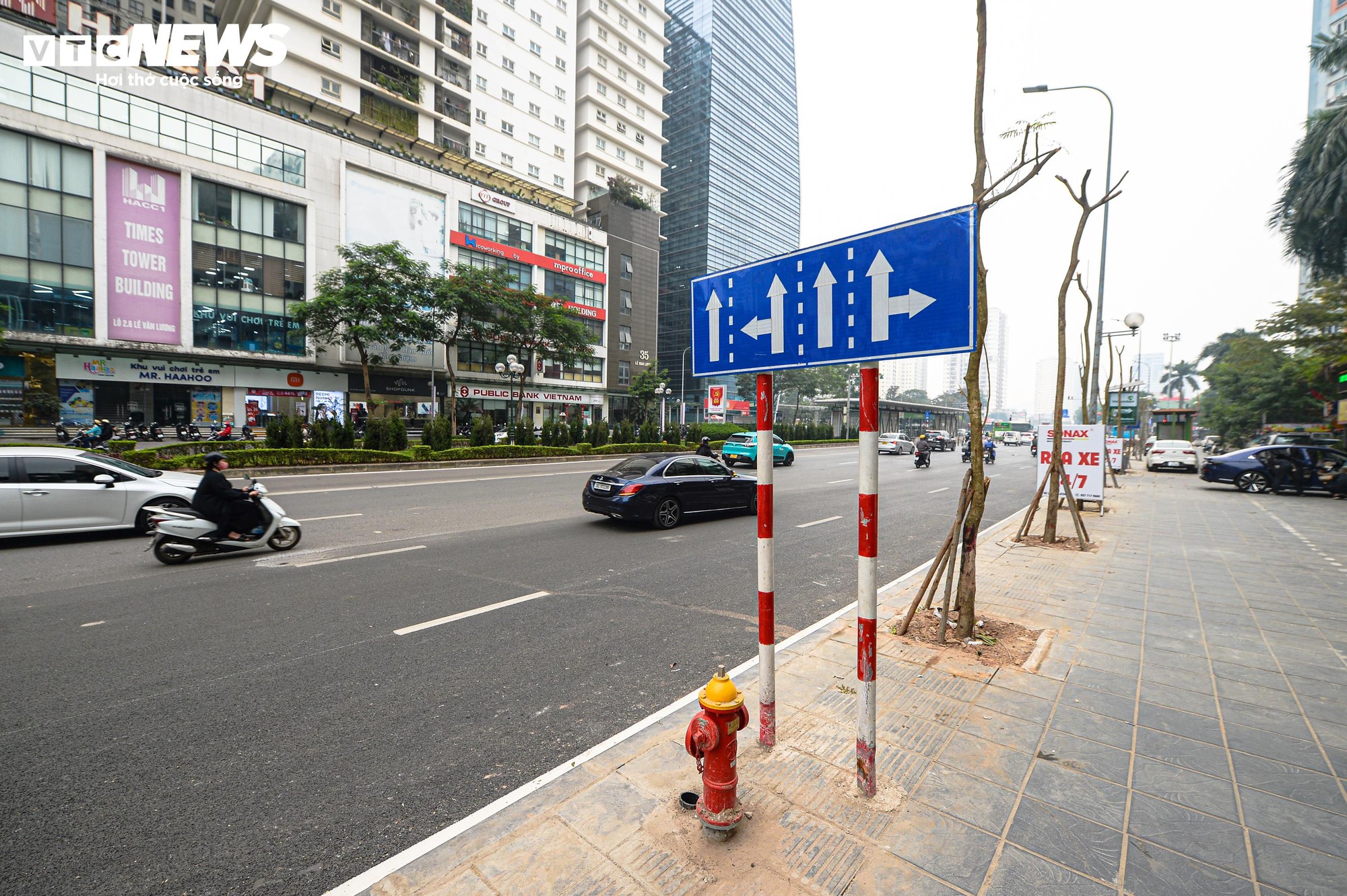
Currently, the road is organized into three mixed lanes for general motor vehicles and one dedicated lane for BRT buses, which helps to better separate traffic flows compared to before.
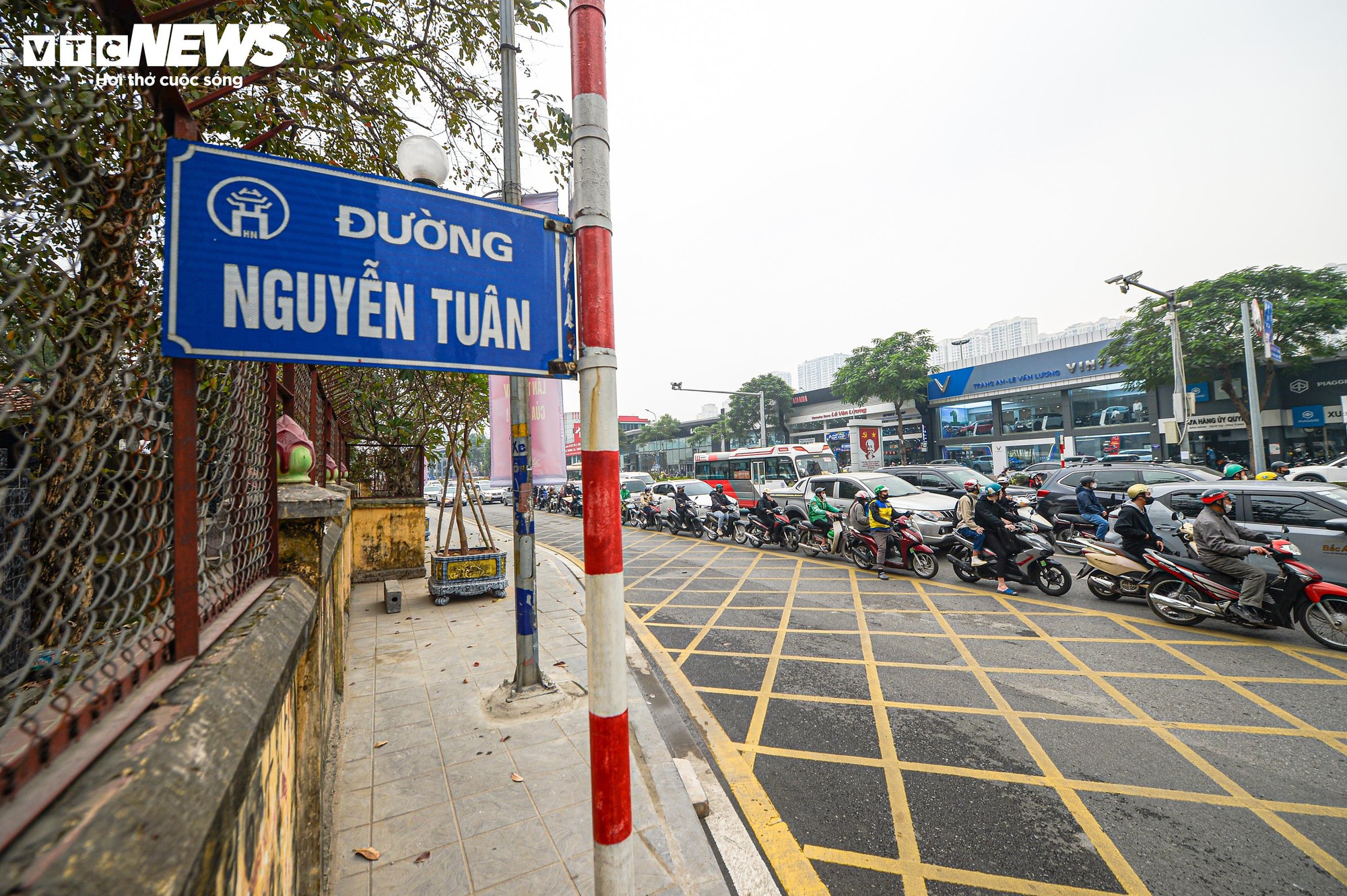
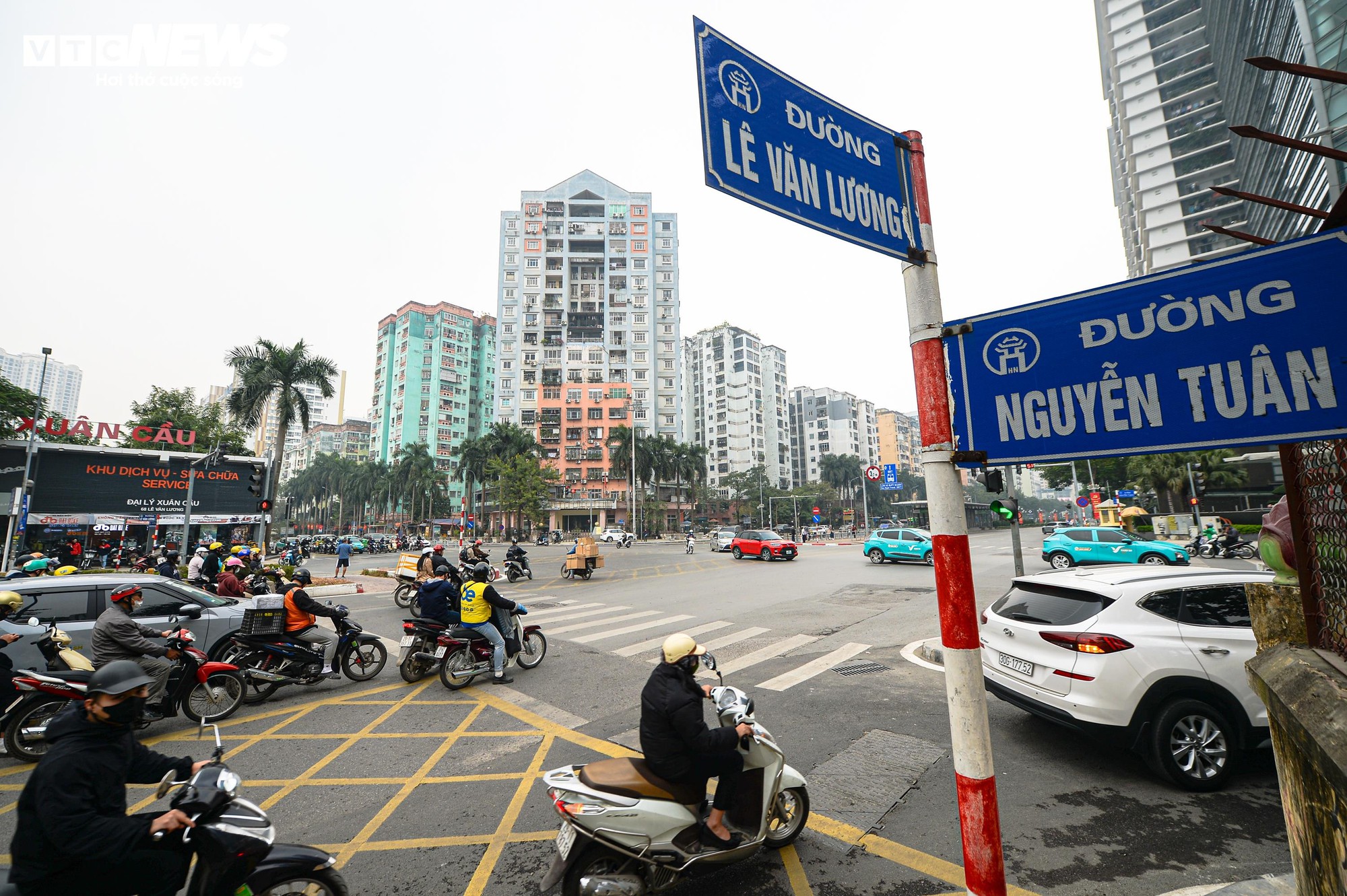
Additionally, the right-turn lane from Le Van Luong to Nguyen Tuan has been marked with a continuous turning pattern, allowing vehicles to turn right without waiting for a red light signal.
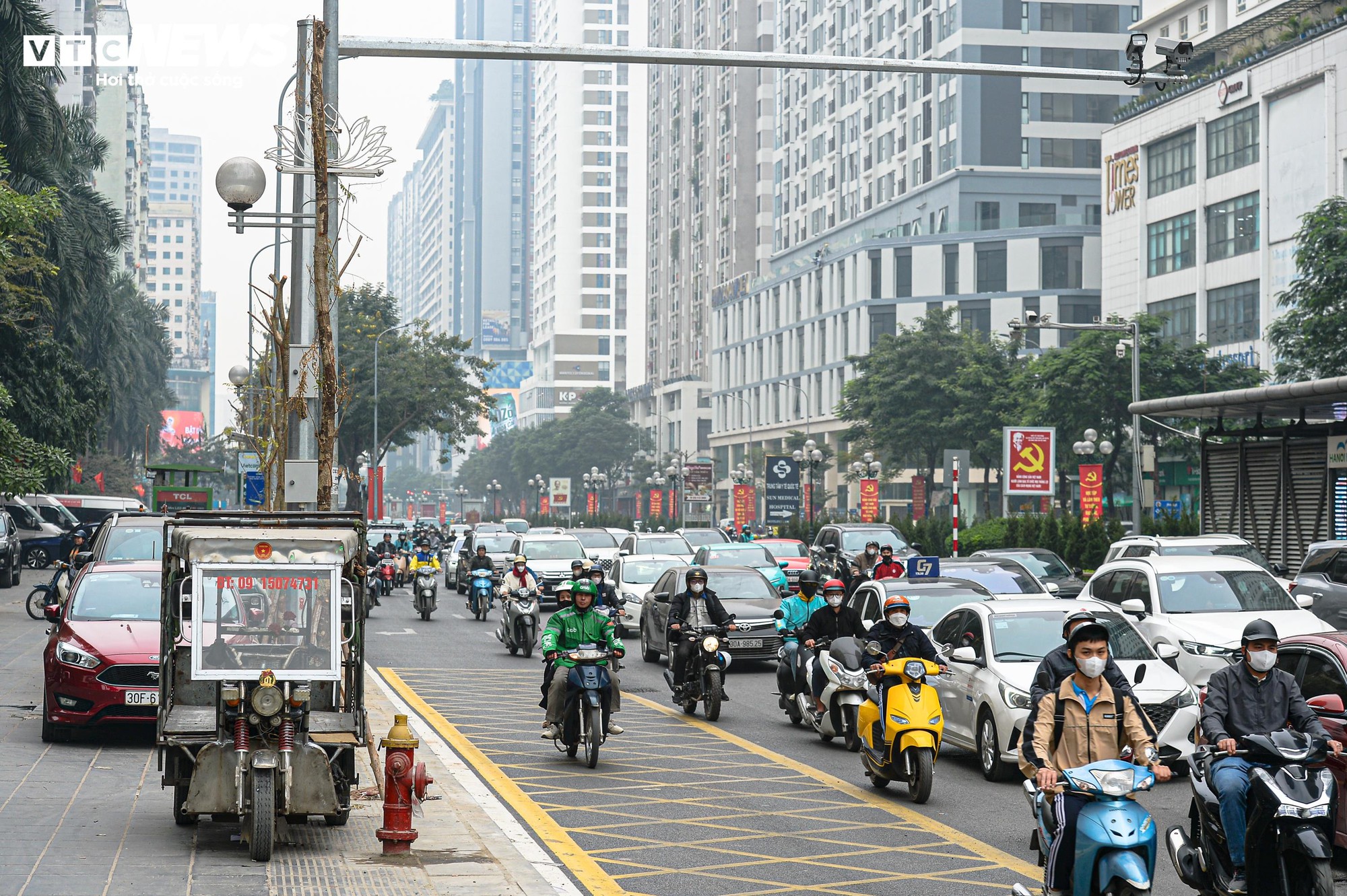
According to local residents, this right-turn lane has significantly reduced traffic conflicts at the intersection, minimizing prolonged congestion during peak hours. “Previously, turning from Le Van Luong to Nguyen Tuan often required a long wait, especially in the afternoon. With the continuous right-turn lane, traffic flows more smoothly, and there’s less congestion at the intersection,” shared Mr. Tran Van Minh, a resident near Hoang Minh Giam Street.
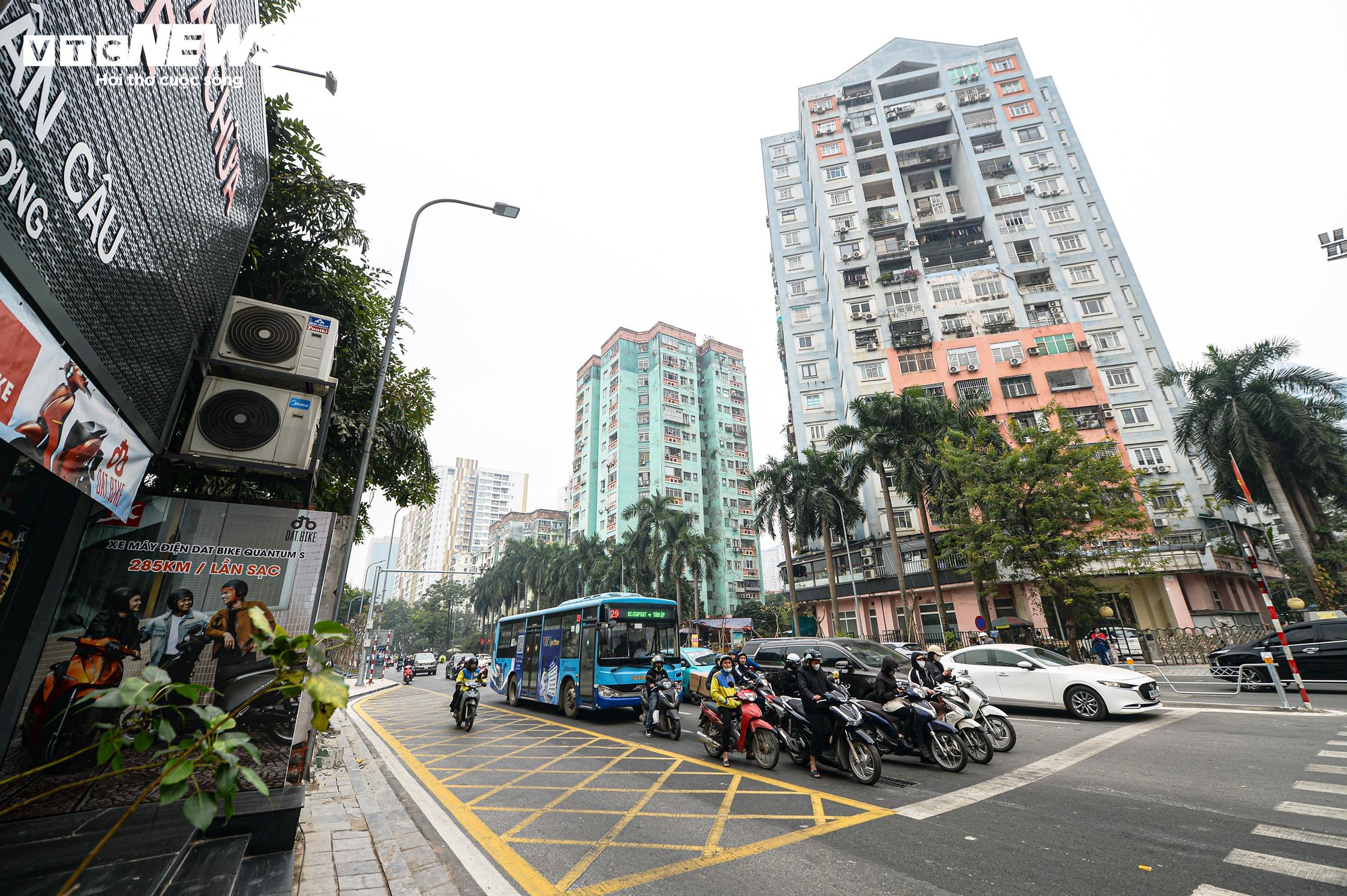
Not only Le Van Luong Street, but also the beginning of Hoang Minh Giam Street at its intersection with this axis has been widened by reducing the sidewalk.
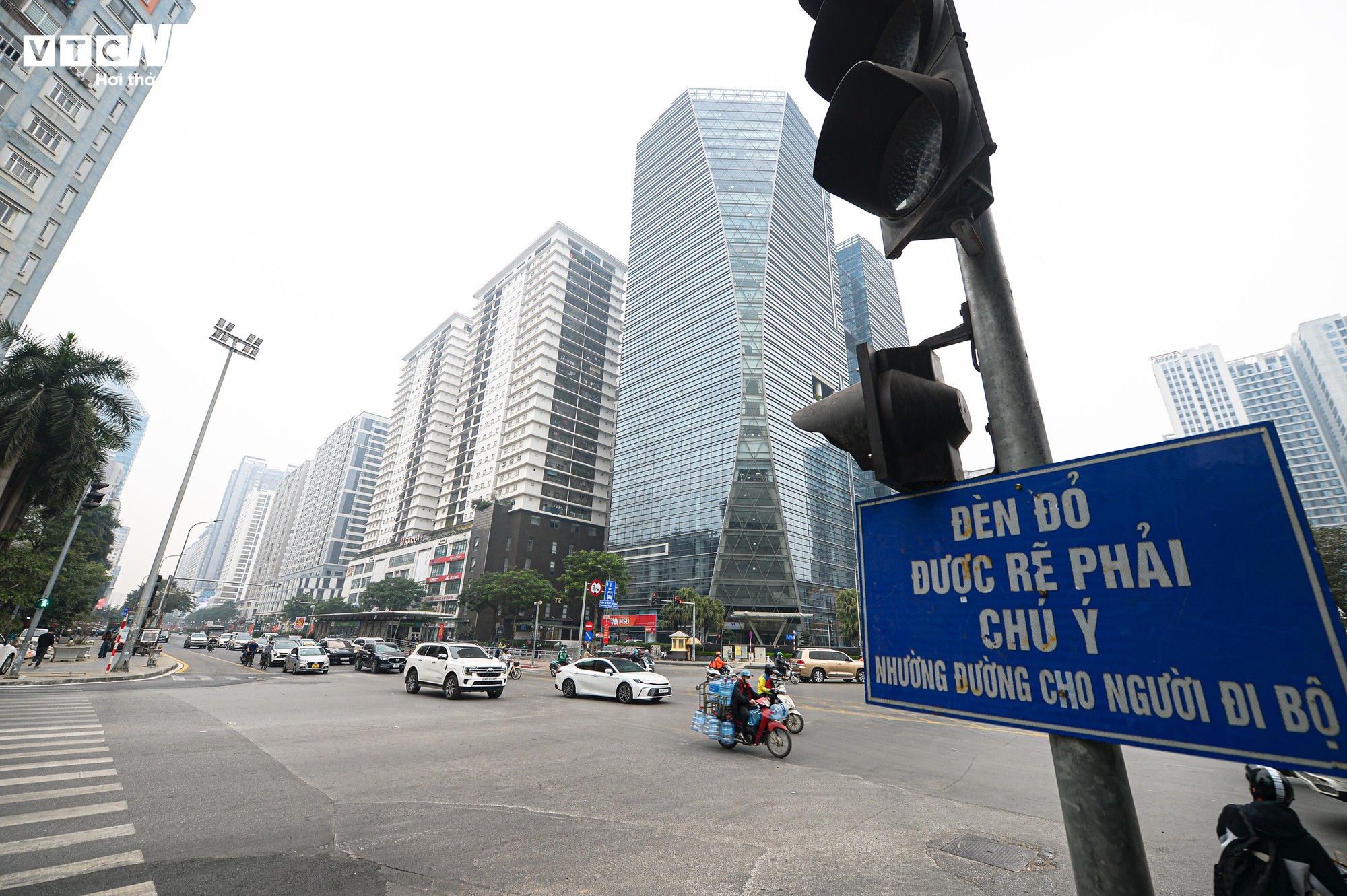
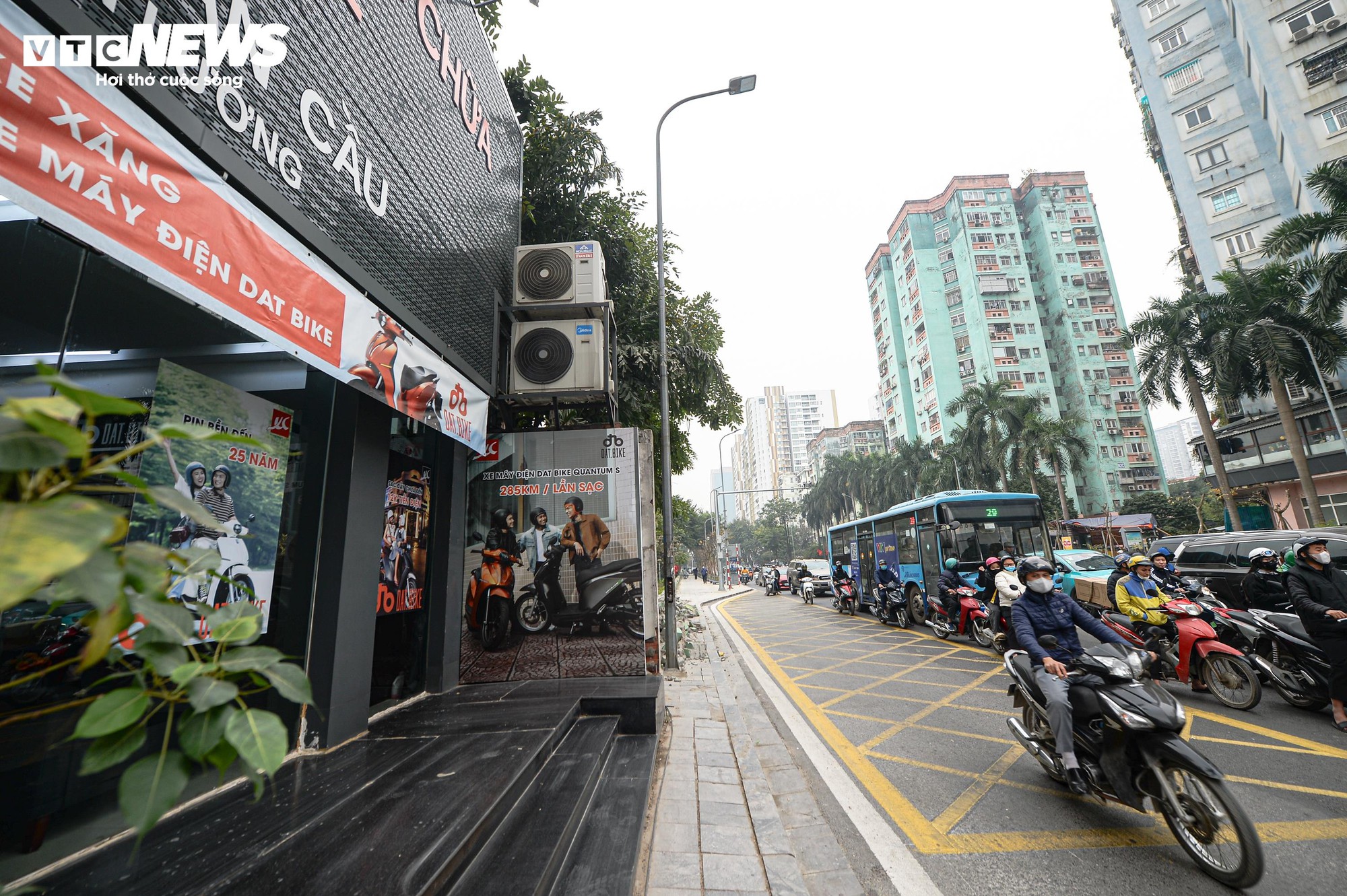
This widening has increased the capacity for vehicles turning from Hoang Minh Giam onto Le Van Luong, reducing localized congestion at the intersection.
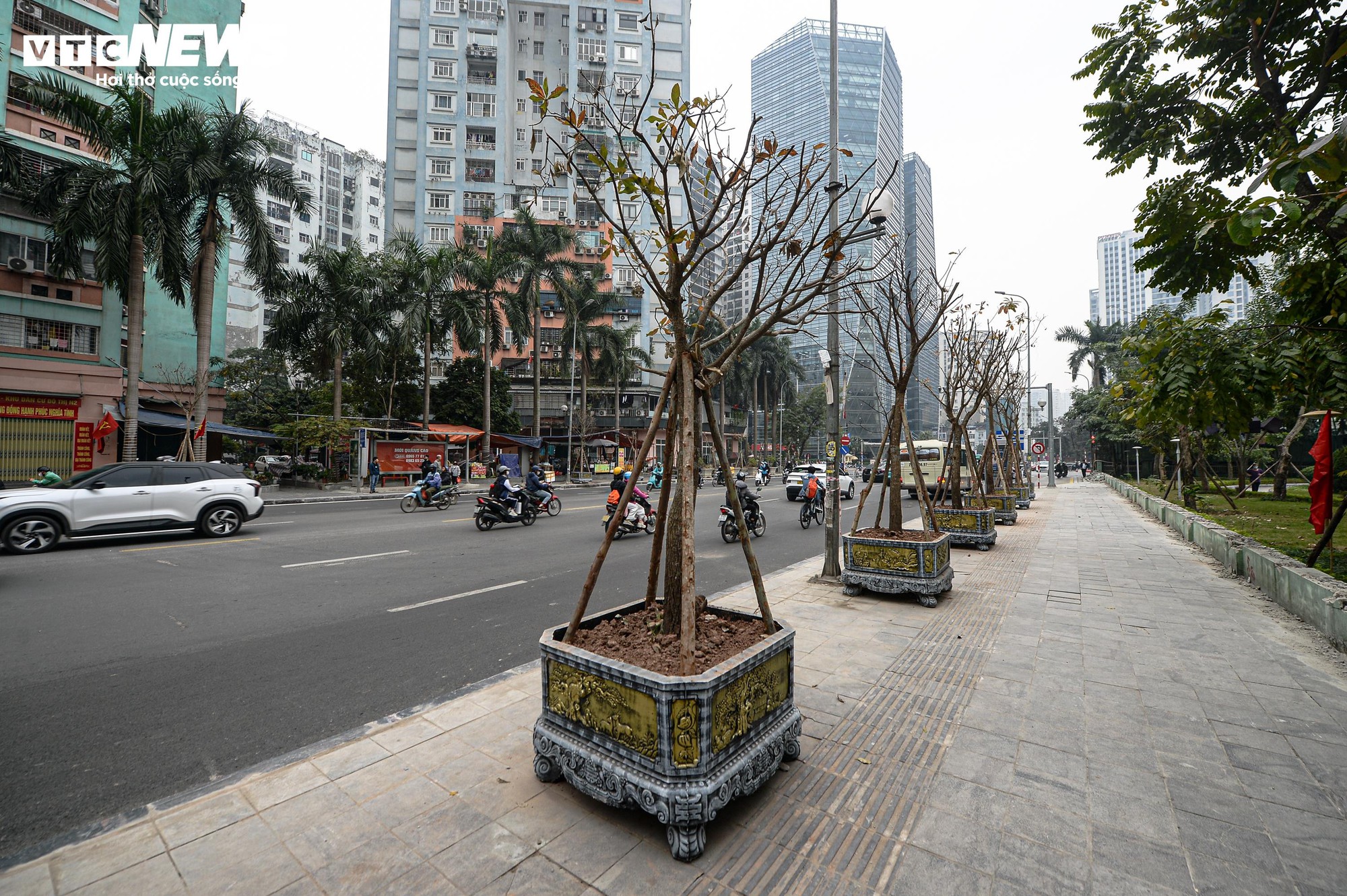
During the renovation of the Le Van Luong – Hoang Minh Giam intersection, dozens of trees were relocated to facilitate road widening. After completing the main works, many planters have been repositioned on the sidewalks of Le Van Luong and Hoang Minh Giam streets.
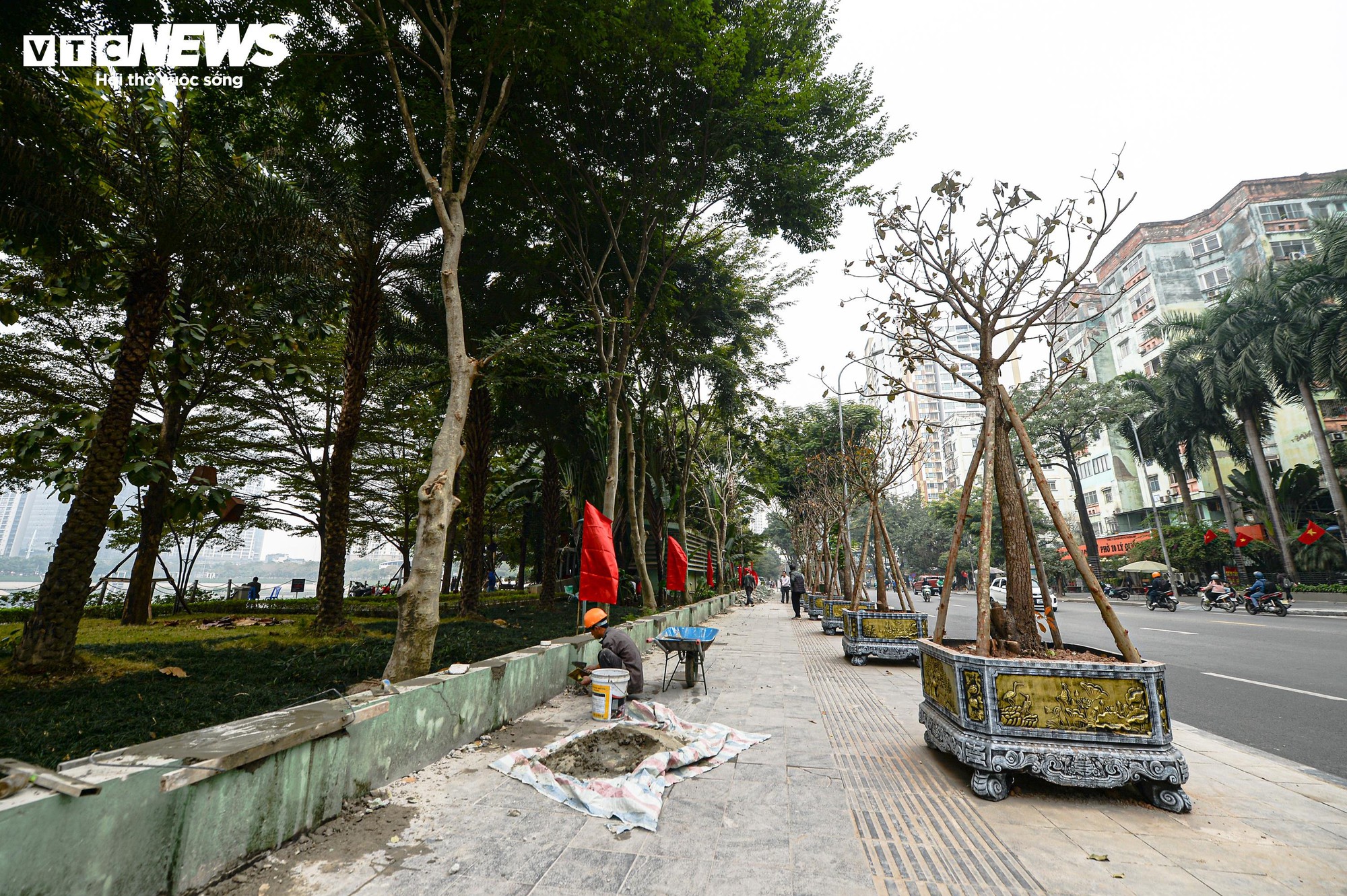
However, some planters show signs of withering, and their arrangement has narrowed pedestrian space in certain sidewalk sections.
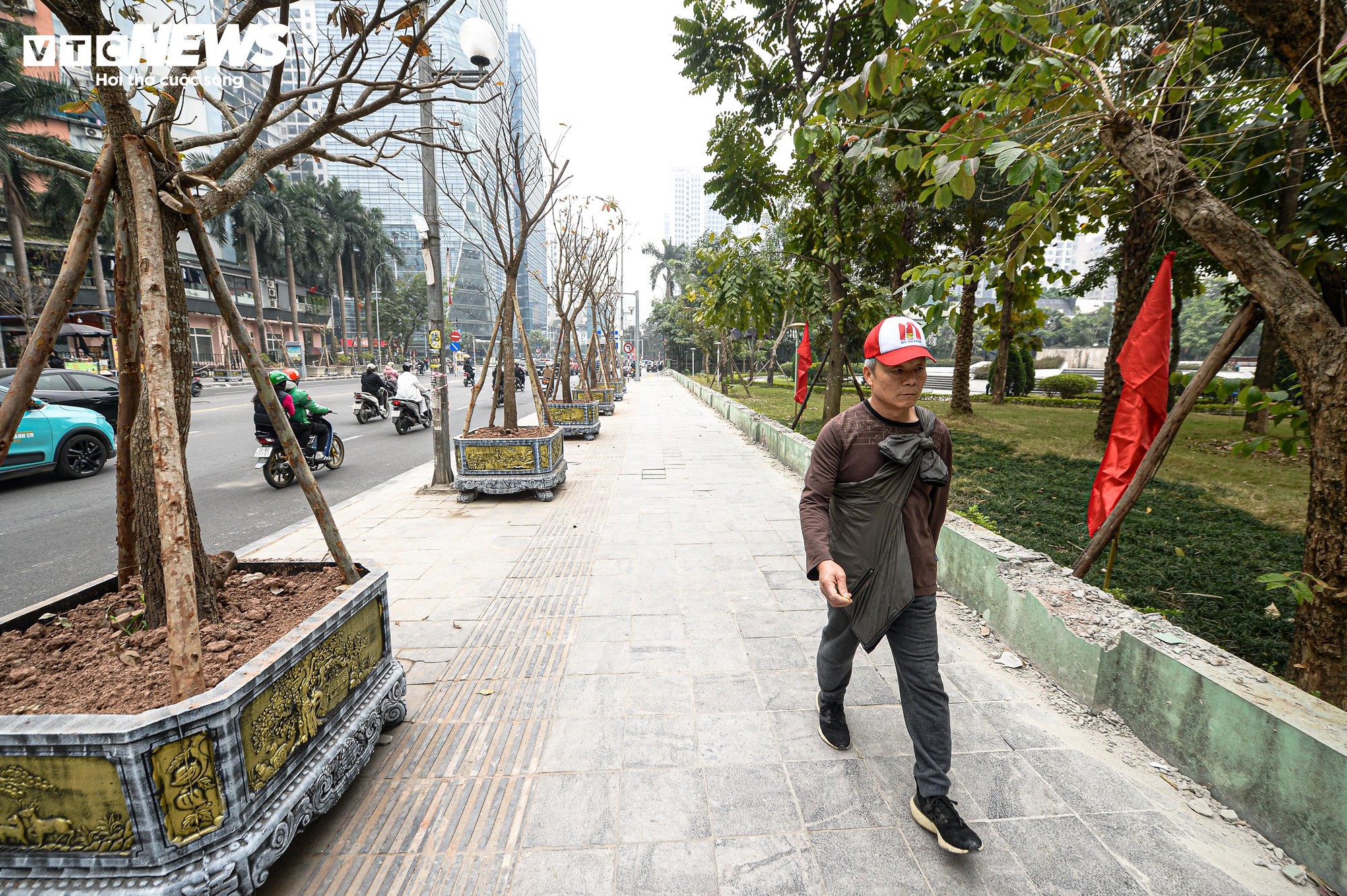
“The sidewalk is quite occupied by planters, forcing pedestrians to step into the roadway. A neater arrangement would be more convenient,” noted Mr. Duc Hanh from Thanh Xuan District.
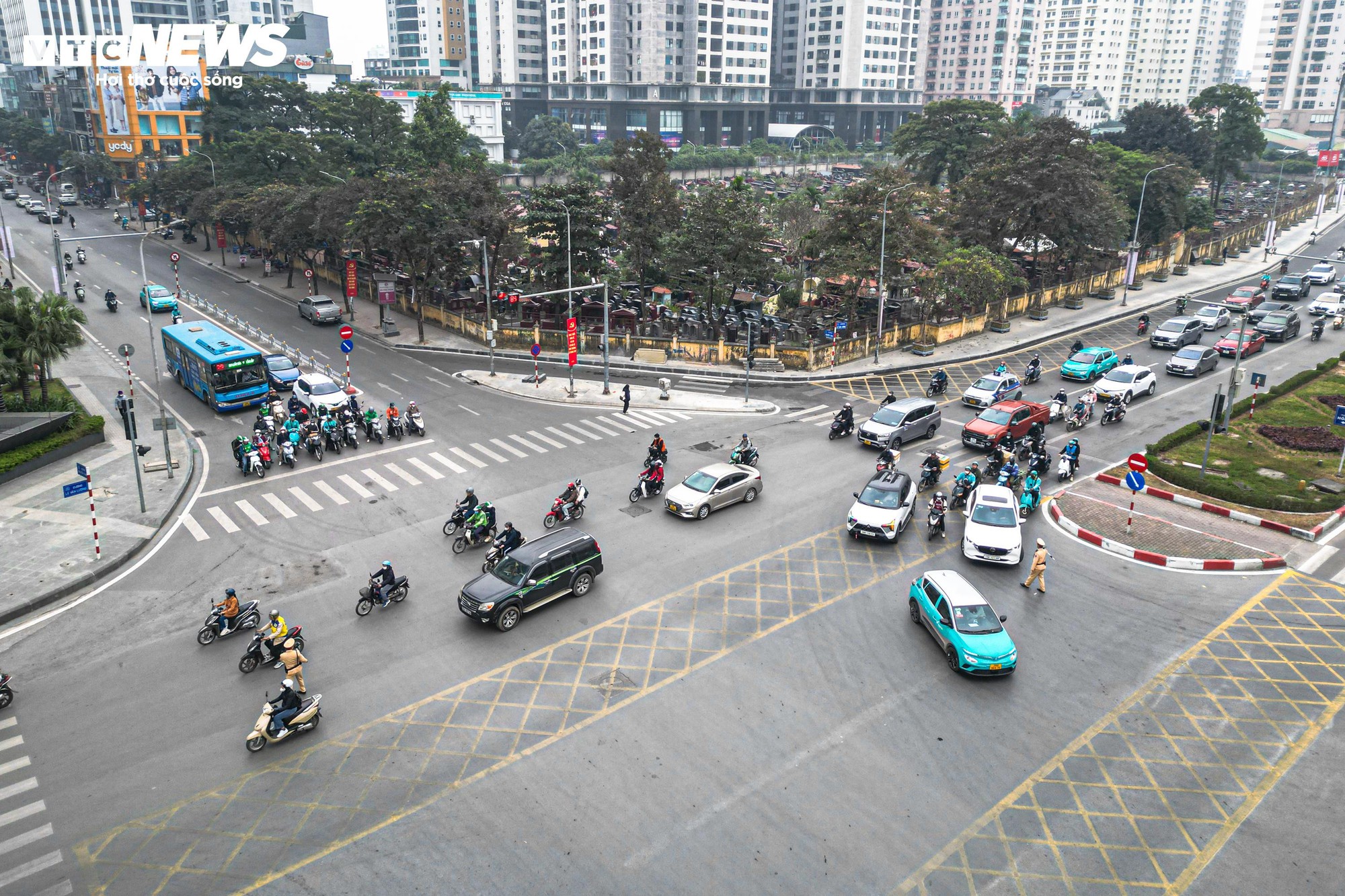
The reduction of sidewalks and widening of the road at the Le Van Luong – Hoang Minh Giam – Nguyen Tuan intersection have brought noticeable changes to the traffic infrastructure.
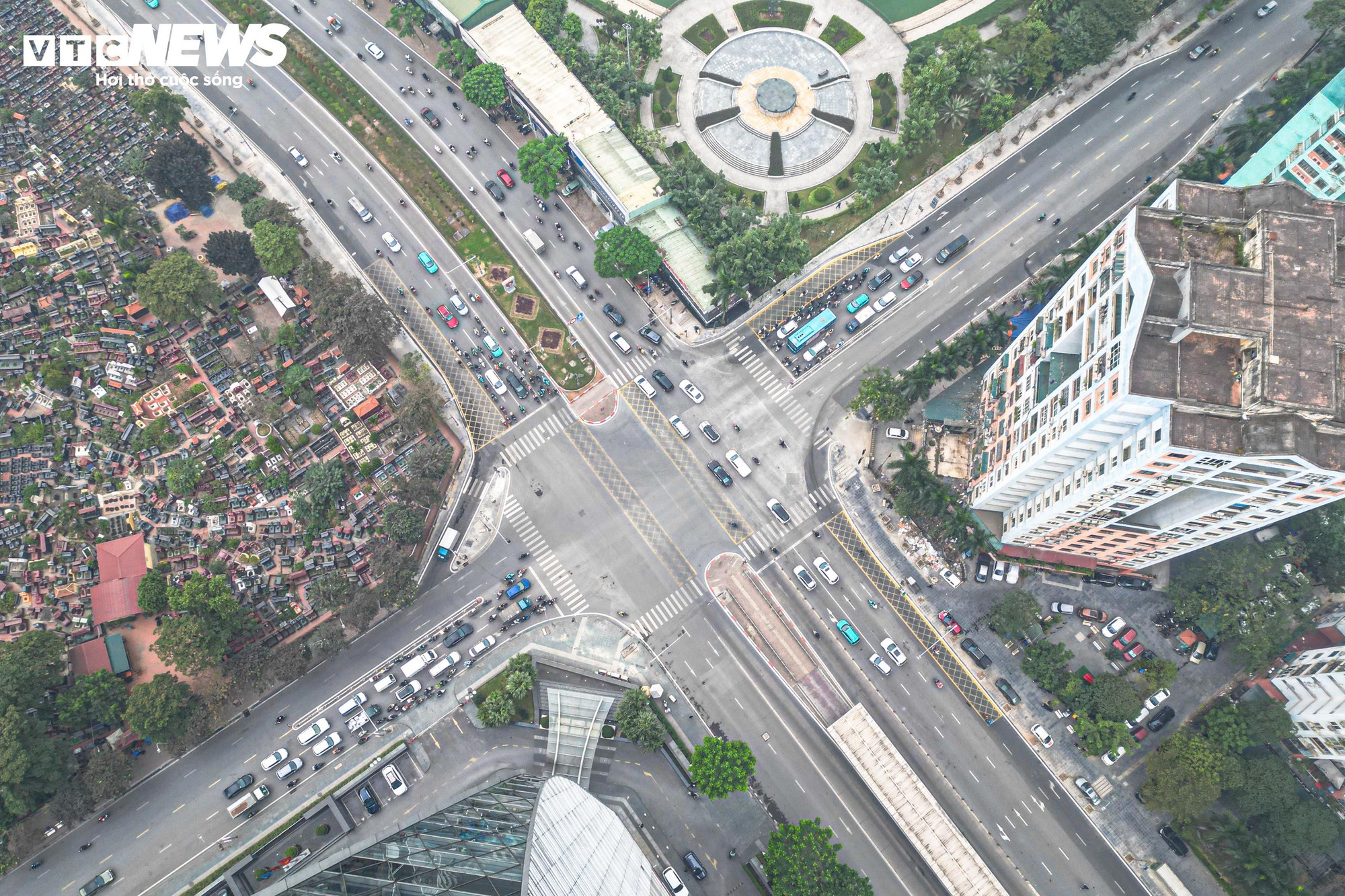
Once all components are fully integrated and traffic management stabilizes, congestion in this area is expected to gradually improve, enhancing traffic efficiency on key western routes in Hanoi.
15-Year Transformation: National Highway 1A Van Dien – Ngoc Hoi Upgraded to 8-Lane Boulevard

After more than 15 years, National Highway 1A, spanning from Van Dien to Ngoc Hoi, has finally reopened, transformed into an expansive 8-lane boulevard. This significant upgrade not only alleviates traffic congestion but also revitalizes the southern gateway of Hanoi, marking a transformative change in its landscape.
Hanoi: Alley Homes Transform into Prime Real Estate After Ring Road 1 Clearance
Following land clearance, numerous residential buildings within the alley have emerged as the new frontage along the Hoàng Cầu – Voi Phục section of Ring Road 1.
Unveiling Hanoi’s $360 Million Investment: Closing the Loop on Ring Road 2.5 with Three Major Routes

With a total investment of approximately VND 8,400 billion, the construction of the Ring Road 2.5 project, spanning three sections totaling over 2.2 kilometers, is slated for completion and operation by Q4 2026.
Hanoi: Up-Close Look at the $360 Million Emergency Project to Alleviate Traffic Congestion
The Hanoi People’s Committee has issued an urgent decree for the construction of the Belt Road 2.5 project, encompassing key segments: Dich Vong New Urban Area – Duong Dinh Nghe, Vu Pham Ham – Tran Duy Hung, and Nguy Nhu Kon Tum – Nguyen Trai. This ambitious initiative boasts a total investment of 8.4 trillion VND.
Proposed Six-Lane Underpass Project: Current Status of the Western Hanoi Site

The underpass at the Me Tri – Duong Dinh Nghe – Ring Road 3 intersection boasts a 6-lane design, spanning 655 meters. It features both enclosed and open tunnels, efficiently accommodating high traffic volumes.