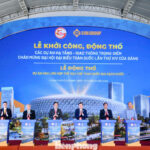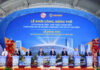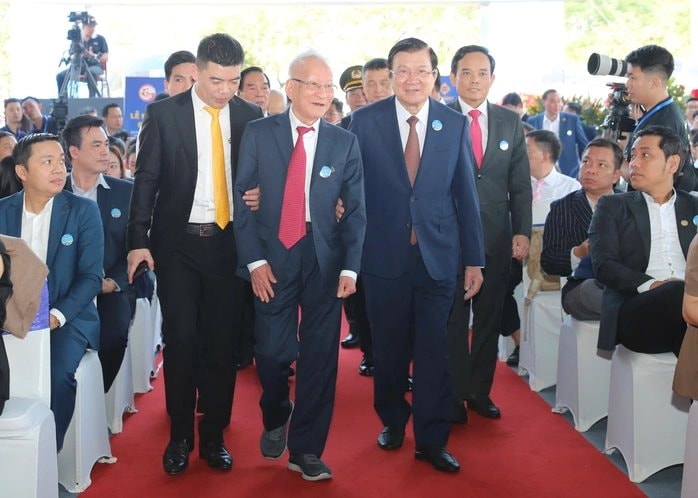
Central government leaders, along with Ho Chi Minh City officials, attended the groundbreaking ceremony for the Rach Chiec National Sports Complex project. Photo: NLĐ
This morning (January 15th), Ho Chi Minh City launched four major infrastructure projects simultaneously, with a combined investment of nearly VND 240 trillion. Notably, within the urban infrastructure sector, this marks the largest-scale groundbreaking event in the city in recent years.
The four projects include Metro Line 2 (Ben Thanh – Tham Luong), Rach Chiec National Sports Complex, Can Gio Bridge, and Phu My 2 Bridge. These projects are part of the celebrations for the 14th National Party Congress and are expected to transform the city’s landscape, alleviate existing infrastructure pressures, and expand development towards strategic directions, particularly the sea and the eastern and northwestern regions.
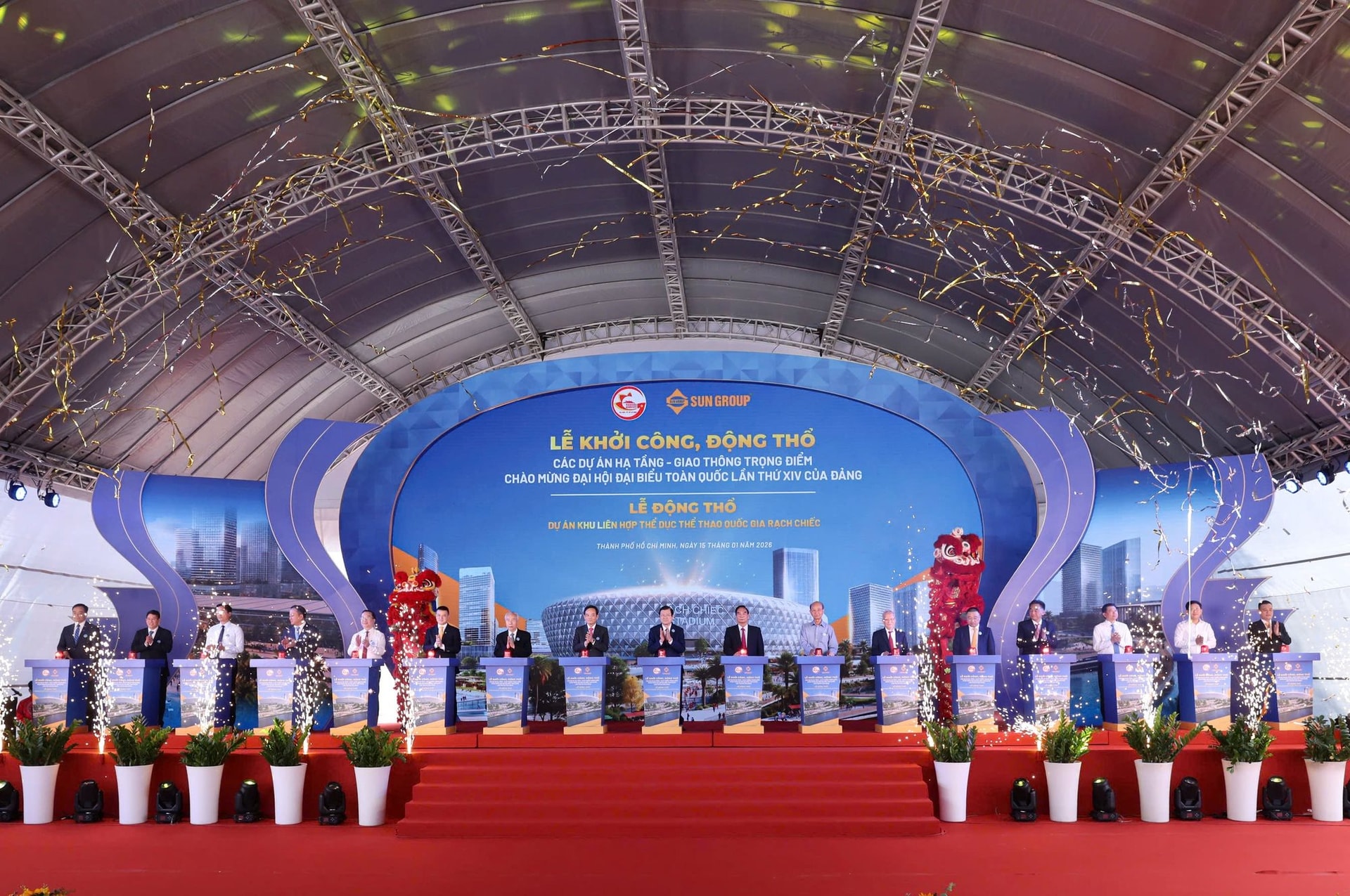
Groundbreaking ceremony for the Rach Chiec National Sports Complex. Photo: NLĐ
The main event took place at the groundbreaking ceremony for the Rach Chiec National Sports Complex, attended by central government and city leaders. Simultaneously, ceremonies were held for the commencement of Metro Line 2 (Ben Thanh – Tham Luong), Can Gio Bridge, and Phu My 2 Bridge. The event also saw the participation of numerous investors and contractors.
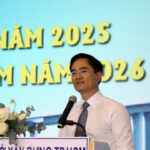
Speaking at the ceremony, Mr. Nguyen Loc Ha, Vice Chairman of the Ho Chi Minh City People’s Committee, emphasized that the launch of these four key infrastructure projects is a concrete step towards realizing the city’s new development goals.
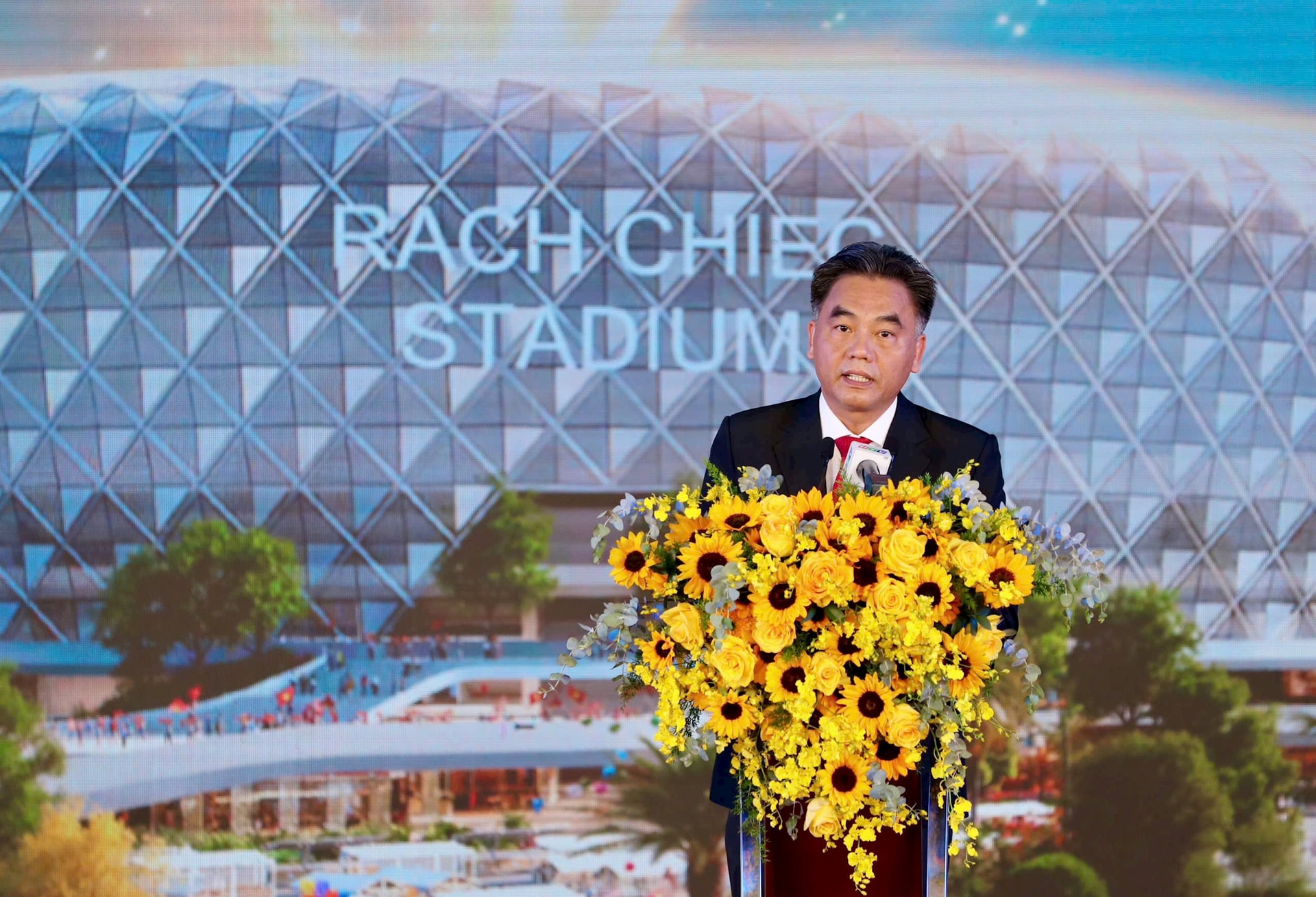
Mr. Nguyen Loc Ha, Vice Chairman of the Ho Chi Minh City People’s Committee, speaking at the event. Photo: NLĐ
City leaders stated that Ho Chi Minh City is poised to become a multi-centered metropolis, closely connected with Binh Duong and Ba Ria – Vung Tau. This vision aims to create an urban structure similar to major Asian regions like Bangkok or Seoul, with a population exceeding 14 million.
The Vice Chairman acknowledged the collaboration of companies such as Sun Group, Masterise, and THACO, aligning with Resolution 68 on the private sector. The city pledged to address obstacles and urged investors to focus resources, comply with laws, and ensure timely project completion.
Metro Line 2 (Ben Thanh – Tham Luong Section)
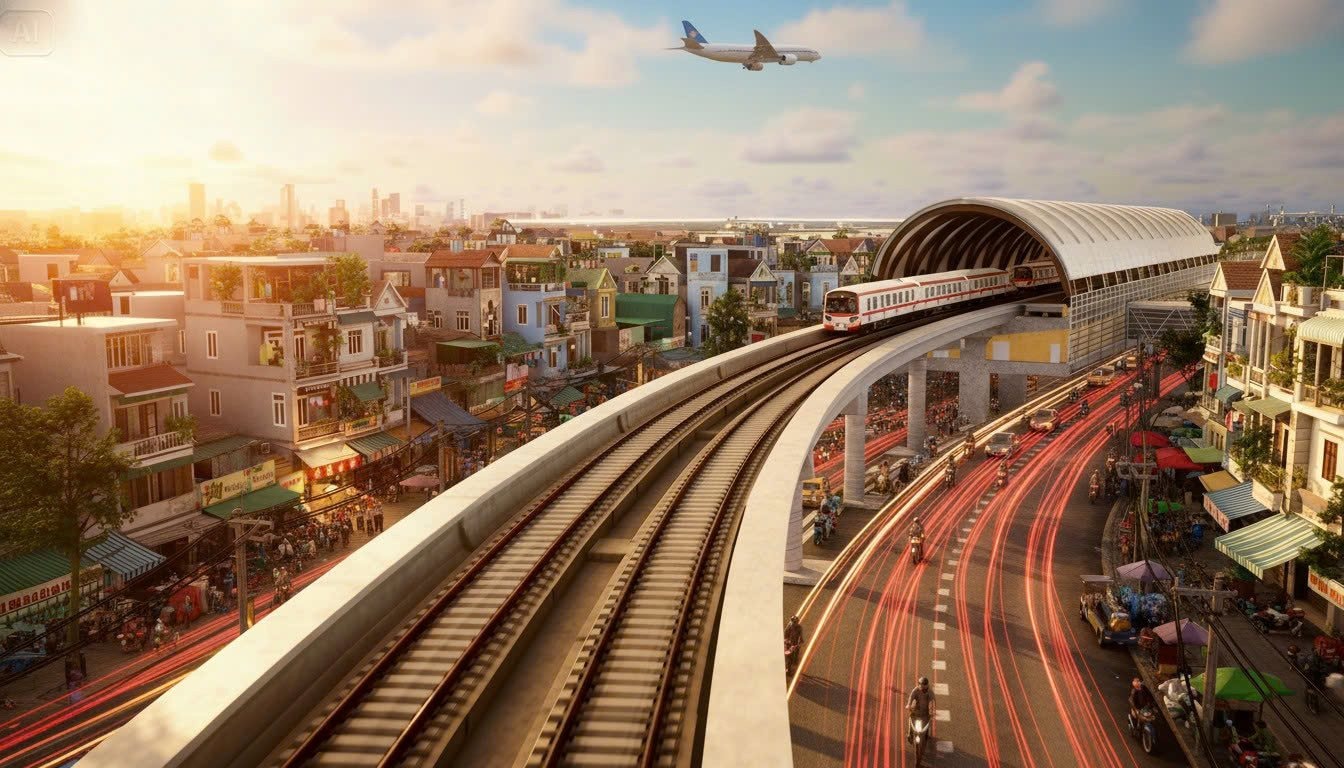
Rendering of the elevated section of Metro Line 2. Photo: MAUR
This project is the first in the city to apply the special mechanisms and policies of Resolution 188. Previously, Truong Hai Group (Thaco Group), led by Mr. Tran Ba Duong, proposed investing in Metro Line 2 and the Thu Thiem – Long Thanh line under a PPP model, specifically a BT contract.
The Ho Chi Minh City People’s Committee stated that Metro Line 2, launched on January 15th, is expected to provide high-capacity transportation, meeting the travel demands of residents between the city center and the northwest. It will also significantly reduce traffic congestion, accidents, and improve the urban environment along the route.
Furthermore, this line will seamlessly connect with Metro Lines 1, 4, Ben Thanh – Thu Thiem, and Ben Thanh – Can Gio at Ben Thanh Central Station, as well as future Metro Lines 5 and 6. It will also link with the Thu Thiem – Long Thanh line, forming an urban rail corridor.
Metro Line 2 has an investment of over VND 55 trillion from the city budget, managed by the Ho Chi Minh City Urban Railway Management Board. After 16 years of planning, construction has begun on the 11.3 km line, including 9.3 km underground, 2 km elevated, 10 underground stations, 1 elevated station, and a depot.
Upon completion, Metro Line 2, combined with the Thu Thiem – Long Thanh railway, will form a modern transportation axis, serving as the backbone connecting central Ho Chi Minh City to Long Thanh International Airport.
By 2030, Ho Chi Minh City aims to increase the total length of urban railways to 187 km, with priority projects including Metro Line 2 (Ben Thanh – Thu Thiem), Metro Line 1 extension (Binh Duong New City – Suoi Tien), Metro Line 6 (Tan Son Nhat – Phu Huu), and the Thu Thiem – Long Thanh and Ben Thanh – Can Gio lines.
From 2030 to 2035, the city will invest in an additional 8 metro lines totaling 275 km, bringing the network’s length to 462 km. In the following decade, the metro system will expand with 5 new lines spanning 239 km, reaching a total length of approximately 700 km, covering the entire city and connecting regions.
Rach Chiec Mega Project Worth Over VND 145 Trillion
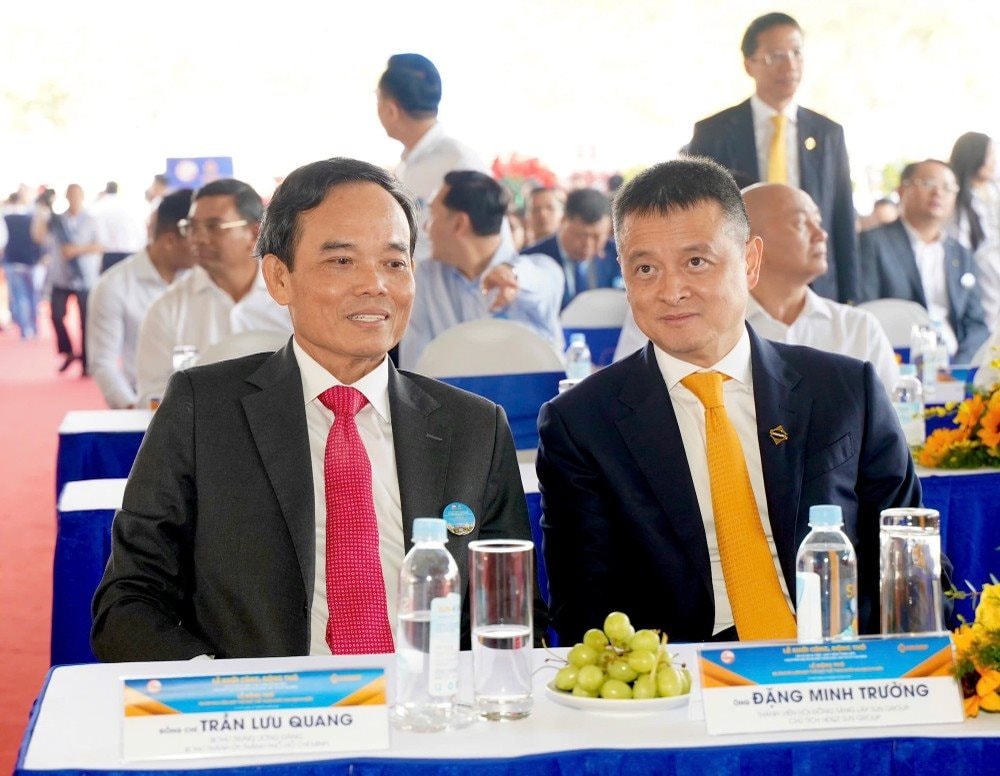
Mr. Tran Luu Quang, Secretary of the Ho Chi Minh City Party Committee, and Mr. Dang Minh Truong, Chairman of Sun Group, at the event. Photo: Plo
This morning, in Binh Trung Ward, the Ho Chi Minh City People’s Committee and Sun Group held the groundbreaking ceremony for the Rach Chiec National Sports Complex, a key infrastructure project. The project has a total investment of over VND 145.6 trillion and will be built on a site covering more than 186.78 hectares, making it the largest capital project launched by the city this time.
The centerpiece of the project is a 24-hectare stadium with a total investment of VND 35 trillion, seating 70,000 spectators. Upon completion, the Rach Chiec Stadium will surpass regional venues like Kai Tak (Hong Kong – China) with 50,000 seats and the Singapore National Stadium with 55,000 seats in terms of scale and technology.
Compared to open-air stadiums, Rach Chiec Stadium rivals global icons such as Wembley (London) with 90,000 seats and the “Bird’s Nest” (Beijing) with approximately 80,000 seats.
The project also includes modern auxiliary facilities, such as a 10-hectare multi-purpose arena with 18,000 seats, designed for indoor sports and international concerts.
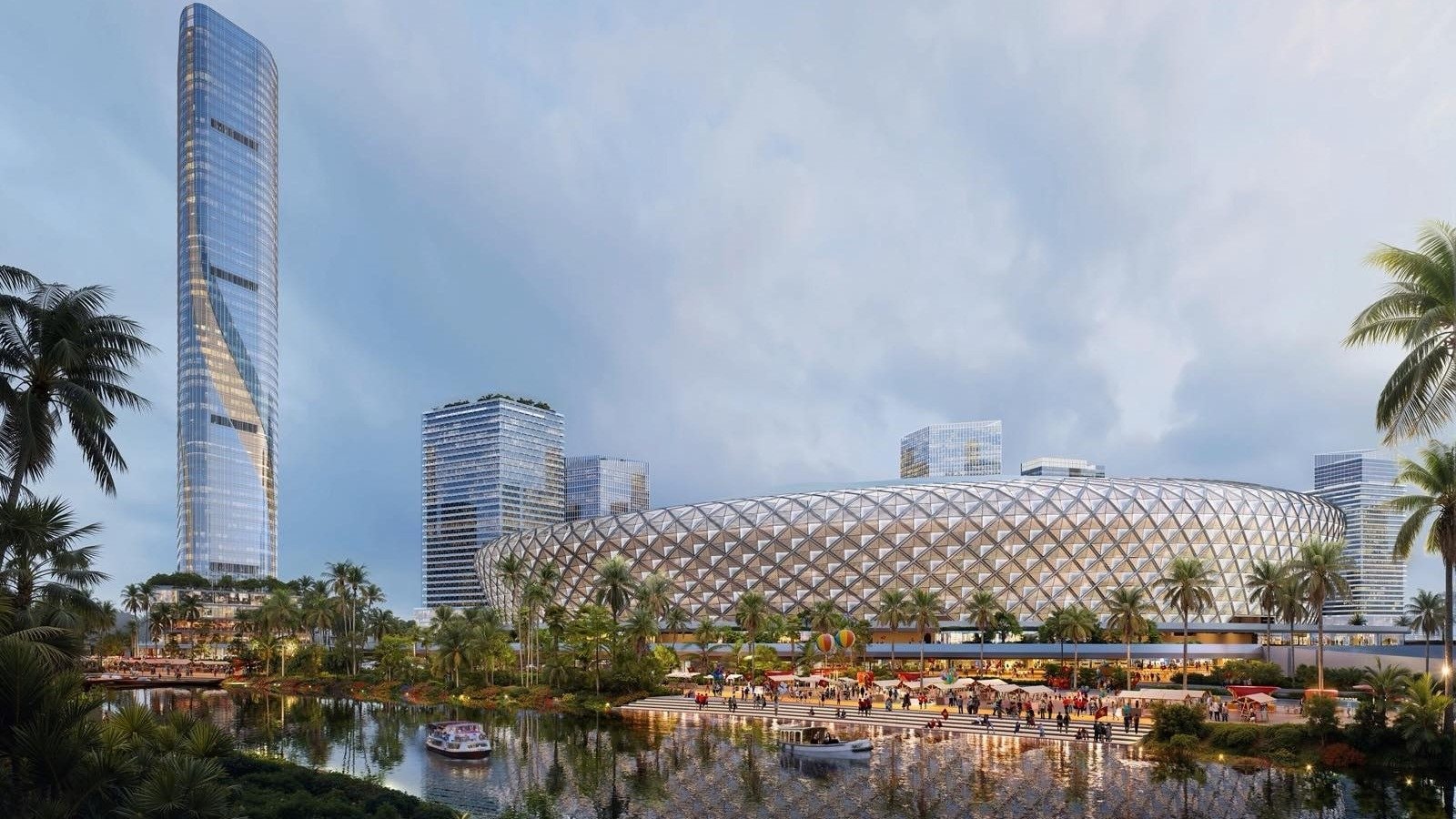
Rendering of the Rach Chiec Sports Complex. Photo: Sun Group
The Rach Chiec Sports Complex is envisioned as a new growth pole for the eastern part of Ho Chi Minh City. According to the city’s People’s Committee, upon completion, it will become a world-class sports hub, meeting standards for hosting professional domestic and international events like the SEA Games and ASIAD, as well as other major international events. Additionally, it will serve as a training center for athletes and encourage community engagement in sports and fitness.
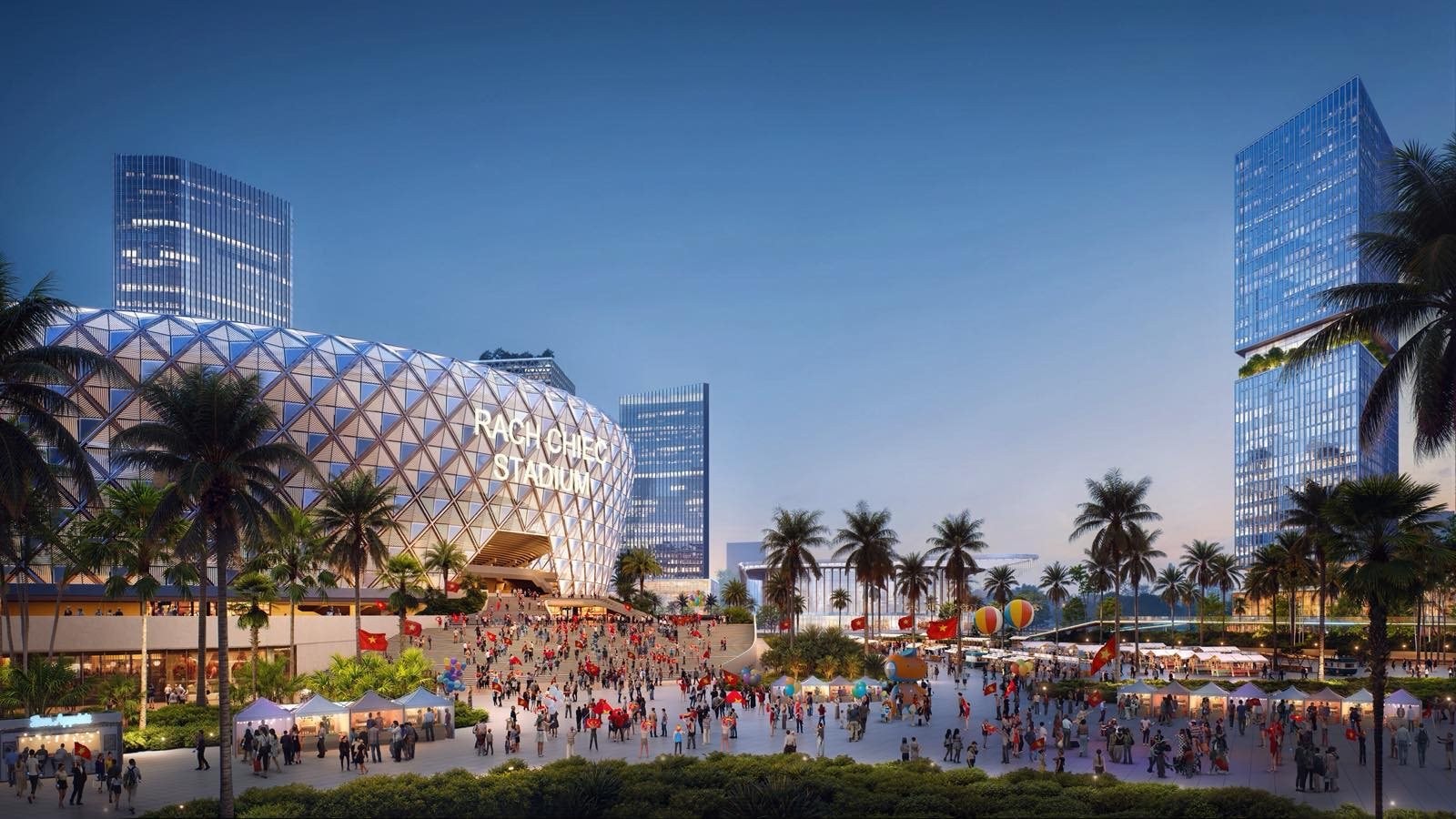
Rach Chiec Stadium is the centerpiece of the project. Photo: Sun Group
At the groundbreaking ceremony, Mr. Dang Minh Truong, Chairman of Sun Group, stated that thanks to timely policies, long-planned projects like the Rach Chiec National Sports Complex have been realized, contributing to Ho Chi Minh City’s strategic infrastructure in the future.
The Chairman emphasized that the Rach Chiec project is a key focus for the group in Ho Chi Minh City. As a strategic investor, Sun Group is committed to long-term development, creating sustainable value.
Groundbreaking for Two Bridges with a Combined Investment of Over VND 36 Trillion
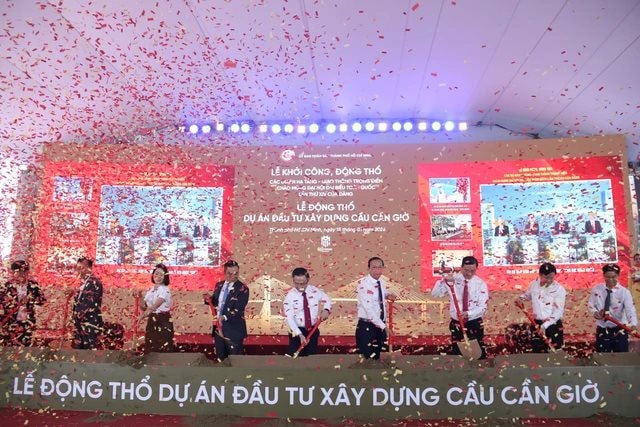
Groundbreaking ceremony for the Can Gio Bridge. Photo: NLĐ
This morning, the Ho Chi Minh City People’s Committee held groundbreaking ceremonies for two key transportation infrastructure projects: Phu My 2 Bridge and Can Gio Bridge. The event was co-hosted by the Ho Chi Minh City People’s Committee and Masterise Group, the investor for both projects.
These projects will be implemented under a public-private partnership (PPP) model, specifically a BT contract, with Masterise Group as the investor. Construction is expected to begin in 2026 and be completed by 2029.
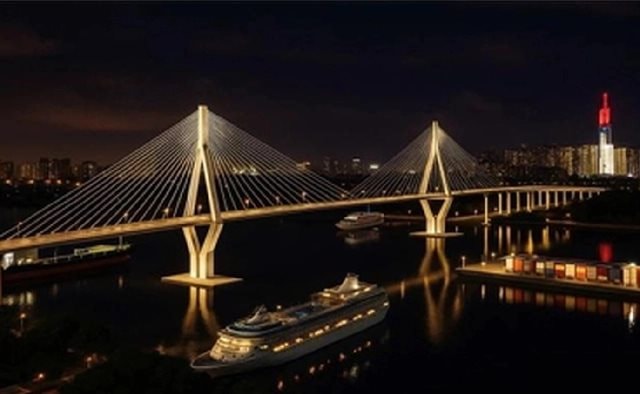
Rendering of Phu My 2 Bridge. Photo: ĐVTK
Specifically, Phu My 2 Bridge has an investment of over VND 23 trillion, spanning 6.3 km with 8 lanes, connecting southern Ho Chi Minh City to Dong Nai. This project will create a new transportation axis directly linking to Long Thanh International Airport, reducing pressure on the Ho Chi Minh City – Long Thanh – Dau Giay Expressway and lowering inter-regional logistics costs.
Meanwhile, Can Gio Bridge has an investment of over VND 13.2 trillion, spanning 6.3 km with 6 lanes, replacing the Binh Khanh ferry.
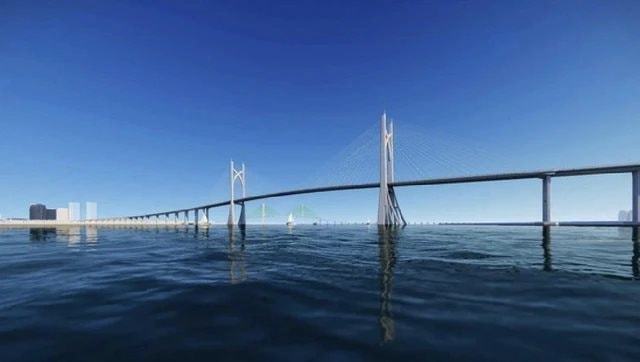
Rendering of Can Gio Bridge. Photo: ĐVTK
At the event, Mr. Nguyen Cong Vinh, Vice Chairman of the Ho Chi Minh City People’s Committee, affirmed that the Can Gio Bridge is not only a key transportation project with a total investment of over VND 13.2 trillion but also a symbol of the city’s ambition to reach the sea. Upon completion, it will end Can Gio’s isolation, driving it to become a new growth pole for marine economy and eco-tourism, while supporting the future Can Gio International Transshipment Port.
To achieve this goal, city leaders directed relevant departments, agencies, and localities to closely coordinate and create favorable conditions for Masterise Group to implement the project on schedule, ensuring quality, aesthetics, and absolute safety.
Official Groundbreaking of Two Key Projects: Phú Mỹ 2 Bridge and Cần Giờ Bridge
On January 15, 2026, the People’s Committee of Ho Chi Minh City hosted a groundbreaking ceremony for key infrastructure and transportation projects, marking the celebration of the 14th National Congress of the Communist Party of Vietnam. The event highlighted the commencement of two significant initiatives: the construction of the Phu My 2 Bridge and the investment in the Can Gio Bridge project.
Latest Updates on the Prime Land Plot at 1 Ly Thai To, Ho Chi Minh City
Amidst the emerging issue of relocating VNPT’s headquarters in Ho Chi Minh City, key advisory bodies convened to discuss and propose strategic solutions.
Khang Điền Targets Over $1 Billion in 2025 Profits, Seeks Inventory Clearance, No Equity Fundraising Plans Yet
Khang Dien Investment and Trading Joint Stock Company (HOSE: KDH) has announced its preliminary business results for 2025, reporting an estimated net profit of over 1,000 billion VND, successfully meeting its set targets.
Da Nang Grants Certifications to Financial Institutions, Ho Chi Minh City Finalizes Financial Hub Framework
At the Steering Committee meeting for the International Financial Center, chaired by Prime Minister Pham Minh Chinh on January 16th in Hanoi, leaders from Ho Chi Minh City and Da Nang presented updates on the implementation progress of key tasks. These tasks encompass institutional frameworks, organizational structures, personnel, and ensuring conditions to achieve the goal of launching the Vietnam International Financial Center into substantive operation as soon as possible.
Ho Chi Minh City Unveils Plans for a $1.5 Billion Stadium with 70,000-Seat Capacity
The National Sports Complex Rach Chiec, spanning over 186 hectares, is a masterplanned development. At its heart lies the centerpiece stadium, a 24-hectare project with a total investment of 35 trillion VND, boasting a seating capacity of 70,000.