The groundbreaking ceremony marks the commencement of several key projects: the National Sports Complex at Rach Chiec, Metro Line No. 2 (Ben Thanh – Tham Luong), Can Gio Bridge, and Phu My 2 Bridge. Among these, Can Gio Bridge and Phu My 2 Bridge are expected to have the most direct and significant impact on the development of South Saigon, particularly benefiting the former District 7 and Nha Be areas.
Phu My 2 Bridge is being constructed as South Saigon reaches its urban maturity but remains constrained by long-standing traffic bottlenecks. With a total investment of over VND 23,000 billion, an 8-lane design, and a length exceeding 6 km, this project not only alleviates congestion on the existing Phu My Bridge but also creates a new “runway” for the entire southern region. Upon completion, travel time from the former District 7 to Long Thanh International Airport will be reduced to just 30–35 minutes, down from over an hour currently—a significant shift that redefines the former District 7’s position on the regional connectivity map.
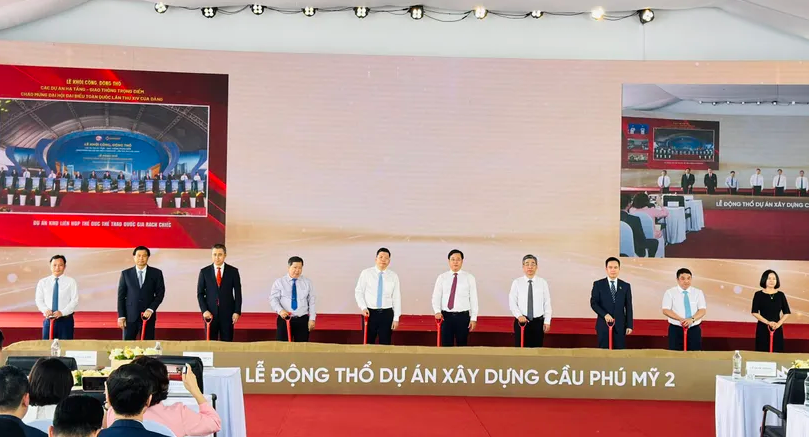
Groundbreaking ceremony for Phu My 2 Bridge. Photo: Dinh Du
Can Gio Bridge, spanning approximately 6.3 km with a six-lane design and an operating speed of 80 km/h, will replace the Binh Khanh ferry terminal. This will reduce travel time from Ho Chi Minh City to Can Gio from over 2 hours to just 40–50 minutes. For South Saigon, this bridge not only opens a new connection but also strengthens economic, eco-tourism, and service flows from Can Gio, creating an integrated development space linking the former District 7 and Nha Be to the southern coastal region.
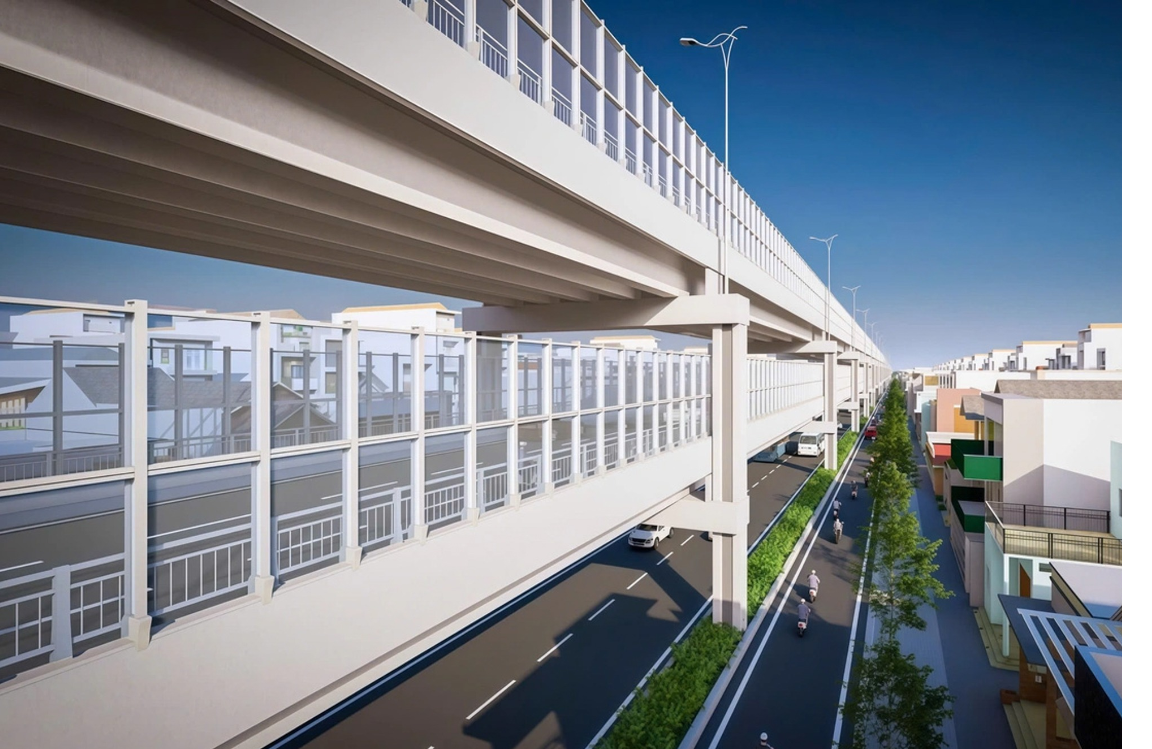
Phu My 2 Bridge reduces travel time from the former District 7 to Long Thanh International Airport to just 30 minutes. (Rendering)
The simultaneous launch of these multi-billion-dollar projects is creating a powerful synergy with South Saigon’s existing infrastructure, promising to ignite a growth explosion in the region.
Ho Chi Minh City’s market history shows that major infrastructure developments often lead to significant property value increases. For instance, Thu Thiem 2 Bridge, connecting the Eastern District to the former District 1, drove land prices in the Eastern District from VND 80–100 million/m² to VND 300–400 million/m² within five years. The Eastern District has since emerged as a new financial and urban hub with remarkable growth.
Experts predict a similar scenario for South Saigon, which already boasts a comprehensive connectivity network thanks to projects like Rach Dia Bridge, Phuoc Long Bridge, the Nguyen Van Linh – Nguyen Huu Tho underpass, and upcoming initiatives such as Nguyen Khoai Road, Thu Thiem 4 Bridge, and Metro Line No. 4. Additionally, the area benefits from the modern ecosystem of Phu My Hung, Vietnam’s first international urban area, known for its synchronized planning, elite community, and world-class amenities.
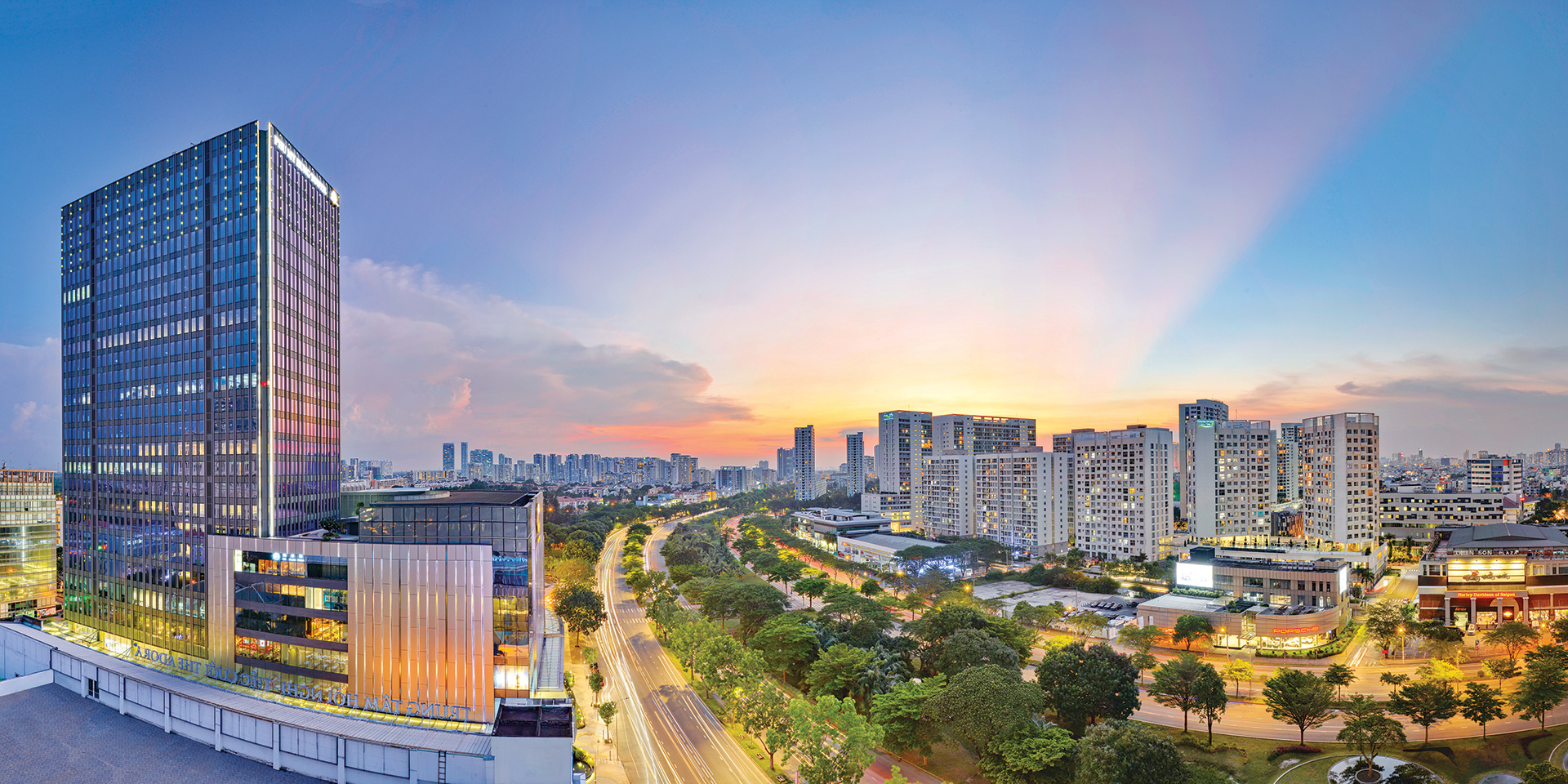
Phu My Hung – The focal urban area of South Saigon. Photo: PMH
This foundation ensures that South Saigon’s growth potential is not driven by short-term speculation but by sustainable accumulation. Investment is expected to flow into projects with strategic locations, transparent legal frameworks, and tangible progress, particularly those near key connection points like Phu My 2 Bridge, such as Sunshine Sky City and Noble Crystal Riverside by Sunshine Group, as well as nearby projects like Celesta Heights and Khai Hoan Prime.
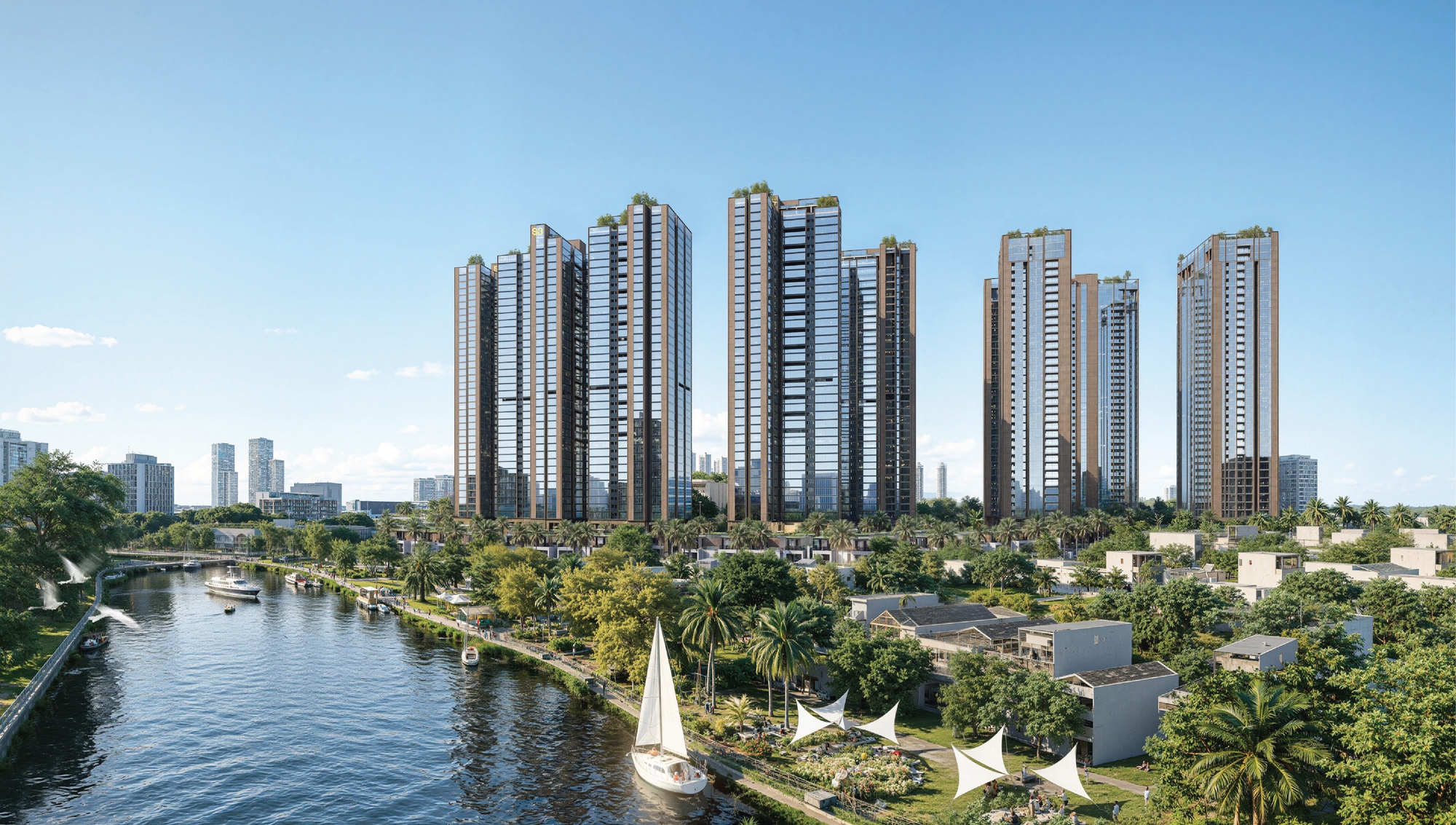
Projects in the former District 7 are poised to benefit most from the infrastructure revolution in South Saigon. (Photo: Sunshine Sky City)
Market trends reflect this momentum. Apartment prices in the former District 7 have risen by 25–35% recently and are expected to surge further as infrastructure projects near completion in the coming period.
Hanoi Apartment Prices Surge Over 200% Since 2019

Over the past five years, apartment prices in Hanoi have surged by an average of 26% annually, now standing 200% higher than in 2019. Moving into 2026, condominium prices in Hanoi are expected to continue their upward trajectory, though the rate of increase may moderate compared to previous periods.
Ho Chi Minh City Launches Construction of the Thu Thiem – Long Thanh Railway Line Project

The Thu Thiem – Long Thanh railway line spans approximately 42 kilometers, featuring around 20 stations and a depot. It originates at Thu Thiem Station in Ho Chi Minh City and terminates at Long Thanh Station in Dong Nai, seamlessly connecting to the Long Thanh International Airport.
Emerging East: The New Destination as Core Central Apartment Prices Skyrocket

The real estate market is witnessing a significant shift as capital flows towards satellite urban areas. With apartment prices in central core regions surpassing 100 million VND per square meter, homeownership is becoming increasingly out of reach for many, while investors face shrinking profit margins.
Ho Chi Minh City Invests in 77 Key Transportation Projects, Totaling VND 1,780 Trillion

According to the Department of Construction, from 2026 to 2027, Ho Chi Minh City will focus on implementing 77 key transportation projects and works, with a total investment of approximately VND 1,780 trillion.
“Millions in Ho Chi Minh City Witness Record-Breaking 240 Trillion VND Milestone, Led by Three Major Conglomerates”

This is considered the largest-scale investment event in Ho Chi Minh City in many years.